Last updated:
Why Most Roof Leaks Start at the Flashing
That mysterious brown water stain on your ceiling after a heavy rain probably has nothing to do with your shingles. National roofing data from 2026 shows that nearly 90% of all roof leaks originate at penetrations and intersections, the exact spots where flashing is supposed to keep water out.
When flashing fails at a chimney, wall intersection, or skylight, water finds the joint immediately. Connecticut’s freeze-thaw cycles accelerate this failure. Ice expands in tiny gaps, lifts metal edges, and breaks mortar bonds season after season. By the time you notice the ceiling stain, the water path is often well established.
West Hartford Roofing traces every leak to its true source before touching a single fastener. If a previous roofer sealed over the failure with a bead of cheap caulk, we strip that off completely and do the flashing properly. Your home deserves a permanent fix, not a seasonal band-aid.
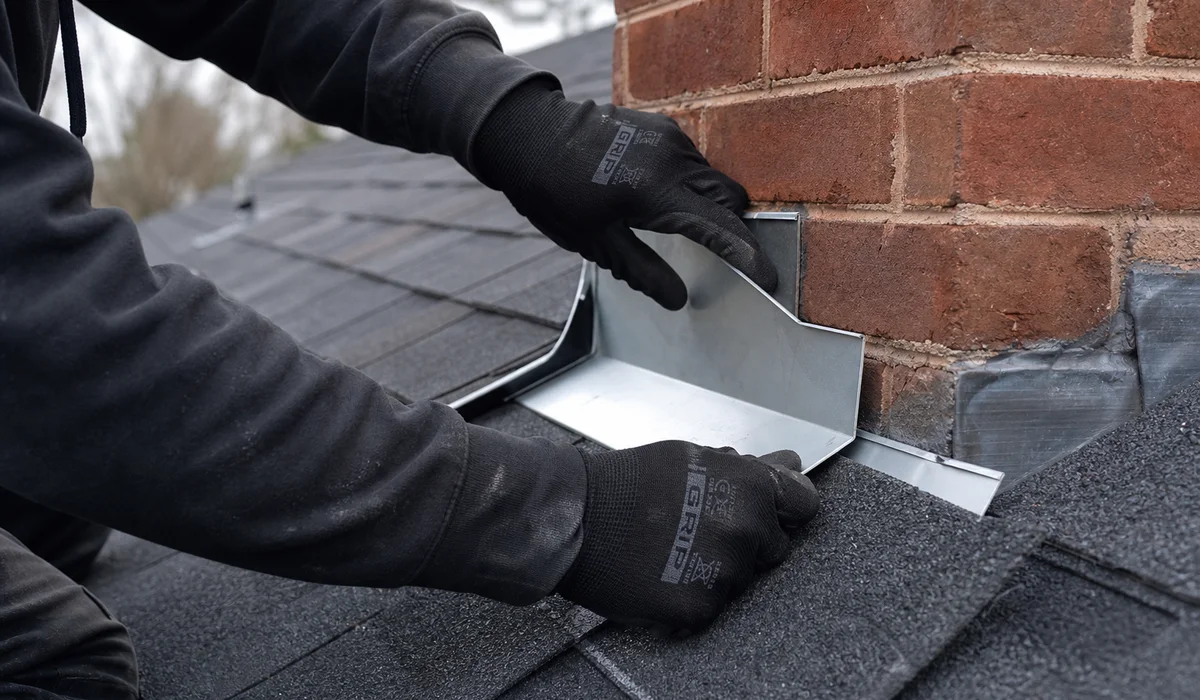
Flashing Repairs We Handle
Hartford County weather punishes poorly sealed roof joints, so every flashing repair must be custom-fitted to the specific intersection. Our service covers all the critical vulnerability zones on your property:
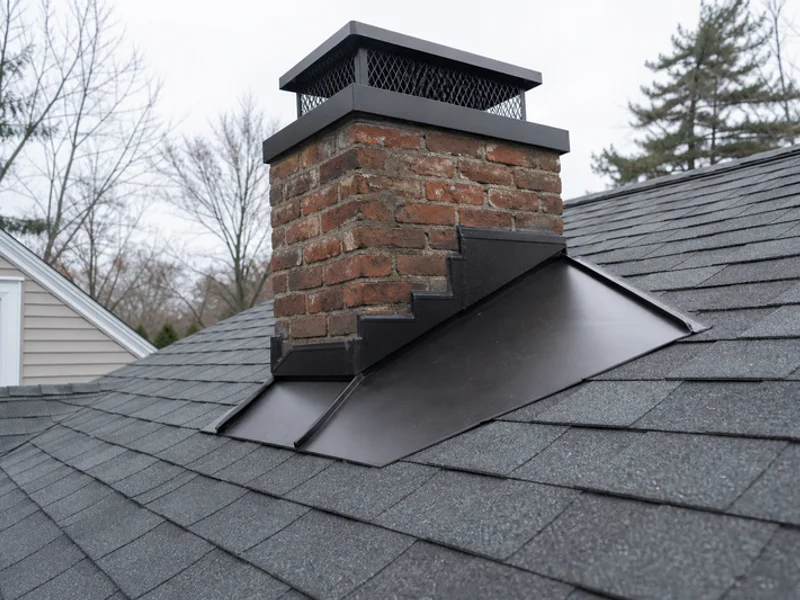
- Chimney step and counter flashing (aluminum, copper, or lead)
- Sidewall flashing on dormers and additions
- Apron flashing at roof-to-wall junctions
- Skylight perimeter flashing
- Valley flashing on open and closed-cut valleys
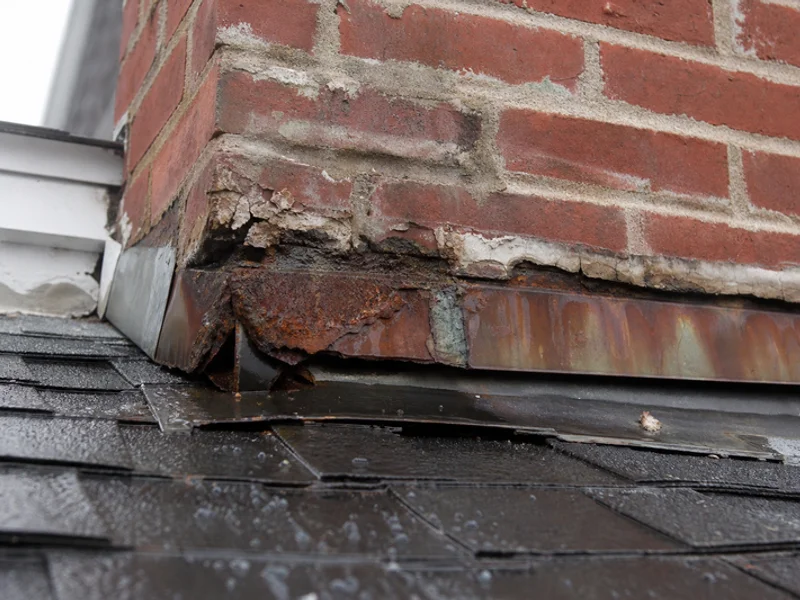
- Rusted or lifted flashing on older Connecticut roofs
Professional chimney flashing repair in Connecticut generally runs between $300 and $1,500 in 2026, depending on chimney size and the metal you choose. We provide a transparent, upfront quote before starting any work.
Choosing the Right Flashing Material
The metal you select directly impacts how long your repair holds up against Connecticut’s harsh climate. Here is a comparison of the most common options.
| Material | Average Lifespan | Cost Factor | Best Used For |
|---|---|---|---|
| Aluminum | 20+ Years | Most Affordable | Standard residential repairs |
| Copper | 50+ Years | Premium | Historic homes and high-end properties |
| Lead | 30+ Years | Mid-Range | Contouring to uneven stone chimneys |
Many of the classic Colonial and Tudor homes in West Hartford Center were built with copper flashing that has lasted decades. When we work on these properties, we match the original material to maintain both the aesthetic and the proven durability that copper provides.
Historic Homes and Chimney Challenges in West Hartford
The dense stock of 1920s to 1960s homes near Westmoor Park and throughout Bishops Corner presents unique flashing challenges. These older brick chimneys have mortar joints that have weathered nearly a century of New England winters. Simply laying new flashing over deteriorated mortar creates a false seal that fails within a few seasons.
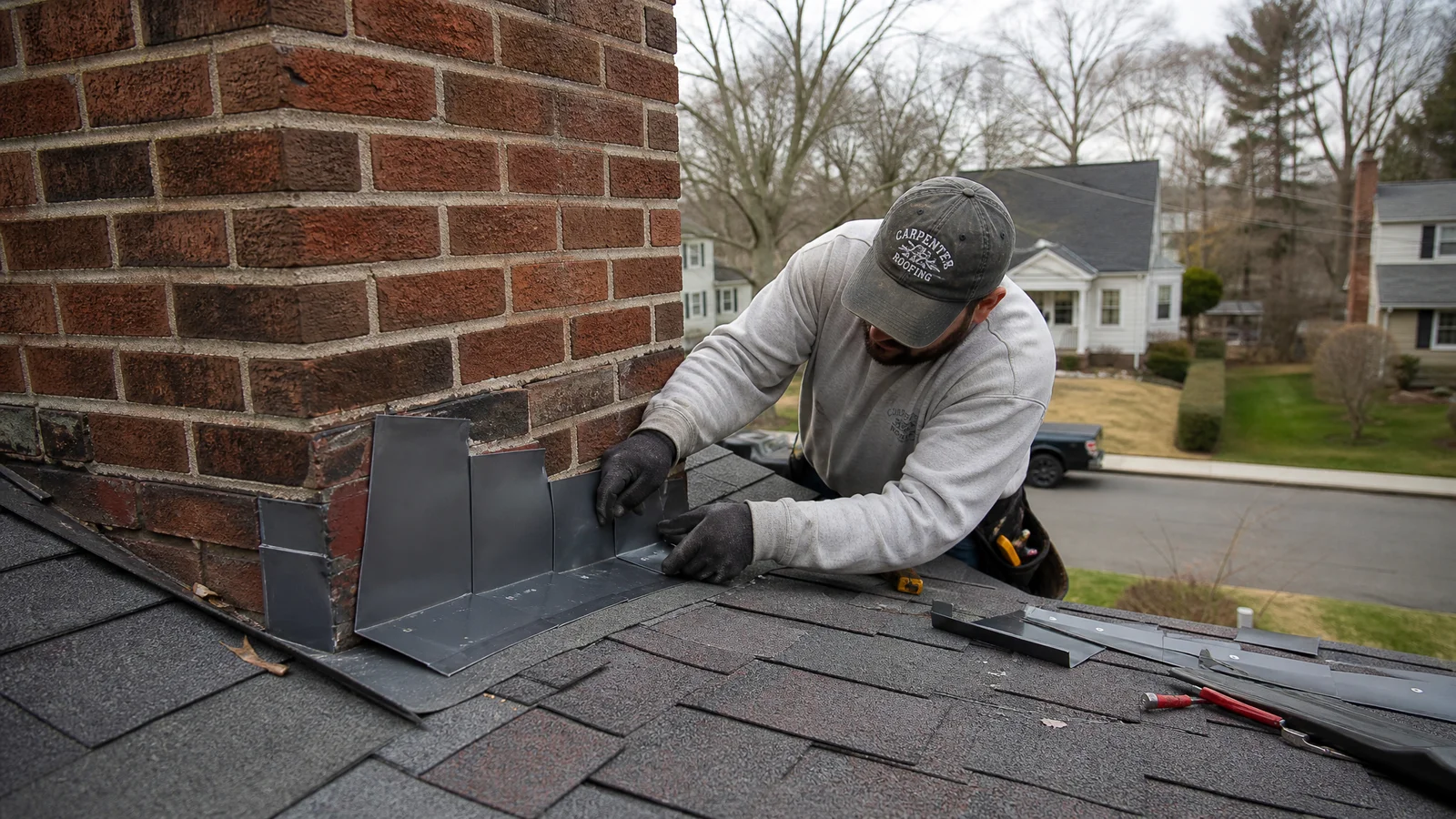
Our process on these homes starts with cutting a clean reglet into sound mortar, setting the counter flashing into a fresh mortar bed, and properly weaving step flashing into each shingle course below it. This traditional method physically blocks water and lasts for decades. It takes longer than slapping sealant over the old work, but it is the only approach that actually solves the problem.
Spotting Early Warning Signs
You can often catch a flashing problem before water starts dripping inside your home. One major red flag is efflorescence, a chalky white residue on the exterior of your chimney bricks. This occurs when trapped moisture dissolves salts in the masonry and pushes them to the surface. If you see this white powder, the mortar joints or flashing seals are already compromised.
Other signs include rusty streaks running down from flashing edges, lifted metal visible from the ground, and interior stains that appear only during heavy rain with wind from a specific direction. Any of these warrant a professional inspection before the next storm makes the problem worse.
The Difference Between Real Repair and Sealant Camouflage
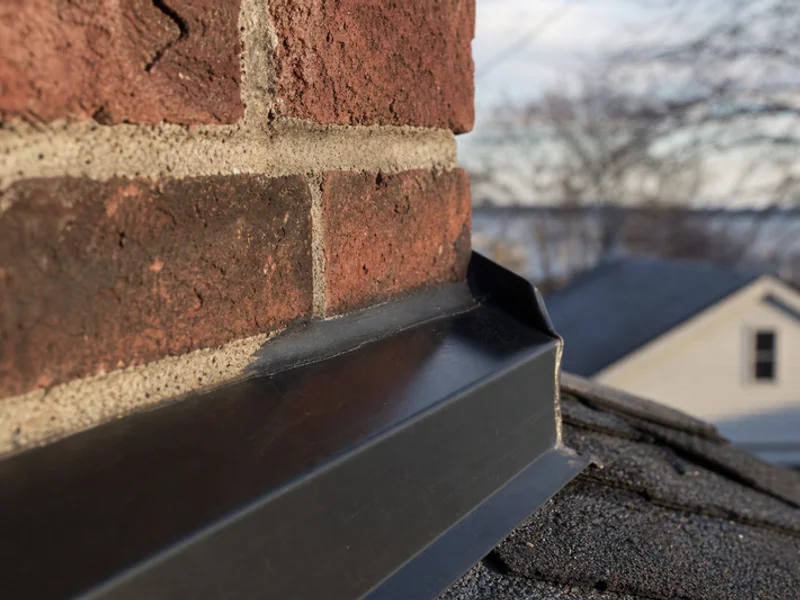
A proper flashing repair means removing the failed metal completely, cleaning the substrate, and installing new material. New step flashing weaves into every shingle course, counter flashing seats into a fresh mortar bed, and professional-grade polyurethane sealant from brands like Vulkem or Geocel handles the final detail work. That layered approach holds for decades.
Basic hardware-store silicone caulk applied over an existing failure lasts one season at best. It cracks in the first hard freeze, and you are back to chasing the same leak. If you have had a chimney “repaired” that keeps leaking, the previous contractor almost certainly sealed over the problem instead of fixing it.
Chimney Crickets and Water Diversion
Wide chimneys on the downslope side of a roof can trap water and debris behind them, creating a dam that pushes moisture under the flashing. The solution is a chimney cricket, a small peaked diverter built behind the chimney that channels water around the masonry instead of pooling against it.
Connecticut building code requires a cricket for chimneys wider than 30 inches on the slope side. If your home was built before this requirement existed or the original cricket has deteriorated, installing one during a flashing repair prevents a recurring leak source that no amount of sealant can solve.
Call West Hartford Roofing at (203) 824-0275 for a thorough flashing inspection. We serve West Hartford, Farmington, Avon, Bloomfield, and communities across Hartford County.