Last updated:
Leaks Are Traced, Not Guessed
A growing water stain on your ceiling is alarming, but the stain itself is misleading. Water rarely enters your home directly above where the damage appears. It runs along the roof deck, jumps to a rafter, tracks down a nail, and drops through the ceiling at the lowest point it can find. That path can stretch six feet or more from the actual entry point.
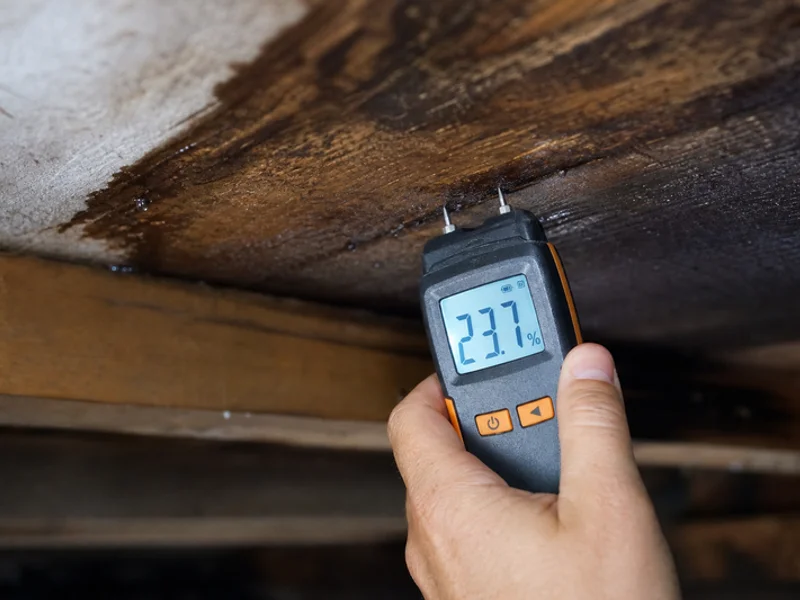
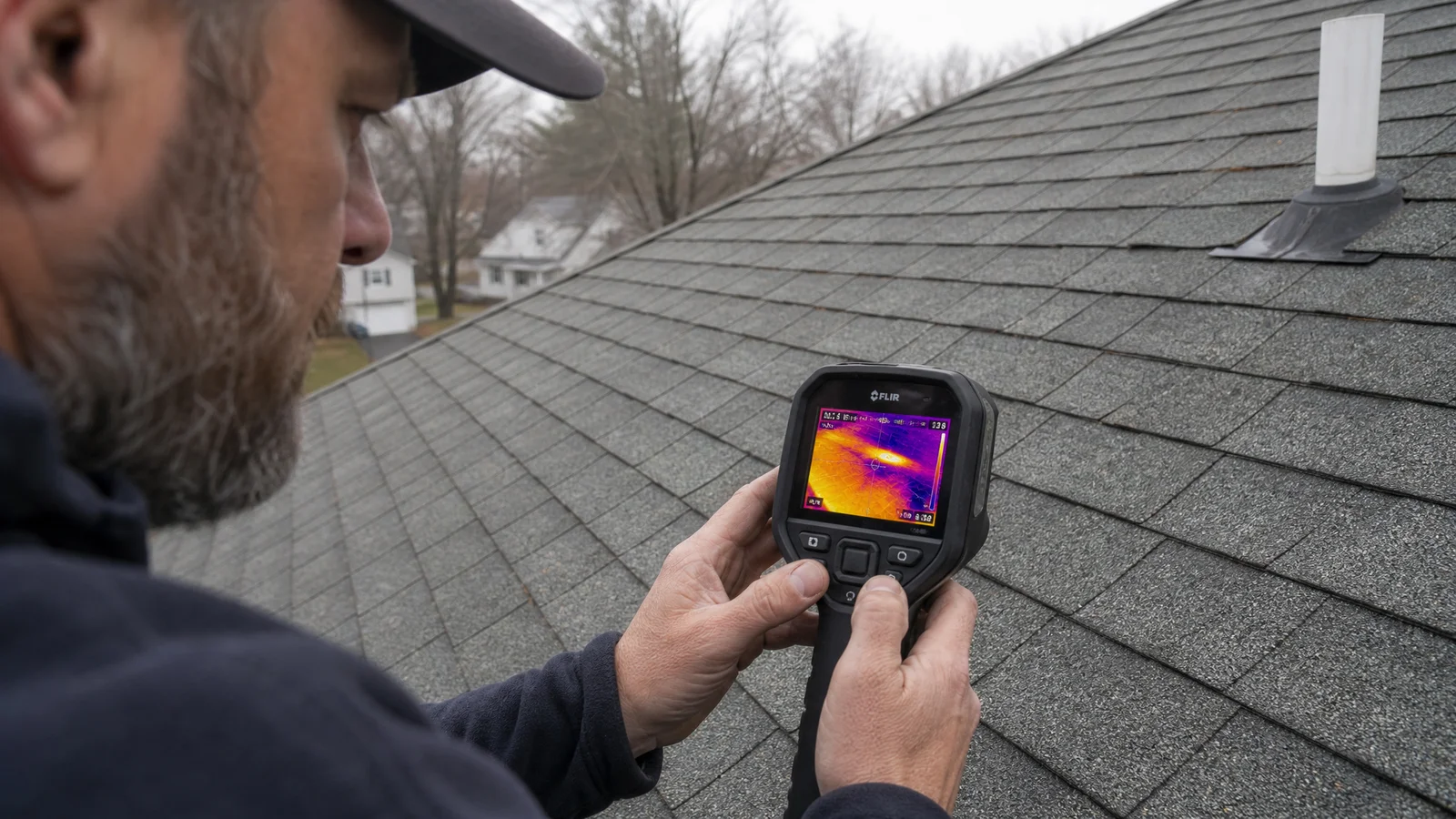
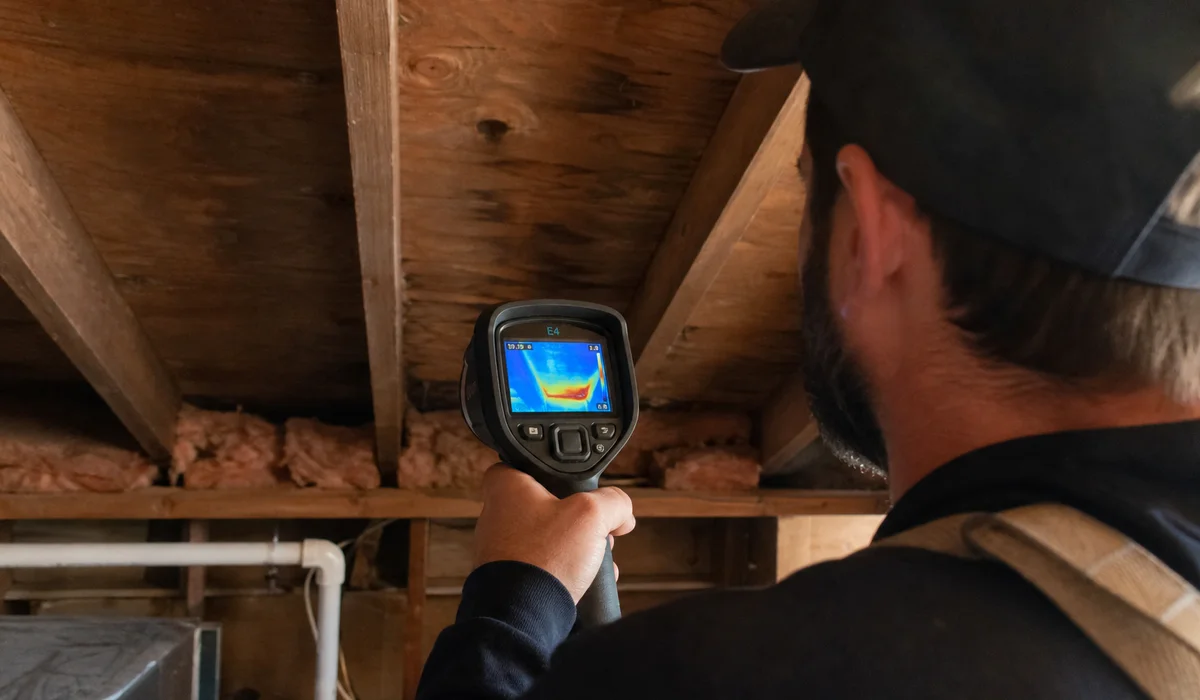
This is why guessing fails. A contractor who sees the stain and patches the shingles directly above it has a poor chance of stopping the leak. Our team starts at the stain and works backward using thermal imaging and moisture meters to map the invisible water path through your attic without tearing up drywall.
We use the FLIR ONE Edge Pro thermal camera and the Tramex ME5 moisture meter to trace the exact route water takes through your roof system. Finding the real failure means you get a permanent repair at the actual source, not a seasonal patch that leaks again after the next heavy rain.
What Causes Roof Leaks in Hartford County
Hartford County receives an average of 47 inches of rain and over 50 inches of snow annually. That combined volume of precipitation, paired with constant freeze-thaw cycling, wears down specific roof components long before the shingle field shows obvious signs of aging.
Our inspection process checks every vulnerability on your roof, not just the obvious spots. Here are the failures we diagnose most frequently:
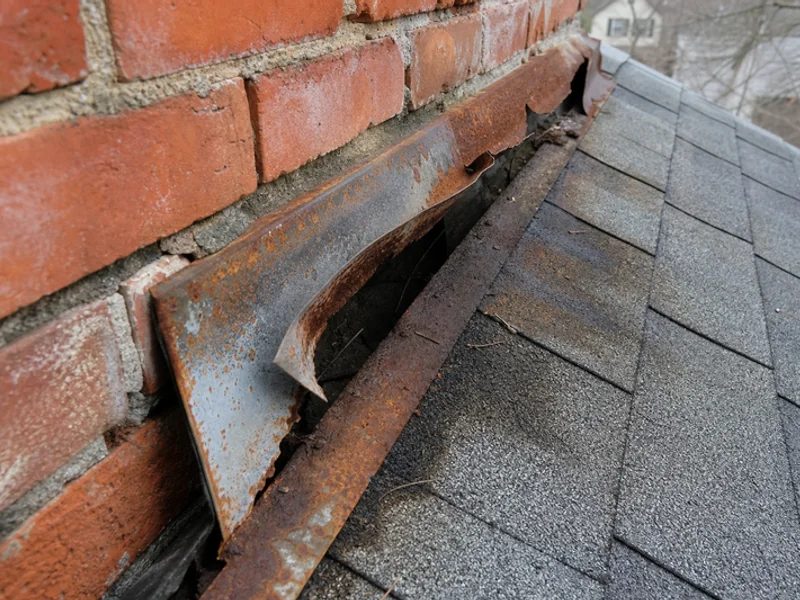
- Flashing failures: Step and counter flashing at chimneys, walls, and skylights are the number one source of persistent leaks.
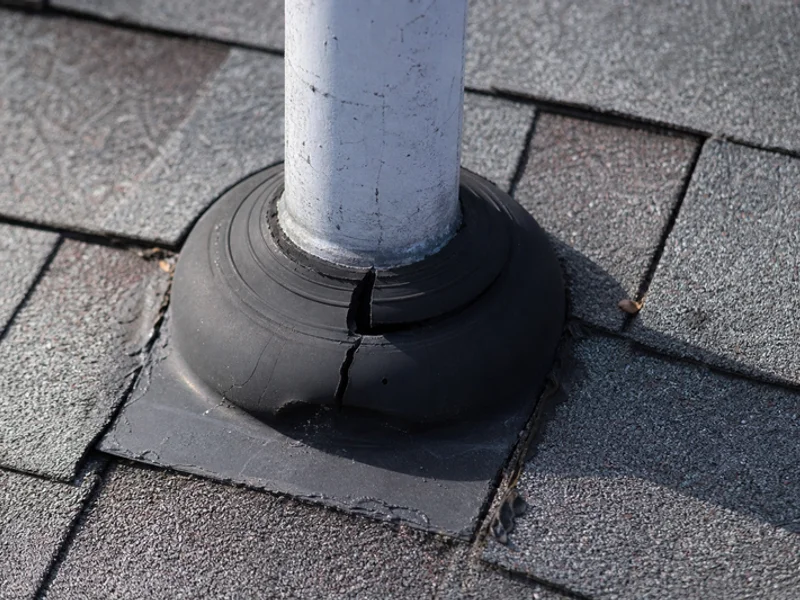
- Pipe boots: Rubber gaskets around plumbing vents crack after 10 to 15 years of sun exposure, creating pinhole entry points.
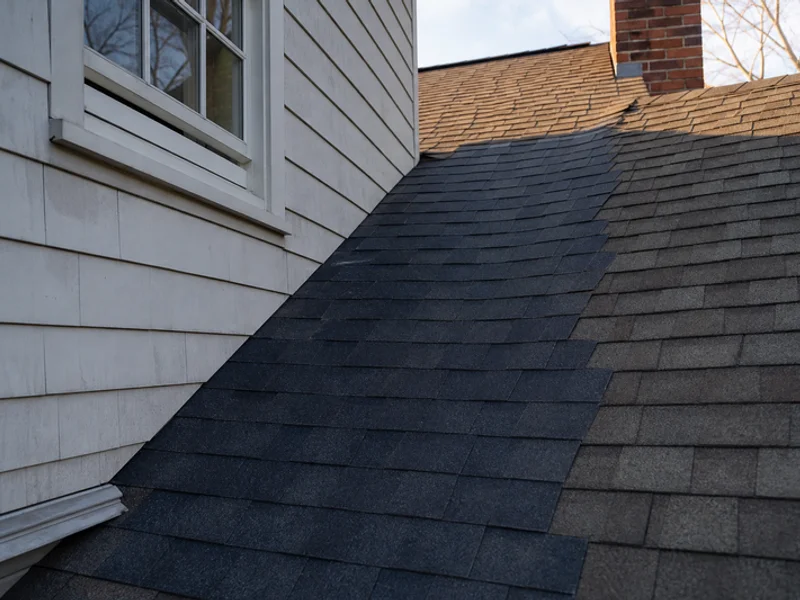
- Valleys: Closed-cut valleys fail when worn shingles or trapped debris force water underneath the overlap.
- Missing or torn shingles: New England storms cause wind-lift and impact damage that exposes the underlayment or bare deck.
- Nail pops: Nails backing out of the sheathing over time create tiny holes that admit water with every rain.
- Skylight seals: Gasket and flashing failures at the perimeter allow slow moisture intrusion that worsens gradually.
How Long Roof Components Last in Connecticut
Understanding the lifespan of individual components helps you anticipate problems before they become emergencies. This table is based on repair data from properties across West Hartford and surrounding towns.
| Roof Component | Typical CT Lifespan | Common Failure Reason |
|---|---|---|
| Rubber Pipe Boots | 10 to 15 years | UV damage cracks the rubber gasket. |
| Chimney Flashing Sealant | 5 to 10 years | Freeze-thaw cycles break the seal. |
| Architectural Shingles | 20 to 30 years | High winds and severe hail impact. |
| Skylight Gaskets | 15 to 20 years | Perimeter seal dries and shrinks from thermal cycling. |
Common Mistakes Homeowners Make With Roof Leaks
The most expensive mistake is ignoring a small stain because it seems to dry up between storms. That pattern usually means water is saturating your attic insulation and framing during rain, then slowly evaporating. The damage compounds silently for months until the stain returns larger or the ceiling material begins to fail.
The second mistake is hiring someone to apply sealant over the visible failure without tracing the actual entry point. Caulk over a lifted piece of flashing may stop water for a few months, but the underlying gap remains. The next heavy rain with wind from the right direction drives water past the sealant and the leak returns.
Our approach eliminates both problems by finding the real entry point first and repairing it with proper materials and technique.
Seasonal Leak Patterns in West Hartford
Different seasons produce different types of leaks. Winter brings ice dam-driven leaks at the eaves, where backed-up meltwater forces its way under shingles. Spring storms with wind-driven rain expose flashing failures that stayed dry all winter because the wind came from a different direction. Summer heat causes pipe boot gaskets to crack after years of thermal expansion.
Understanding these patterns helps us predict where to look based on when your leak appeared. A leak that shows up only during January thaw cycles almost always traces back to an ice dam at the eaves or a ventilation imbalance in the attic. A leak that appears during a hard spring rain from the east points to flashing on the east-facing side of a chimney or wall intersection.
This seasonal knowledge, built from years of repairing roofs on the Colonials and Cape Cods throughout Elmwood and the neighborhoods near Bishops Corner, helps us diagnose problems faster and with fewer exploratory steps.
Our Leak-Free Warranty
A reliable contractor stands behind their repair work. We back all leak repairs with a leak-free workmanship warranty. If water returns through the exact same failure point, the return visit costs you nothing.
For active leaks, we bump the call to the top of our schedule for same-day response across West Hartford and Hartford County. For smaller repairs like flashing, boot, and shingle replacements, we carry materials on the truck and can often complete the fix on the same visit.
Call West Hartford Roofing at (203) 824-0275 to schedule your leak inspection. We serve West Hartford, Wethersfield, Bloomfield, New Britain, and communities throughout Hartford County.