When a Roof Leak Is an Emergency
Not every roof leak requires an emergency call. Learn the specific signs that indicate danger - active water flow, structural risk, electrical hazards - and how to respond at each urgency level.
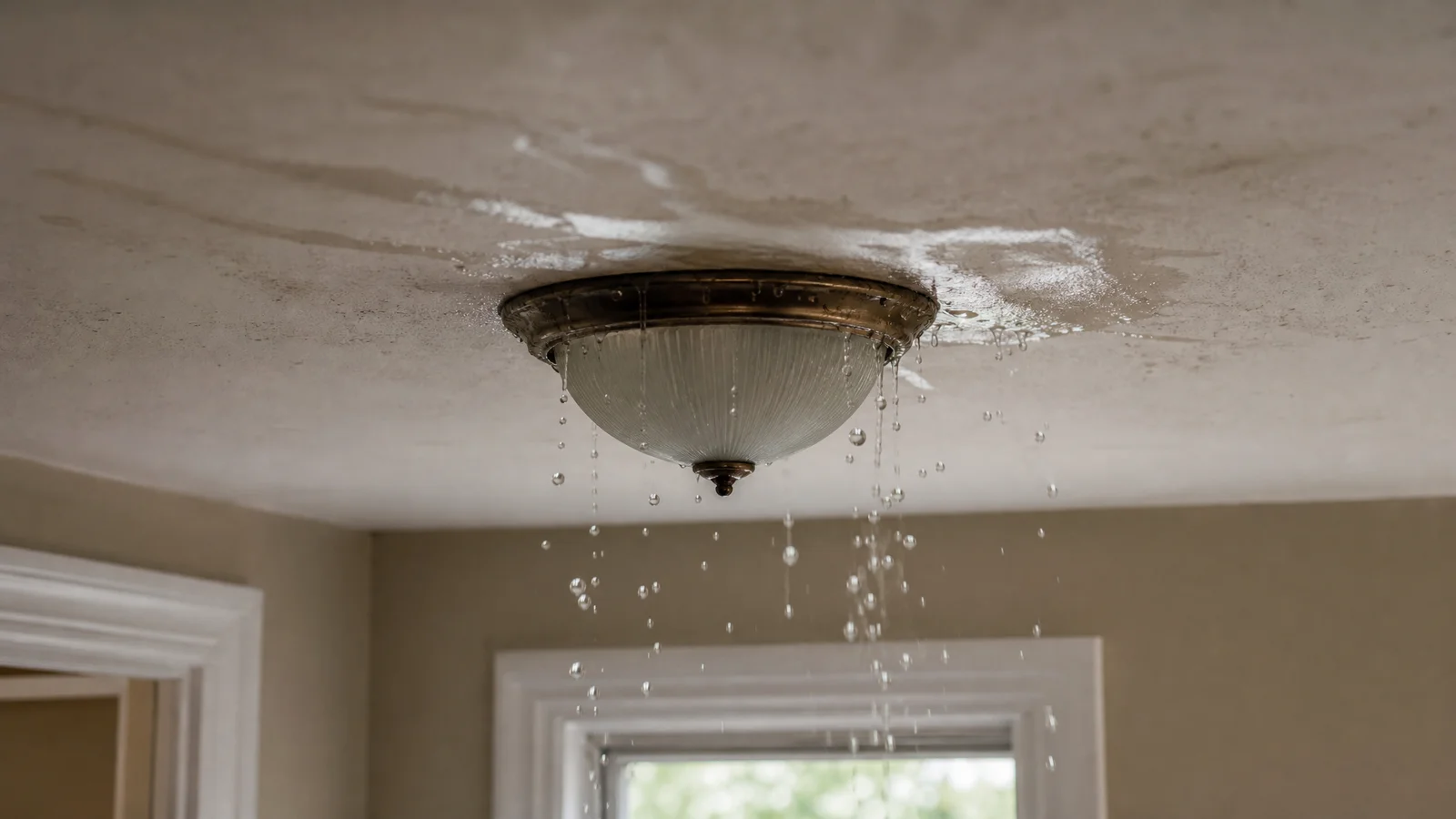
A midnight drip from the ceiling triggers an immediate question: is this a real emergency, or can it wait until morning? The answer depends on specific signs that separate inconvenient leaks from situations that threaten your safety and your home’s structural integrity.
West Hartford Roofing handles urgent calls across Hartford County every week. We have developed a clear three-tier system for evaluating roof leak urgency so you can make the right decision quickly.
Tier 1: Immediate Emergency - Call Now
These situations involve active danger to people or rapid structural deterioration. They require professional intervention within hours, not days.
Flowing Water, Not Dripping
When water moves continuously through your ceiling rather than dripping, the roof barrier has failed at a significant scale. Porous materials like drywall and insulation absorb moisture by the minute, and the damage footprint expands constantly. Containing the flow before it spreads to adjacent rooms is the first priority.
Water Contacting Electrical Systems
Moisture reaching a light fixture, ceiling fan, or outlet creates an immediate fire and shock hazard. Shut off the affected circuit at the breaker panel before doing anything else. Do not touch the wet fixture. This combination of water and live wiring ranks as the most dangerous scenario we encounter.
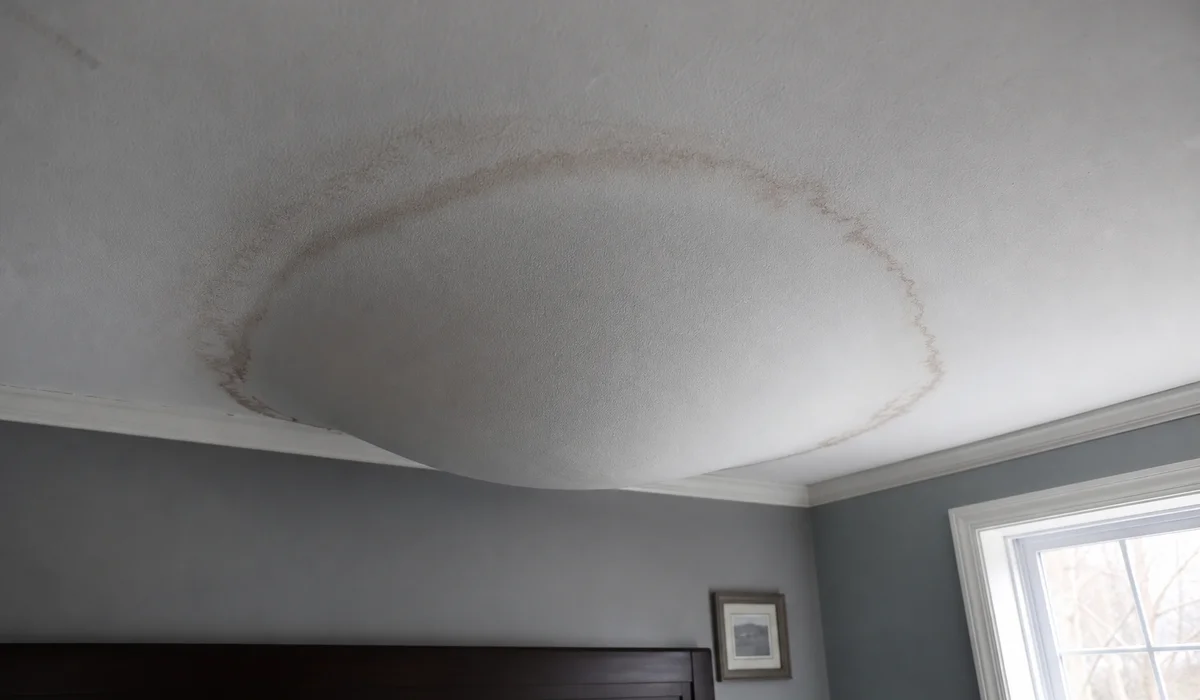
Sagging or Bulging Ceiling
Pooled water above the drywall creates visible sagging or a bubble that grows over time. The weight can cause a sudden ceiling collapse. If you notice this, carefully puncture the lowest point of the bulge with a long object and direct the water into a bucket. Repairs for structural beam failure from water weight can reach $1,500 to $10,000 according to recent restoration industry data.
Structural Impact or Tree Strike
Broken rafters, cracked framing, or a fallen tree limb means the roof is compromised even if no active leak is visible yet. The next rain will find every gap. OSHA specifically warns against attempting to tarp a damaged roof yourself during active wind or rain due to fall risks.
Missing Roof Sections
High winds can strip entire courses of shingles, exposing underlayment or bare decking. This is common on the older Colonials and Cape Cods found throughout West Hartford. Professional tarping must happen before the next precipitation.
Tier 2: Urgent - Schedule Same-Day or Next Morning
These leaks are active but contained. They require prompt attention to prevent escalation, but the immediate danger level is lower.
Steady Drip Catchable in a Bucket
Water is coming in at a manageable rate. This is not a midnight crisis, but it needs a next-day fix. The EPA warns that mold growth begins on damp materials within 24 to 48 hours of initial exposure, so the repair window is measured in a day or two, not weeks.
Fresh or Spreading Ceiling Stain
A dark ring on your ceiling that appeared today or is visibly growing means moisture is actively pooling above. Mark the edge of the stain with a pencil so you can track whether it expands before the crew arrives. This gives the repair team valuable diagnostic information.
Visible Attic Leak Source
If you can locate the entry point in the attic, repairs can be targeted and scheduled efficiently. Watch for wet cellulose insulation pressed against wood joists, as sustained moisture contact accelerates rot.
Storm-Damaged Shingles Visible from Ground
Cracked, lifted, or missing shingles spotted after a storm may not be leaking yet. The next significant rain will change that. Getting a professional out the following morning prevents the inevitable water intrusion.
Tier 3: Not an Emergency - Schedule During Business Hours
Some issues look alarming but do not justify paying an after-hours premium. Booking during regular hours saves you 25 to 40 percent compared to emergency dispatch rates.
| Service Type | Average Cost (2026) | Response Time |
|---|---|---|
| Standard Scheduled Repair | $150 - $300 (minor fix) | 2 to 5 days |
| Emergency Dispatch | 25% to 40% Premium | Immediate (24/7) |
Situations that can wait for regular scheduling include:
- Old stain, currently dry - The ceiling shows evidence of a past leak, but nothing is active. The area is dry to the touch.
- Intermittent stain in heavy rain only - A consistent minor issue that dries completely between storms. Important to fix, but not a midnight call.
- Cosmetic-only damage - A missing shingle tab with no interior leak. The underlayment is likely still intact and protecting the deck.
- One damaged shingle, dry forecast - If no rain is expected for several days, a single cracked shingle can wait.
What to Do Before the Crew Arrives
Taking the right steps while waiting for a professional response prevents additional damage and keeps your household safe.
- Clear the area - Move people and pets away from sagging ceilings. Collapse can happen without warning.
- Kill affected circuits - Flip breakers for any rooms where water contacts electrical components.
- Relocate valuables - Electronics, rugs, and irreplaceable items should be moved away from active drip zones. Cover heavy furniture with plastic sheeting.
- Contain the water - Place buckets under drips. Pin plastic sheeting to the ceiling with a small hole in the center to funnel widespread drips into a single container.
- Document everything - Photograph and video the active leak, noting the exact time you first spotted it. Insurance adjusters need a precise timeline.
- Stay off the roof - A wet, damaged roof is extremely dangerous without proper fall-arrest equipment. Leave it to trained professionals.
The Cost of Hesitation
Every hour of uncontrolled water intrusion compounds the repair bill. Standard water damage remediation ranges from $1,400 to $6,300 depending on how far the moisture spreads. Emergency tarping at $400 to $700 frequently prevents thousands in secondary destruction to drywall, insulation, flooring, and framing.
West Hartford Roofing provides honest assessments on every call. If your situation can safely wait until morning, we will tell you that directly and advise you on interim protection.
For active emergencies, see our emergency roof repair service or call our 24/7 line now.
Frequently Asked Questions
Is water near a light fixture dangerous? ▼
Yes. Shut off that circuit at the breaker immediately. Water and electricity create a shock and fire hazard. Do not touch the fixture, and call for emergency response right away.
Can a small drip wait until morning? ▼
A slow drip you can catch in a bucket with no rain in the forecast can usually wait until business hours. Active flowing water that is spreading to new areas cannot wait.
What if I don't know how urgent it is? ▼
Call our 24/7 line. We will tell you honestly whether to dispatch now or schedule for the morning, and walk you through how to protect the interior in the meantime.
Ready to talk to a roofer?
Read about our emergency roof repair in west hartford service or get a free estimate.
Related Guides
Emergency Roof Repair Cost and Response Times
How much does emergency roof repair cost in West Hartford, and how quickly can a crew arrive? Real pricing data and response windows for Hartford County homeowners.
What Emergency Roof Repair Covers
A step-by-step breakdown of what happens during an emergency roof repair call - from dispatch to documentation - with realistic durations for each phase.