What Emergency Roof Repair Covers
A step-by-step breakdown of what happens during an emergency roof repair call - from dispatch to documentation - with realistic durations for each phase.
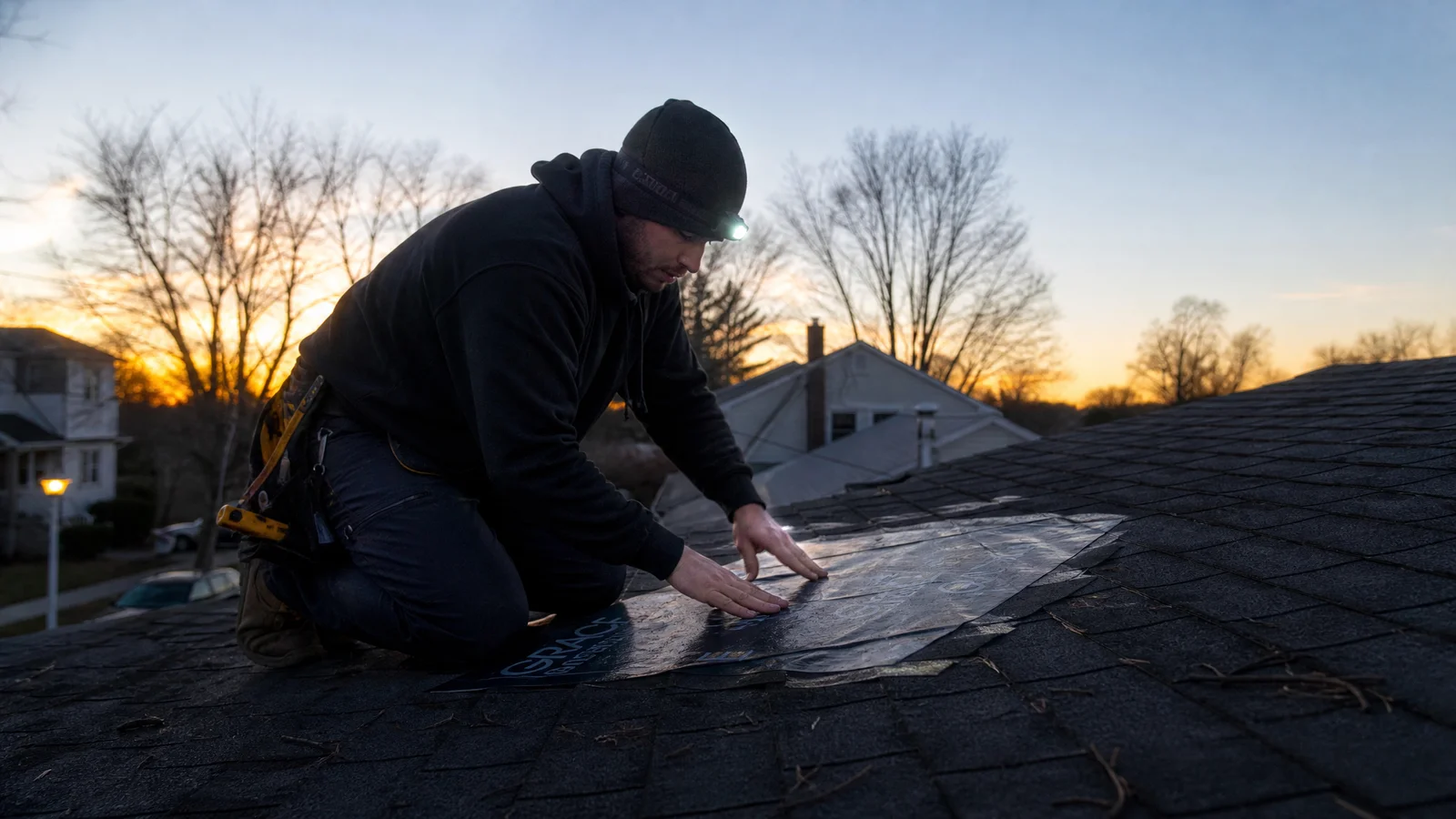
When you call for emergency roof repair, you are requesting a specific type of service with a defined scope. Understanding exactly what that service includes helps you set the right expectations and avoid confusion about what happens after the crew leaves.
This guide walks through every step of the process as West Hartford Roofing handles it, from the moment you pick up the phone through insurance coordination and permanent repair scheduling.
Step 1: Phone Triage and Dispatch
The process starts when you describe the situation to our dispatch team. They assess severity based on three factors: whether water is actively entering the building, whether electrical or structural hazards exist, and whether weather conditions are worsening.
Based on that assessment, one of two things happens. For true emergencies with active intrusion, a crew is dispatched immediately. For situations that can safely wait, we schedule a next-morning visit and walk you through interim protective steps over the phone.
Typical dispatch-to-arrival windows for West Hartford and surrounding towns run 1 to 3 hours during business hours and 2 to 4 hours after hours.
Step 2: On-Site Safety and Damage Assessment
Before anyone touches the roof, the crew conducts a full safety check. They verify that the deck structure is sound enough to support a worker, identify electrical hazards, and assess fall-protection requirements. OSHA mandates personal fall arrest systems on any walking surface with an unprotected edge above six feet.
The assessment phase typically takes 15 to 30 minutes and covers:
- Exterior inspection from ground level and ladder access points
- Attic inspection to locate the actual water entry point (which is often far from where the ceiling stain appears)
- Interior damage evaluation to determine containment needs
- Structural integrity check of rafters, decking, and trusses
This assessment determines the scope and price of the emergency work. You receive the confirmed number before any repair begins.
Step 3: Temporary Repair Execution
The core emergency work takes 30 minutes to 2 hours depending on the damage extent. It falls into two categories based on what the situation requires.
Tarping for Large Exposures
When significant sections of roof are compromised, the crew deploys commercial-grade polyethylene tarps (10 to 20 mil thickness) secured with wooden battens screwed into sound decking. These covers extend at least 3 to 4 feet past the damaged area in all directions, following FEMA specifications for temporary roof covers.
Heavy-duty materials matter here. Hardware store tarps tear in moderate wind. Professional covers hold for 30 to 90 days, giving you time to schedule permanent repairs without rushing.
Targeted Patching for Isolated Damage
Not every emergency requires a full tarp deployment. A single failed flashing, a cracked pipe boot, or a few missing shingles can often be addressed with wet-surface roofing cement and industrial sealants designed to bond and cure even in rain. This emergency roof patch approach is faster, less expensive, and appropriate when the damage is contained to a small area.
Step 4: Interior Containment Guidance
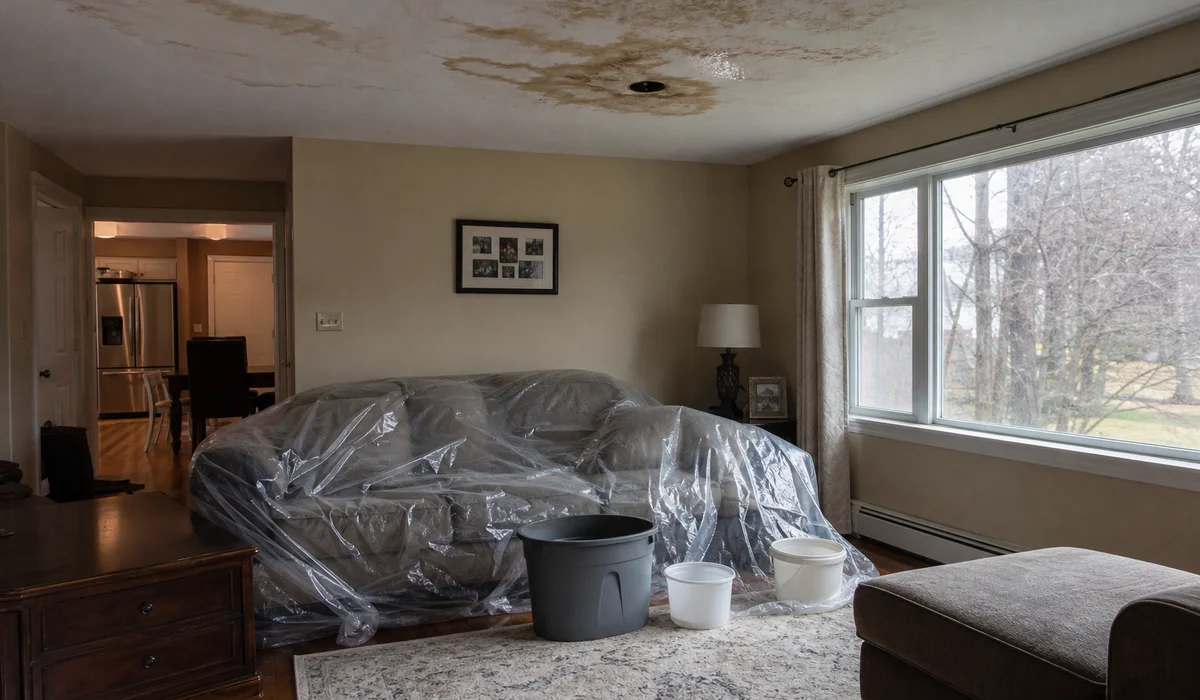
Sealing the exterior is only half the job. The crew also helps you protect the interior by identifying saturated drywall sections before moisture spreads into framing, advising on furniture and electronics relocation, and setting up plastic sheeting and water catches for any residual dripping.
Catching interior damage early prevents the moisture from migrating into wall cavities where it becomes invisible and far more expensive to address later.
Step 5: Insurance Documentation
Insurance carriers require specific evidence to process storm damage claims. The crew captures high-resolution photos and measurements of the damage before and after the temporary repair. This documentation package includes:
- Photos of the damage source on the roof surface
- Images of interior water intrusion and affected materials
- Measurements of the compromised area
- A written scope of work for the emergency mitigation performed
This package becomes essential when you file your claim. Adjusters need to see the initial state of the damage, not just the aftermath of repairs.
What Emergency Service Does Not Include
The boundary between emergency mitigation and full restoration is important to understand before the crew arrives.
| Service Type | Primary Goal | Typical Cost Range | Expected Lifespan |
|---|---|---|---|
| Emergency Tarping | Stop immediate water entry | $450 to $800 | 30 to 90 days |
| Permanent Repair | Restore structural integrity | Varies by damage | 15 to 30+ years |
| Mold Remediation | Remove interior health hazards | $1,200 to $3,700 | Permanent |
Permanent roof repairs happen after weather clears and insurance scope is confirmed. Full shingle replacement, decking repair, and structural rebuilds require dry conditions and proper material ordering.
Interior drying and mold remediation fall outside a roofer’s scope. If significant water has entered the building, a dedicated water restoration company handles extraction, structural drying, and mold treatment. Industry data shows mold remediation averaging around $2,300, making fast initial response critical to avoid that cost entirely.
Insurance filing must be initiated by the property owner. We supply all documentation, but the homeowner contacts the carrier directly to open the claim.
Why One Contractor for Both Phases Matters
Using the same team for emergency response and permanent repair eliminates the handoff problems that plague multi-contractor recoveries. Documentation stays consistent, scheduling moves faster because existing emergency customers receive priority for permanent work, and accountability remains with a single company from start to finish.
Storm chasers who install a temporary roof repair and disappear leave homeowners scrambling to find a second contractor willing to take over mid-project. That delay extends the time your home sits under a temporary cover and complicates insurance coordination.
See our emergency roof repair service for the full scope of what is included. For guidance on whether your situation requires emergency tarping specifically, that guide covers the decision framework.
For active damage right now, call our 24/7 line.
Frequently Asked Questions
Is an emergency repair permanent? ▼
No. It stabilizes the roof to stop active water intrusion. Permanent repair or replacement follows once weather clears and insurance scope is confirmed, typically days to weeks later.
Do you work in the rain? ▼
For active emergencies, yes. We can tarp and contain in most conditions to stop ongoing intrusion. Permanent shingle work waits for dry weather.
How much does emergency service cost? ▼
Emergency calls typically run $400 to $2,000 depending on damage scope and timing. After-hours premiums apply. Insurance often covers this as storm damage mitigation.
Ready to talk to a roofer?
Read about our emergency roof repair in west hartford service or get a free estimate.
Related Guides
Emergency Roof Repair Cost and Response Times
How much does emergency roof repair cost in West Hartford, and how quickly can a crew arrive? Real pricing data and response windows for Hartford County homeowners.
When a Roof Leak Is an Emergency
Not every roof leak requires an emergency call. Learn the specific signs that indicate danger - active water flow, structural risk, electrical hazards - and how to respond at each urgency level.