Last updated:
Flat Roof Repair for West Hartford Commercial Properties
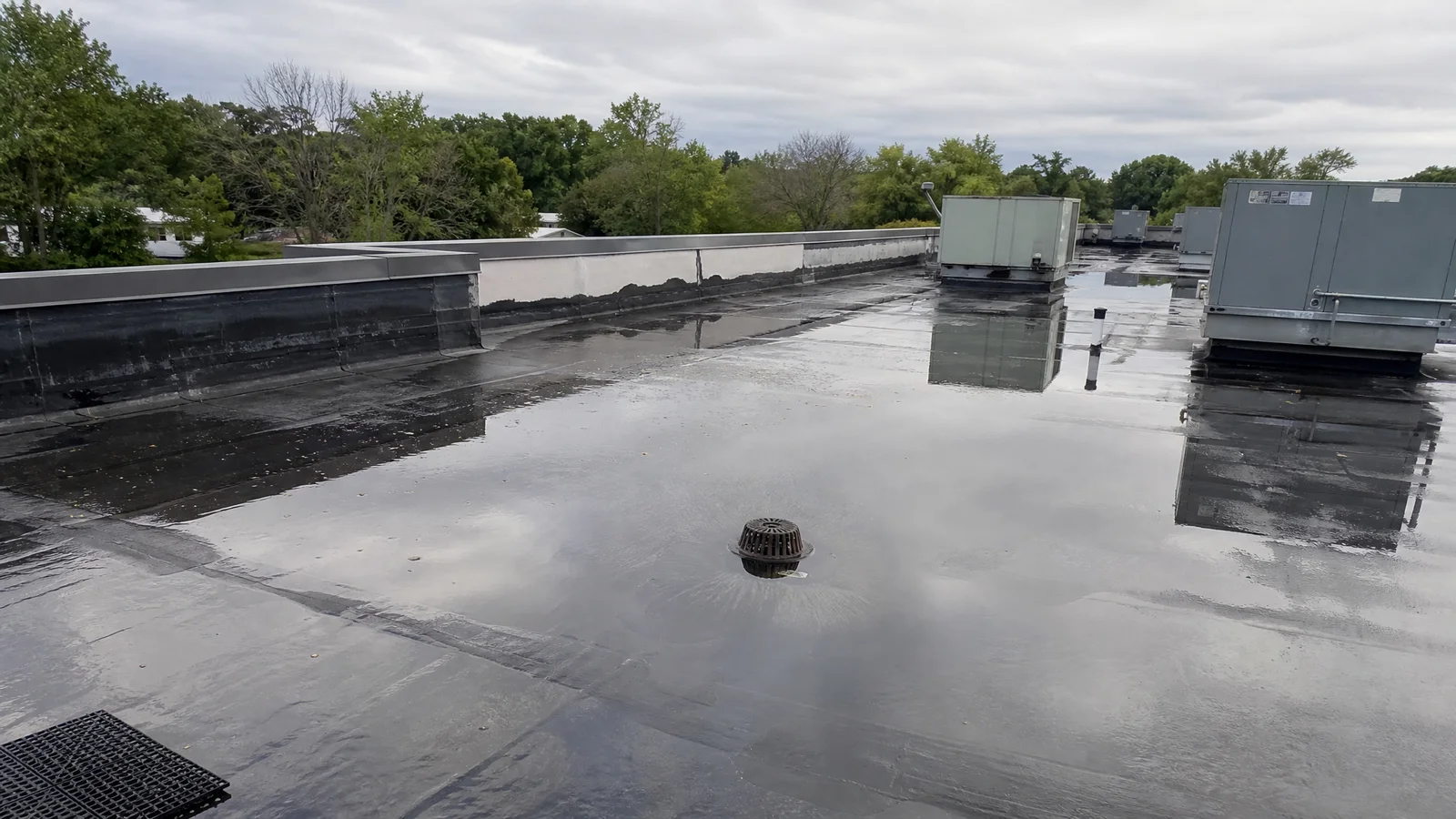
Managing a commercial flat roof is fundamentally different from dealing with a residential shingle roof. Membrane welds replace shingle overlaps, internal drains take the place of standard gutters, and complex perimeter flashing ties the wall system together at every edge. When any of these components fail, the leak path is often difficult to trace and even harder to fix without the right experience.
West Hartford’s commercial corridors along Farmington Avenue, Park Road, and New Park Avenue are lined with retail plazas, professional offices, and mixed-use buildings that rely on flat roofing systems. The newer transit-oriented developments near CTfastrak stations add even more flat-roofed commercial stock to the area. We repair EPDM, TPO, and modified bitumen membranes on these properties, working around tenant schedules and business operations to minimize disruption.
How We Diagnose Flat Roof Problems
A 2026 construction industry report found that 80 percent of all commercial flat roof leaks originate at seams or penetrations. Our diagnostic process targets these exact vulnerabilities using thermal imaging cameras to detect hidden moisture beneath the membrane surface. This technology pinpoints the precise location that needs attention, saving you the cost of exploratory tear-ups.
The assessment covers every element of the flat roof system:
- Membrane field condition and surface wear
- Seam integrity across the entire roof area
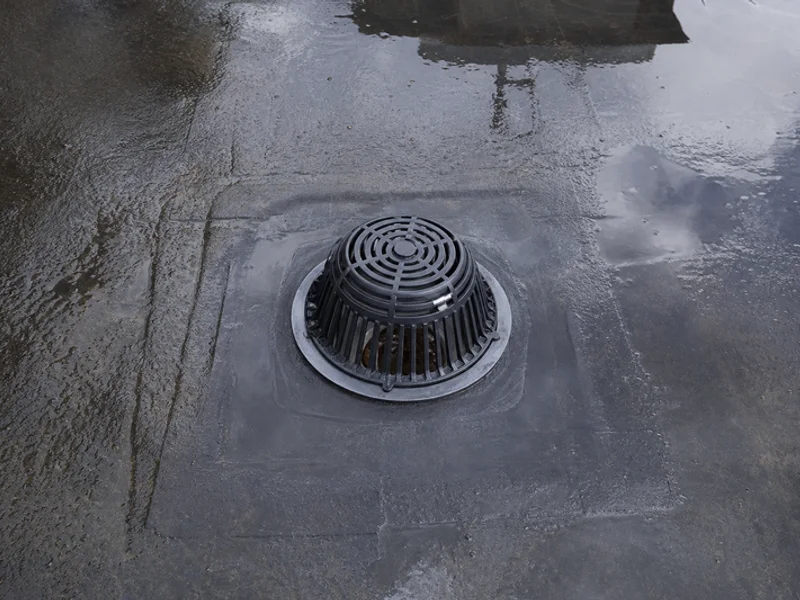
- Drain and scupper flow testing
- Perimeter and wall flashing condition
- Penetration boots around HVAC units, vents, and pipes
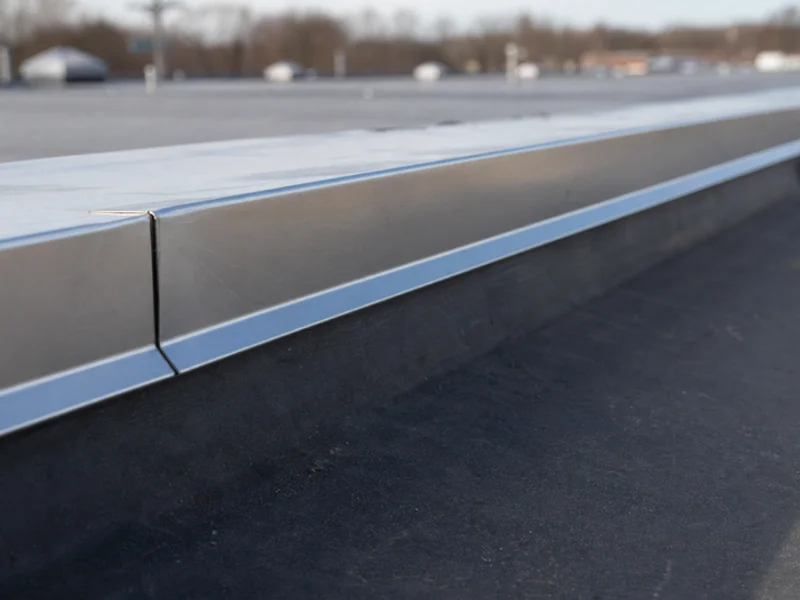
- Coping caps and edge-metal condition
You receive a written scope that separates urgent repairs from items that can safely wait. Property managers use this report for capital expenditure planning and to keep building owners informed about the condition of their asset.
EPDM Repair Techniques
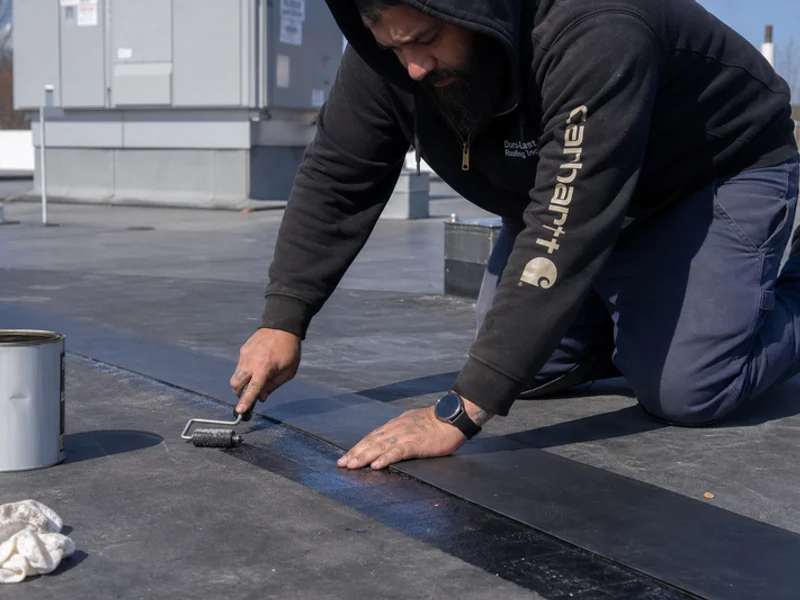
EPDM (black rubber) membranes are common on older commercial buildings throughout the Design District and along the I-84 corridor. These roofs are durable, but they can develop seam shrinkage over time, especially if the rubber was not given adequate time to relax during the original installation. That tension slowly pulls seams apart, creating a direct path for rainwater.
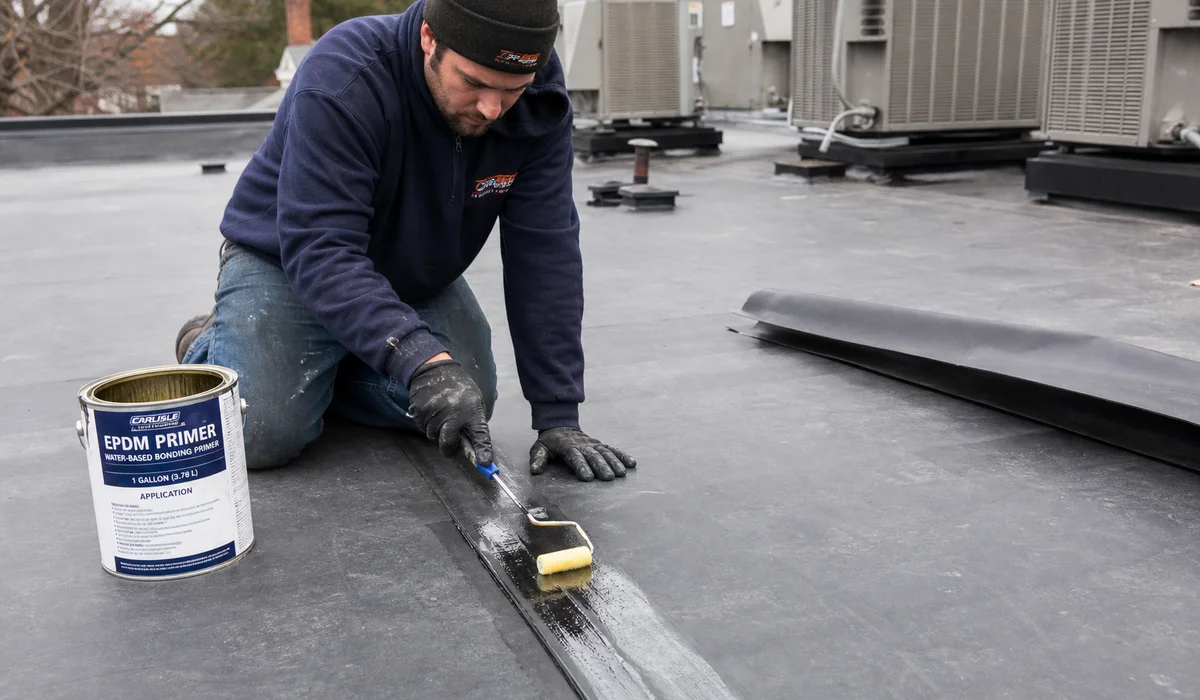
Our technicians clean the affected area thoroughly, then apply specialized EPDM liquid adhesives to create a fresh, watertight bond. Patches use compatible EPDM material that integrates seamlessly with the existing field. This technique restores the original waterproofing performance without requiring a full membrane replacement.
TPO Repair and Hot-Air Welding
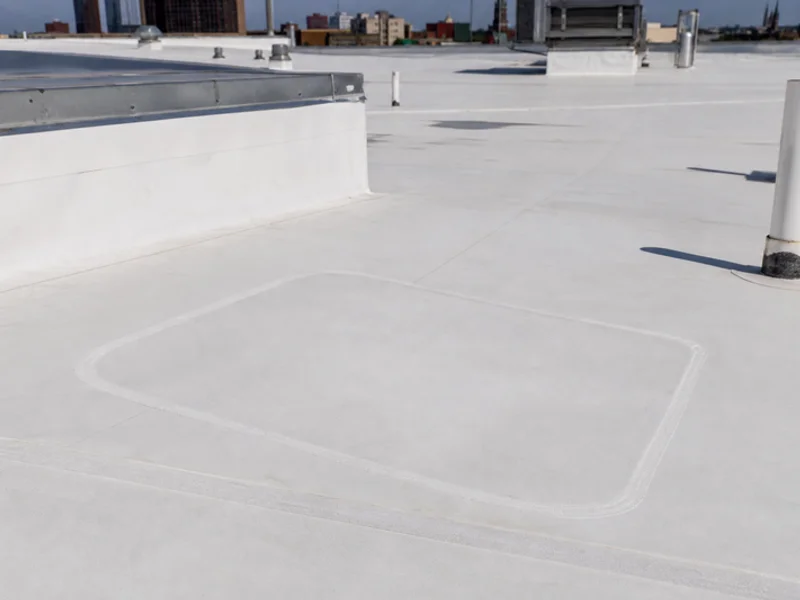
TPO (white, heat-reflective) membranes require precise hot-air welding to fuse the thermoplastic layers back together. Our crews use commercial-grade heat welders calibrated to the exact temperature and speed required for a proper weld. The result is a patch that bonds at the molecular level with the original membrane.
National pricing data from 2026 shows that an average flat roof repair costs between $1,200 and $5,500, depending on damage size and insulation condition. Our goal is keeping your costs on the lower end by catching problems before they spread.
| Feature | TPO (Thermoplastic Polyolefin) | EPDM (Ethylene Propylene Diene Monomer) |
|---|---|---|
| Material Type | White, heat-reflective plastic | Black, synthetic rubber |
| Repair Method | Hot-air welding fuses patches | Liquid adhesives and seam tape |
| Common Vulnerability | Punctures from foot traffic | Seam shrinkage over time |
| Expected Lifespan | 20 to 30 years | 20 to 30 years |
When to Repair and When to Replace
Property managers always want to know if a targeted repair is sufficient or if the entire membrane needs to come off. We will never push a full replacement when the existing roof has years of useful life remaining.
Major manufacturers like GAF and Elevate confirm that a properly installed flat roof membrane should last 20 to 30 years. We verify the age and overall condition of your system before recommending any significant capital expenditure.
If the membrane is generally intact and the failures are localized to a few seams or one drain area, a targeted repair is the right call.
We recommend replacement when seams are failing across the entire field and thermal imaging reveals wet insulation in multiple zones. Trapped moisture degrades the structural decking underneath, creates safety risks, and drives up heating costs through the compromised insulation.
Scheduling Repairs Around Your Business
Commercial flat roof work requires coordination that residential jobs do not. Tenants need to know about noise, staging areas block parking spaces, and material deliveries may require temporary lane closures on busy streets like Farmington Avenue or Park Road.
We schedule work during early mornings, late afternoons, or weekends whenever possible. For retail plazas and restaurant buildings in Blue Back Square and West Hartford Center, we communicate directly with tenants about timing, access, and what to expect. The goal is always a watertight repair with minimal disruption to your revenue stream.
Every property gets both options in writing, with photo evidence and clear pricing. That transparency lets you make a confident decision for your building. Call West Hartford Roofing at (203) 824-0275 to schedule a commercial flat roof assessment.