How Clogged Gutters Damage Your Roof and Fascia: Warning Signs by Urgency
Clogged gutters cause water backup, fascia rot, ice dams, and foundation problems. Learn the specific warning signs for each issue and how urgently each needs attention.
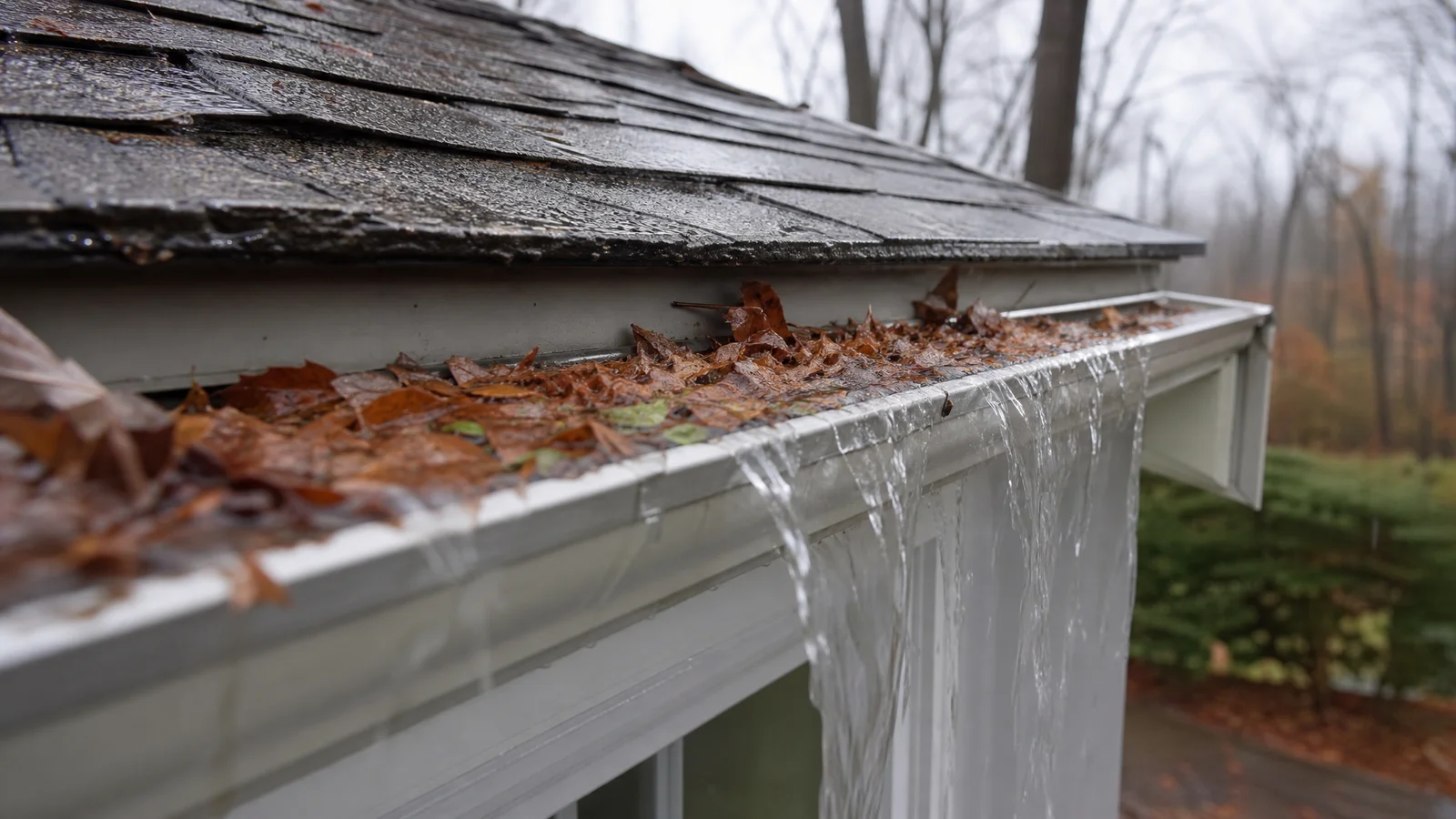
Gutters and roofs are not separate systems. They work as a single drainage unit, and when one fails, the other suffers. Most West Hartford homeowners do not realize how quickly clogged gutters escalate from a minor nuisance into structural damage that requires thousands of dollars in repairs.
Each type of clogged gutter damage follows a predictable progression with specific warning signs. Recognizing those signs early and understanding how urgently each needs attention is the difference between a $200 cleaning and a $5,000 restoration.
Drip Edge and Underlayment Failure - Urgency: High
The most direct path from clogged gutters to roof damage starts at the drip edge. The International Residential Code, Section R905.2.8.5, mandates a metal drip edge on all asphalt shingle roofs. This flashing directs water off the roof deck and into the gutter channel. When gutters overflow, pooling water backs up directly under that flashing and reaches the underlayment beneath the shingles.
Repeat this every rain event for a few seasons, and the damage compounds in a specific sequence:
- The drip edge lifts as water forces its way underneath
- Underlayment rots at the eaves where moisture sits longest
- Fascia board behind the gutter begins to decay
- Soffit panels absorb moisture from above
- Wall sheathing at the roof edge starts to fail
Warning signs to watch for: Water streaking down the fascia during rain, paint peeling on the fascia or soffit, visible gaps between the gutter and the fascia board, or shingle edges that appear lifted or curled at the eave line.
Why this is high urgency: None of this damage is visible from the ground until it becomes severe. By the time you notice paint peeling or soft spots in the fascia, the wood behind the gutter has been rotting for months. Drip edge repair costs $300 to $600 in 2026. Waiting until the underlayment and fascia are compromised pushes that number well past $2,000.
Ice Dam Formation - Urgency: Critical (Winter)
Clogged gutters filled with frozen debris become the foundation for ice dams. Water that cannot drain freezes in place and builds upward until the entire gutter channel becomes a solid mass of ice. That mass forces meltwater back under the shingles and directly into the attic or living space below.
West Hartford receives 38 to 52 inches of snow in a typical winter. The historic Colonials and Cape Cods throughout neighborhoods like West Hartford Center and Elmwood are particularly vulnerable because their roof geometry creates natural accumulation points where ice dams form.
Warning signs to watch for: Icicles hanging from gutter edges, ice forming along the roofline above the gutter, water stains on interior ceilings near exterior walls, or gutters that appear visibly weighed down or pulling away from the fascia during winter months.
Why this is critical urgency: Active ice dam leaks cause immediate interior water damage to ceilings, walls, and insulation. Professional ice dam removal runs $650 to $2,400 per event. West Hartford Roofing treats ice dam leaks as a two-problem situation: the gutter drainage failure needs fixing alongside any attic ventilation issues that allow warm air to melt snow unevenly.
If ice starts forming, use calcium chloride pucks rather than rock salt. Rock salt accelerates asphalt shingle deterioration.
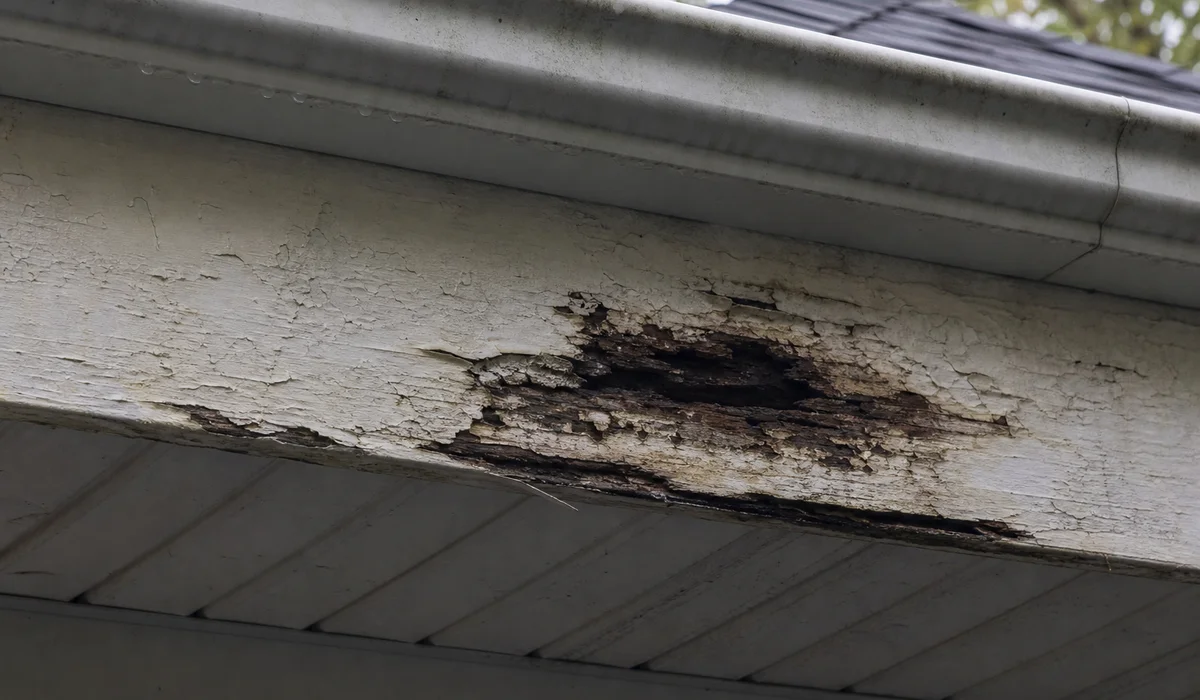
Fascia and Soffit Rot - Urgency: Moderate to High
Fascia and soffit that stay continuously wet from gutter overflow eventually rot through. Once the wood decay takes hold, cosmetic repairs like repainting or rehanging the gutter will not solve the underlying problem. The rot spreads into the wall system behind the fascia and creates entry points for insects and further moisture intrusion.
Warning signs to watch for: Soft or spongy fascia when pressed with a finger, visible fungal growth or dark staining on the wood, gutter sections that sag or pull away from the house, insect activity around the soffit vents, or peeling paint that exposes discolored wood underneath.
Urgency assessment: Moderate if the rot is confined to a small section of fascia and the wood behind it is still firm. High if multiple sections are affected or if you can push a screwdriver into the fascia with minimal resistance. Full fascia replacement runs $14 to $22 per linear foot, with a typical home reaching $2,500 for a complete job. The cost escalation from delayed maintenance is steep:
| Action | Average Cost | What It Addresses |
|---|---|---|
| Routine gutter cleaning | $150 to $300 | Prevents overflow and protects all downstream components |
| Gutter rehang (per section) | $200 to $500 | Restores proper pitch and attachment |
| Fascia replacement | $500 to $2,500 | Replaces rotted wood and restores gutter mounting surface |
| Full fascia, soffit, and wall repair | $3,000+ | Addresses advanced rot that has spread into the wall system |
Foundation and Grading Erosion - Urgency: Low to Moderate
Uncontrolled gutter overflow dumps hundreds of gallons of water directly next to the foundation during every storm. Over time, this saturates the soil, erodes grading, and can lead to basement water infiltration or foundation settling.
Warning signs to watch for: Erosion channels in the soil directly below gutter sections, basement dampness or water intrusion after heavy rain, visible foundation cracks near downspout discharge areas, or grading that slopes toward the house rather than away from it.
Urgency assessment: Low if grading erosion is the only symptom and the foundation shows no cracking. Moderate if basement moisture is present or foundation cracks are developing. National average foundation repair costs sit around $5,179 and can exceed $10,000 for major structural shifts. Keeping gutters clear and ensuring downspouts discharge at least four feet from the foundation prevents this entire chain of damage.
Seasonal Cleaning Schedule for Connecticut Homes
Most properties need gutter service twice a year at minimum. The two critical windows are late fall (November) after the leaves drop and before the first snow, and spring (April) after winter debris clears and before spring rains begin.
Homes with heavy tree cover, particularly those with large oaks or maples, often need a third cleaning in early summer. Oak flowers and maple seeds drop heavily in late May and can block downspouts within days.
What a Full Gutter Assessment Covers
During service, our crews check debris removal with a flow test, gutter pitch to confirm water reaches the downspouts, hanger and seam integrity, downspout condition and discharge distance, fascia condition behind the gutter, roof edge and drip edge status, and whether gutter guards make sense for your tree coverage. We verify that your system uses .032 gauge aluminum rather than the thinner .027 gauge, which warps under Connecticut snow loads.
When clogged gutters roof damage has progressed to the point where the roof edge needs restoration, the gutter work and roof repair need to happen together. Fascia replacement requires pulling the gutter, and drip edge repair is part of a complete roof edge restoration. See our gutter and drainage repair service for full-system solutions or our ice dam repair service for winter-specific issues.
Ready to prevent expensive damage with routine maintenance? Request a free gutter assessment today.
Frequently Asked Questions
Can gutters really damage my roof? ▼
Yes. Backed-up water rots the roof edge, fascia, and soffit over time and directly contributes to ice dam formation. Gutters are part of the roof system, not a separate item.
How often should gutters be cleaned? ▼
At least twice a year in Connecticut, in spring and late fall, plus after heavy leaf drop. Homes with significant tree cover often need a third cleaning in early summer.
Are gutter guards worth it? ▼
In wooded neighborhoods like parts of Westmoor Park or Bishops Corner, they dramatically reduce cleaning frequency. On more open lots, twice-a-year manual cleaning may be simpler and cheaper.
Ready to talk to a roofer?
Read about our gutter & roof drainage repair service or get a free estimate.