Roof Replacement Cost in Connecticut (2026)
Line-by-line cost breakdown for a CT roof replacement covering materials, labor, permits, and disposal with real 2026 price ranges for West Hartford homeowners.
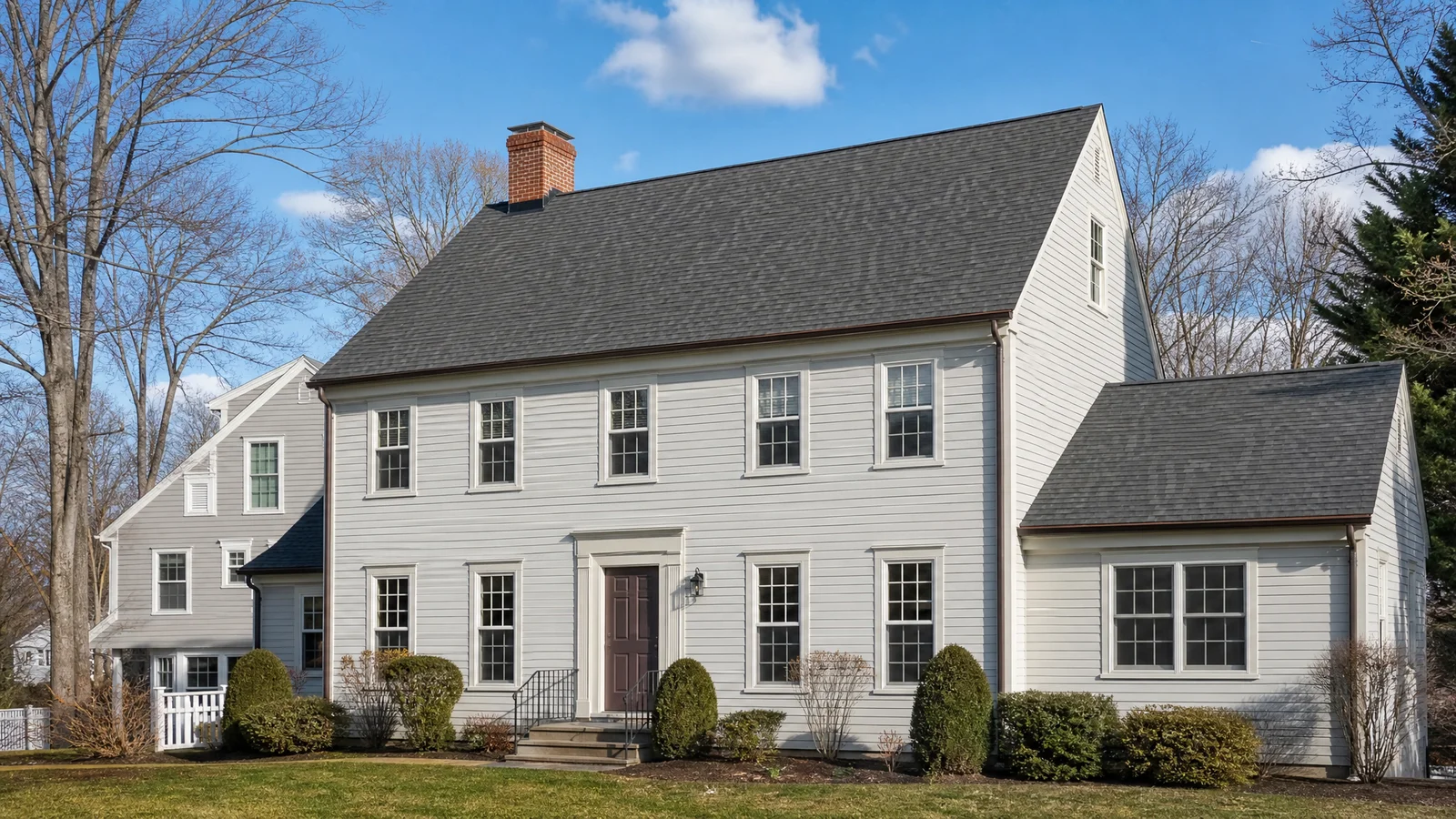
Getting a clear picture of roof replacement cost in Connecticut starts with understanding exactly where the money goes. The state-level cost overview covers average ranges across the market. This guide goes deeper with a line-by-line breakdown based on real 2026 pricing for Hartford County projects.
Every number below reflects current material costs, labor rates, and code requirements specific to Connecticut residential construction.
Total price range for a standard replacement
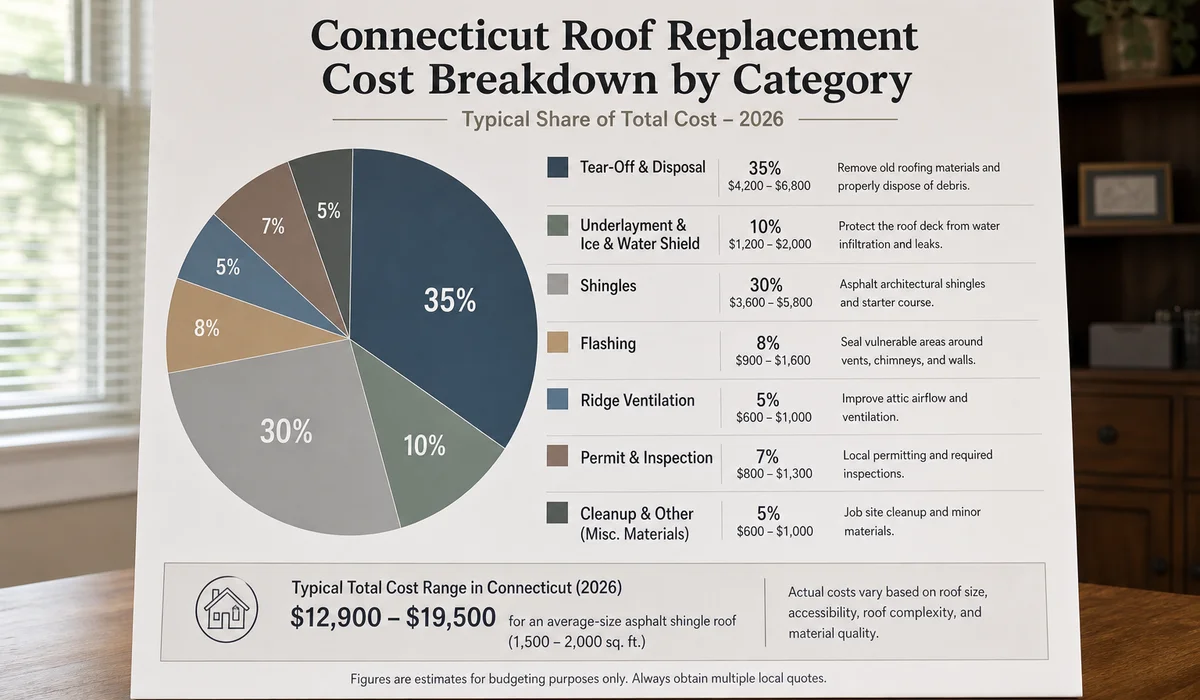
A complete asphalt shingle replacement on a typical 2,200 square foot West Hartford home runs $9,000 to $18,000+ in 2026. That range covers everything from tear-off through final cleanup, including permits and a workmanship warranty.
Where you land within that spectrum depends on roof size, pitch, geometry, material grade, and the condition of the existing deck. The itemized breakdown below shows exactly how each component contributes to the total.
Itemized cost breakdown: 2,200 sq ft Colonial
The following figures reflect a standard architectural shingle installation on a two-story Colonial, the most common home style in West Hartford neighborhoods like Elmwood, Bishops Corner, and the areas surrounding Blue Back Square.
Tear-off and disposal: $1,000 - $1,800
Stripping the existing roof down to bare decking, loading debris into a 20-yard dumpster, and paying transfer station fees. Connecticut transfer stations charge by weight or volume for asphalt shingle disposal, and rates vary by municipality.
Decking inspection and repair allowance: $300 - $800
A baseline allowance covers replacement of up to four sheets of half-inch plywood or 7/16-inch OSB. Most roofs need zero to four sheets. Additional sheets run $80-$120 each, fully installed. Older West Hartford homes built in the 1930s-1950s occasionally need more extensive deck work.
Synthetic underlayment: $300 - $500
Full-coverage synthetic rolls (GAF Deck-Armor, Owens Corning Deck Defense) replace outdated felt paper. This secondary water barrier covers the entire roof surface and provides superior moisture resistance and tear strength.
Ice-and-water shield: $500 - $900
Connecticut building code (section R905.1.2) requires self-adhering membrane at all eaves, extending at least 24 inches past the interior wall line. This component is non-negotiable for preventing ice dam leaks during freeze-thaw cycles.
Drip edge: $150 - $300
Aluminum flashing along all rakes and eaves that directs water into the gutters and prevents moisture from wicking back under the shingle edges. Protects fascia boards from rot.
Starter shingles: $150 - $300
Purpose-built starter strips along all leading edges provide wind hold-down and are required by manufacturers for full warranty coverage.
Field shingles (architectural): $3,500 - $6,500
Standard architectural products like the GAF Timberline HDZ or Owens Corning TruDefinition Duration. Upgrading to designer or luxury lines adds $2,000-$5,000. See the architectural vs designer shingles comparison for a detailed breakdown of each tier.
Ridge vents and cap shingles: $400 - $700
Continuous ridge ventilation paired with matching cap shingles. Connecticut enforces a 1:150 ventilation ratio to prevent attic condensation. If existing soffit intake is insufficient, adding new vents costs $200-$800 extra.
Flashing (step, counter, apron): $500 - $1,200
New aluminum step and counter flashing at chimneys, walls, and skylights. Fresh apron metal at every roof-to-wall junction. Reusing old flashing is a common source of premature leaks.
Pipe boots: $75 - $200
Replacement rubber gasket boots on all plumbing vent penetrations. These seals degrade under UV exposure and freeze-thaw cycling and should be replaced with every re-roof.
Permits: $150 - $500
Municipal permit fees vary by town. West Hartford Roofing handles the application, scheduling, and final inspection coordination.
Cleanup and magnet sweep: $200 - $400
Magnetic nail sweep of the entire property, debris removal, landscape tarp collection, and driveway inspection.
Workmanship warranty: Included
A comprehensive workmanship guarantee is included at no separate charge on every project.
Summary cost table
| Category | 2026 Price Range |
|---|---|
| Tear-off, Disposal, and Permits | $1,150 - $2,300 |
| Decking, Underlayment, and Ice Shield | $1,100 - $2,200 |
| Shingles, Starters, and Drip Edge | $3,800 - $7,100 |
| Ventilation, Flashing, Boots, and Cleanup | $1,175 - $2,500 |
| Baseline Total (Architectural) | $7,225 - $14,100 |
Variables that shift the price 20% or more
Six site-specific factors create the biggest swings between the low and high ends of the range:
- Roof size. A 1,500 sq ft ranch versus a 3,600 sq ft two-story creates roughly a 2.4x multiplier on materials and labor.
- Pitch and complexity. Steep hip-and-valley geometry demands safety rigging and slower crew movement, adding cost per square foot over simple gable designs.
- Existing layers. Tearing off two layers increases labor time and disposal weight by approximately 50%.
- Material grade. Jumping from standard architectural to designer or luxury shingles adds a 20-40% material premium.
- Access difficulty. Tight driveways, elevated landscaping, or limited staging areas add several hundred dollars for equipment positioning and property protection.
- Decking condition. Extensive rot requiring ten or more sheet replacements can add $800-$1,200 beyond the standard allowance.
Reading a quote: what to watch for
A well-structured estimate lists each material and task as a separate line item. Be cautious of quotes that lump everything into a single “labor and materials” figure. That structure makes it impossible to compare bids or verify that critical components like ice-and-water shield and proper flashing are actually included.
Items like nail patterns, valley lacing methods, ventilation calculations, and cleanup are standard parts of professional installation. They should be built into the scope of work, not presented as optional add-ons with separate charges.
Financing options
A full roof replacement is a significant investment, and paying out of pocket is not the only path forward. Available financing structures include:
- 12-month interest-free plans for qualified buyers on projects above minimum thresholds
- 60-month term plans with competitive fixed rates and manageable monthly payments
- 120-month extended terms suited for larger projects or designer-shingle installations
Cash and financed pricing can be compared side by side so the total cost over the life of the loan is clear before signing. A home equity line of credit is another viable option worth evaluating.
Getting your specific number
The breakdown above provides an accurate template, but the number that matters is the one calculated from your actual roof measurements, pitch, penetration count, and material selection. Request a free written estimate to get every line itemized for your specific property.
Frequently Asked Questions
What's included in your quote? ▼
Every line is itemized: tear-off, disposal, decking allowance, synthetic underlayment, ice-and-water shield, drip edge, starter strips, field shingles, ridge vents, flashing, pipe boots, permits, cleanup, and workmanship warranty.
Do permits add much cost? ▼
Permit fees in Connecticut are modest, typically $150-$500 depending on the municipality. West Hartford Roofing handles the application and inspection scheduling.
Is financing available? ▼
Yes. Financing programs are available that spread the cost over 12-120 months with competitive rates for qualified buyers.
Ready to talk to a roofer?
Read about our roof replacement in west hartford service or get a free estimate.
Related Guides
Architectural vs. Designer Shingles: Choosing the Right Tier
Side-by-side comparison of architectural and designer shingles covering cost, lifespan, wind ratings, and curb appeal for West Hartford homeowners.
When to Replace Your Roof in Connecticut: Seasonal Guide
Compare fall, spring, summer, and winter for scheduling a Connecticut roof replacement. See the tradeoffs for each season and why delaying can lead to costly winter damage.
The Roof Replacement Process, Step by Step
Every phase of a residential roof replacement explained with concrete steps and durations, from the initial inspection through final walkthrough.
How Long Does a Roof Replacement Take?
Most West Hartford roof replacements finish in 1-2 days. See how roof size, complexity, and Connecticut weather affect your project timeline.