How Long Does a Roof Replacement Take?
Most West Hartford roof replacements finish in 1-2 days. See how roof size, complexity, and Connecticut weather affect your project timeline.
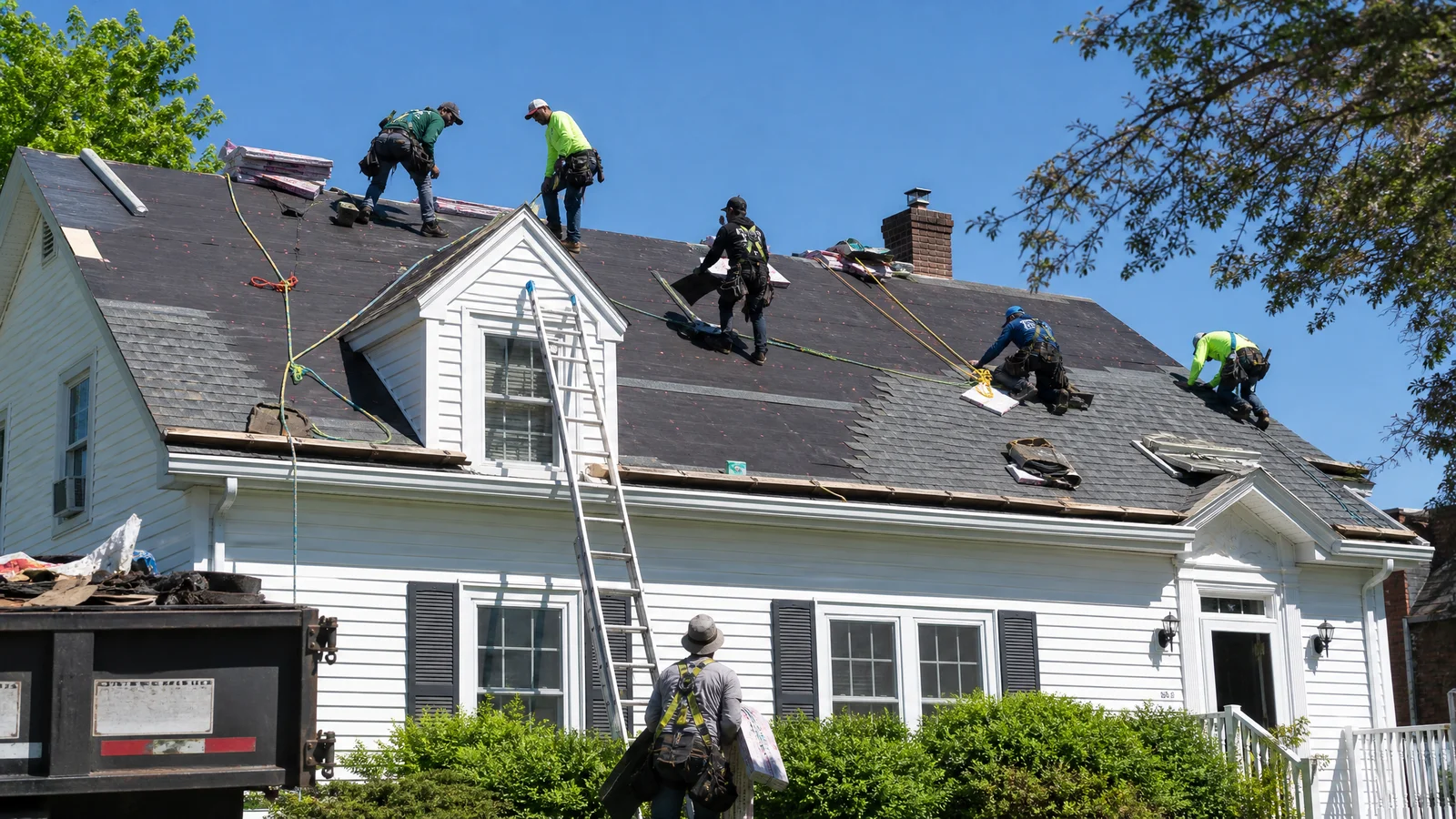
The timeline for a roof replacement depends on three primary factors: the square footage of the roof, the complexity of its geometry, and the weather on installation day. Understanding these variables helps you plan around the project with realistic expectations.
This guide breaks down the concrete milestones for each project length, explains what causes delays, and covers the steps that should never be rushed regardless of schedule pressure.
One-day replacement: what qualifies
The majority of residential roof replacements in West Hartford fall within a single-day window. Homes in the 1,500 to 2,500 square foot range with moderate roof pitch and straightforward geometry are ideal candidates for same-day completion.
A five to seven person crew follows a structured schedule to move through each phase without gaps or bottlenecks. Here is how a typical single-day project breaks down hour by hour:
- 7:00 AM - Materials staged, tarps placed to protect landscaping and siding
- 8:00 AM - Tear-off begins at the ridge and works downward in sections
- 12:00 PM - Old shingles removed, decking inspected and any soft spots repaired
- 12:30 PM - Synthetic underlayment, ice-and-water shield, and drip edge installed
- 2:00 PM - Field shingles going on, working from eave to ridge
- 5:00 PM - Ridge cap installed, flashing completed at all penetrations
- 6:00 PM - Magnetic nail sweep, debris removal, and final walkthrough with the homeowner
This schedule assumes a standard architectural shingle like the GAF Timberline HDZ or Owens Corning Duration on a roof with 20 to 30 squares of surface area. A square equals 100 square feet of installed shingle.
Two-day projects: size and complexity
Larger homes and intricate rooflines push the roof install time into a second day. The threshold sits around 2,500 square feet or any roof with significant architectural detail that demands precision flashing work.
| Factor | One-Day Project | Two-Day Project |
|---|---|---|
| Roof Area | 1,500 - 2,500 sq ft | 2,500 - 3,600 sq ft |
| Pitch | Under 7:12 | 7:12 or steeper |
| Geometry | Simple gable or hip, few penetrations | Multiple valleys, dormers, skylights, chimney |
| Typical Home Style | Ranch, Cape Cod, small Colonial | Large Colonial, Tudor, multi-level |
Steep slopes above 7:12 pitch require safety rigging that significantly slows crew movement across the deck. The historic Colonials and Tudors common in neighborhoods like West Hartford Center and Elmwood often have steep upper stories combined with multiple dormers, creating exactly this combination of height and complexity.
On a two-day project, day one covers tear-off, deck inspection, repairs, and underlayment. Day two handles shingle installation, all detail work at valleys and penetrations, and final cleanup.
Three-day scenarios and what causes them
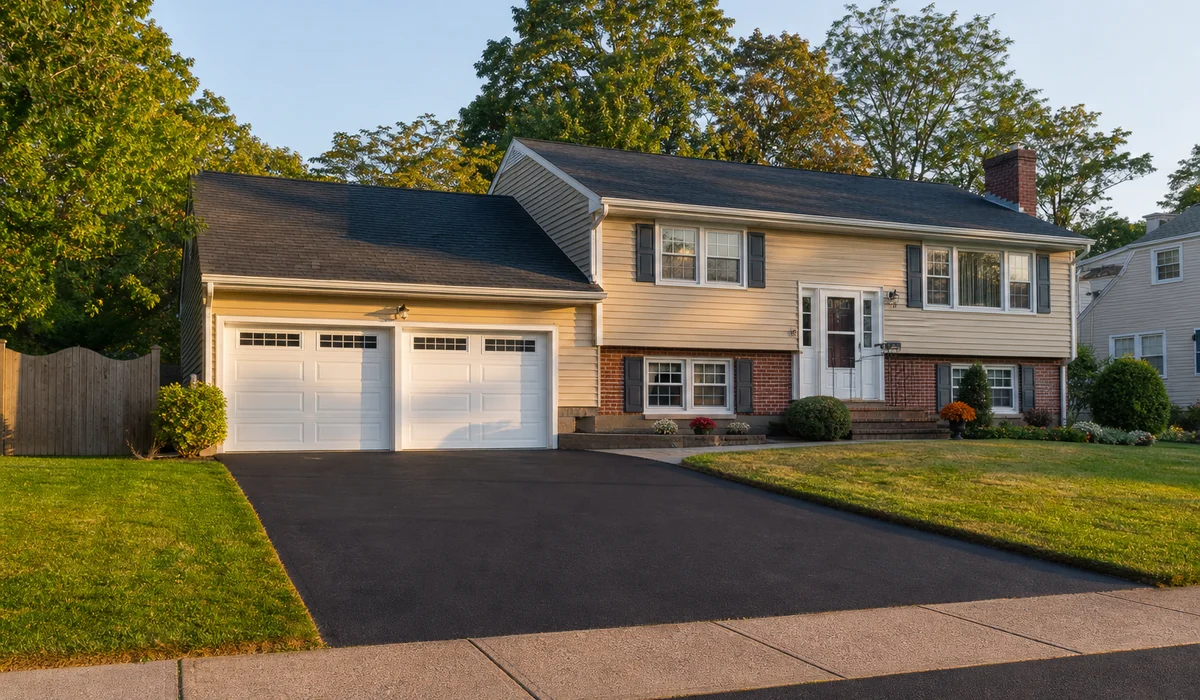
A roof replacement timeline extending to three days is less common but not unusual. The primary causes are hidden structural damage and specialty materials.
Widespread decking rot is the most frequent surprise. Removing old shingles from a home built in the 1940s or 1950s sometimes reveals multiple sheets of deteriorated OSB or plywood that need replacement before any new materials can go on. Each full sheet swap takes 20 to 30 minutes, and a roof with ten or more compromised sheets can easily absorb a full extra day.
Other factors that extend the timeline:
- Complex cut-up geometry with four or more valleys requiring individual flashing sequences
- Second-story access constraints that limit staging options and crew positioning
- Designer or luxury shingle products that are heavier and require slower, more deliberate placement
- Weather interruptions that force work to stop and restart after a delay
Steps that never get rushed
Speed matters, but certain installation steps directly determine how the roof performs over its entire lifespan. These are the non-negotiable items that take as long as they take.
Ice-and-water shield coverage. The IRC requires a minimum 36-inch self-adhering membrane at the eaves. Connecticut’s freeze-thaw cycles make this component critical. Cutting it short to save 30 minutes of labor creates a leak path that shows up within three winters.
Step flashing at walls and chimneys. Properly interlacing individual flashing pieces along a sidewall or around a chimney takes precision and patience. This detail work is exactly where most future leaks originate when shortcuts are taken.
Weather-tighting before stopping. The crew never leaves a partially torn-off section exposed overnight. If conditions change mid-day, work pauses and the exposed area gets sealed with underlayment before anything else happens. West Hartford Roofing treats this as an absolute rule, not a preference.
Connecticut weather and scheduling windows
The most reliable installation season in Connecticut runs from April through mid-November. Asphalt shingle manufacturers specify a minimum ambient temperature of 40 degrees Fahrenheit for installation. Below that threshold, the thermal sealant strips on the shingle tabs do not activate properly, and the fiberglass matting becomes brittle and prone to cracking under the nail gun.
Winter installations are possible on suitable days, but they come with temperature restrictions and a higher likelihood of scheduling delays. See best time of year to replace a roof in Connecticut for a full seasonal breakdown.
What you receive at the estimate
Every project starts with a specific day count based on your actual roof measurements, pitch, penetration count, and geometry. The estimate includes a weather backup plan, a scheduling window (typically two to six weeks out depending on the season), and clear communication expectations.
Supply chains in 2026 are stable for standard colors and products. Specialty designer colors or local permit processing in West Hartford can occasionally affect the start date, but those variables are identified upfront.
Ready to get a realistic timeline for your roof? Request a free estimate and the crew will assess your specific property.
Frequently Asked Questions
Can a roof be replaced in one day? ▼
Yes. A standard-size home under about 2,500 square feet with moderate pitch and simple geometry can be completed in a single working day with a full crew and clear weather.
Does weather delay the job? ▼
Rain and high wind can pause work. The crew never leaves a roof exposed overnight. If tear-off begins, enough progress is made to weather-tight the roof before the end of the day.
What if my roof has complex geometry? ▼
Cut-up roofs with multiple hips, valleys, and dormers can extend the timeline to three days. A realistic day count is provided at the estimate based on your specific roof design.
Ready to talk to a roofer?
Read about our roof replacement in west hartford service or get a free estimate.
Related Guides
Architectural vs. Designer Shingles: Choosing the Right Tier
Side-by-side comparison of architectural and designer shingles covering cost, lifespan, wind ratings, and curb appeal for West Hartford homeowners.
When to Replace Your Roof in Connecticut: Seasonal Guide
Compare fall, spring, summer, and winter for scheduling a Connecticut roof replacement. See the tradeoffs for each season and why delaying can lead to costly winter damage.
Roof Replacement Cost in Connecticut (2026)
Line-by-line cost breakdown for a CT roof replacement covering materials, labor, permits, and disposal with real 2026 price ranges for West Hartford homeowners.
The Roof Replacement Process, Step by Step
Every phase of a residential roof replacement explained with concrete steps and durations, from the initial inspection through final walkthrough.