Full Tear-Off vs. Roof-Over: Understanding the Difference
Learn what separates a full tear-off from a roof-over, including CT code limits, warranty effects, and why tear-off is the better long-term investment.
When a roof reaches end of life, homeowners face a fundamental choice: strip everything down to the bare deck or install new shingles directly on top of the existing layer. The roof tear off vs roof over question comes up on nearly every project estimate, and the answer has major implications for building code compliance, manufacturer warranty coverage, and how long the new roof actually lasts.
This guide defines both approaches, explains the structural and financial differences, and clarifies why a complete tear-off is the standard recommendation for West Hartford homes.
Defining a full tear-off
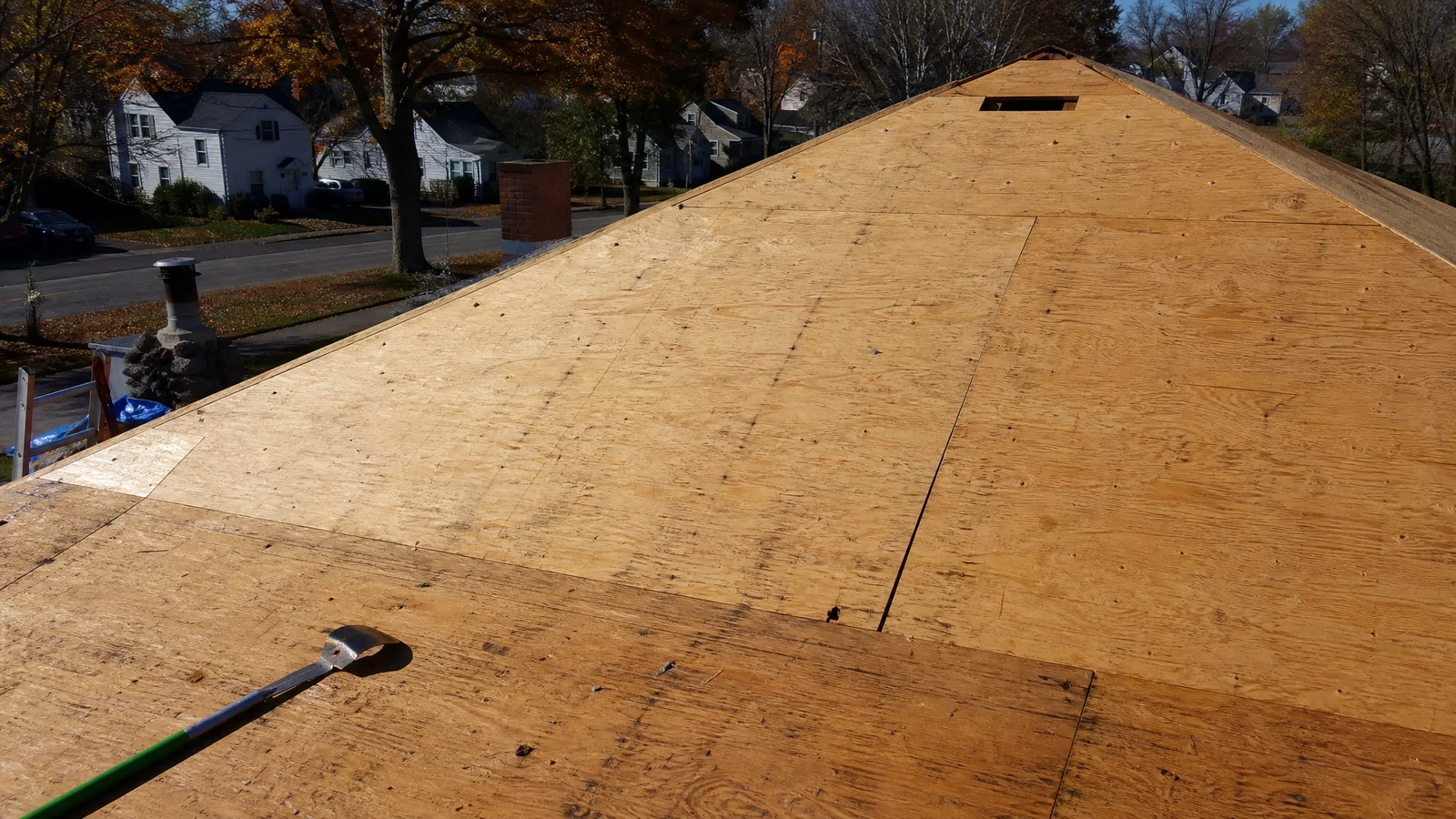
A full tear-off means removing every existing shingle, underlayment layer, and piece of old flashing down to the bare roof deck. The exposed plywood or OSB sheathing then gets a thorough inspection before any new materials go on.
This process allows the crew to identify and repair soft spots, rotted sections, and moisture damage that would otherwise stay hidden. Once the deck is verified sound, installation proceeds in proper sequence: synthetic underlayment, ice-and-water shield at the eaves and valleys, new drip edge, starter course, field shingles, ridge cap, and fresh flashing at every penetration.
Modern synthetic underlayments like GAF Deck-Armor and Owens Corning Deck Defense are engineered to breathe, preventing trapped condensation between the shingle layer and the wood deck. These products require direct contact with clean sheathing to function correctly. Laying them over old shingles defeats their vapor management design.
A tear-off also gives the crew access to verify that attic ventilation meets current code requirements. Intake at the soffits and exhaust at the ridge must be balanced for the roof system to perform as the manufacturer intended.
Defining a roof-over
A roof-over (also called an overlay or re-roof) skips the removal step entirely. New shingles are nailed directly on top of the existing layer. The old underlayment, flashing, and any hidden damage stay in place.
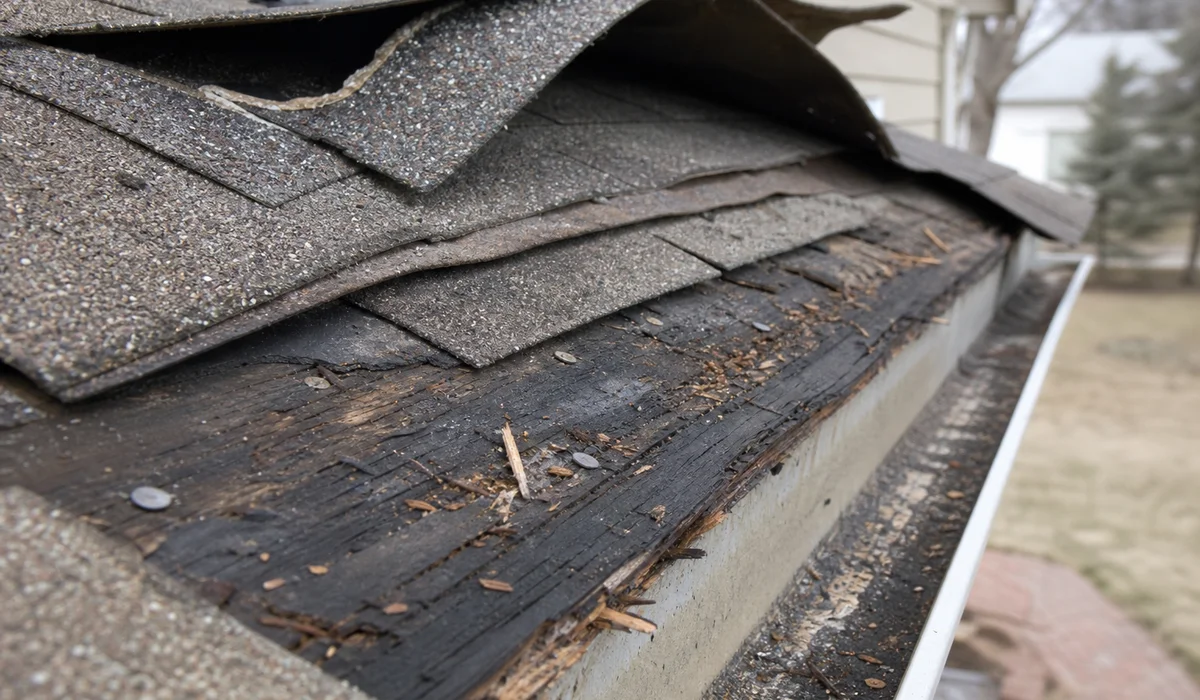
The appeal is obvious: no dumpster rental, less labor time, and a lower invoice. The problems that come with it are less visible but far more expensive when they surface.
- No deck inspection. Rot, delamination, and water staining remain completely hidden until a structural failure occurs.
- Double weight load. Architectural shingles weigh 200-300 pounds per square. A second full layer adds 4,000-6,000 pounds to a typical 20-square home, potentially exceeding the structural capacity of older framing.
- Warranty exclusion. Premium programs like the GAF Golden Pledge and Owens Corning Platinum Protection require single-layer installation. A roof-over voids eligibility for the best coverage tiers.
- Telegraphing. New shingles conform to the uneven wear pattern of the old layer beneath, creating visible waviness across the roof surface.
- Shortened lifespan. Heat trapped between layers accelerates shingle deterioration. Layered roofs typically fail 5-10 years before a tear-off installation of the same product.
Connecticut building code limits
Connecticut follows the International Residential Code (IRC), which sets the maximum at two total shingle layers on a residential structure. The rules break down simply:
- One existing layer: a roof-over is technically permitted under state code
- Two existing layers: a full tear-off is mandatory before any new installation
- Some municipal building departments enforce a stricter one-layer maximum, requiring tear-off for any replacement regardless of current count
Your West Hartford or Hartford County building department confirms the specific rule for your address. West Hartford Roofing pulls all required permits and verifies layer count during the initial inspection to keep every project fully compliant.
Beyond the legal requirement, Connecticut’s snow load specifications add a practical concern. Roofs in this region must support 30-40 pounds per square foot of snow load. Every pound of extra shingle weight reduces the safety margin available for winter accumulation.
Real cost comparison
The upfront savings from a roof-over are real but narrower than most homeowners expect. The long-term cost picture almost always favors a full tear-off.
| Cost Factor | Full Tear-Off | Roof-Over |
|---|---|---|
| Dumpster and Disposal | $600 - $800 | $0 |
| Additional Labor | 1-2 extra days | None |
| Premium Warranty Eligibility | Fully eligible | Voided or denied |
| Hidden Damage Risk | Identified and repaired ($0 surprise) | Discovered later ($3,000 - $5,000 emergency) |
| Expected Lifespan | 25 - 30 years (architectural) | 15 - 25 years (same product) |
The 15-20% upfront savings from skipping tear-off labor and disposal costs disappear quickly when the layered roof needs replacement a decade earlier. Insurance complications add another layer of financial risk. Claims on roofs with unauthorized second layers are frequently denied or reduced.
When a roof-over might apply
The scenarios where layering makes any financial sense are narrow and specific:
- Imminent sale. The property is going on the market within 12 months and the buyer explicitly accepts the layered condition in disclosures.
- Short-term investment hold. The owner plans to gut-renovate or demolish the structure within a few years.
- Budget emergency. The only alternative is leaving active water intrusion unaddressed, and a temporary overlay buys time until a proper replacement is feasible.
For any home you plan to live in for five or more years, the reroof vs replace decision points clearly to a complete tear-off. The upfront savings from layering do not survive the math when you factor in shortened lifespan, voided warranties, and hidden damage risk.
Planning a roof replacement? Request an honest estimate and we will walk you through the full scope of work on your specific roof.
Frequently Asked Questions
Is a roof-over cheaper? ▼
The upfront cost is lower because you skip tear-off labor and dumpster fees. However, the hidden costs are significant: voided warranties, trapped moisture damage, and a roof that fails 5-10 years sooner. The lifetime cost of a roof-over almost always exceeds a full tear-off.
Does CT code limit roof layers? ▼
Connecticut follows the IRC, which caps residential roofs at two total shingle layers. If your roof already has two layers, a full tear-off is mandatory. Some local jurisdictions are even stricter and require tear-off after a single layer.
Are there any situations where roof-over makes sense? ▼
In very limited cases: a property being sold within 12 months, a short-term hold investment property, or a genuine financial emergency where the only alternative is leaving active water damage unaddressed. For any home you plan to live in, tear-off is the correct approach.
Ready to talk to a roofer?
Read about our roof replacement in west hartford service or get a free estimate.
Related Guides
Architectural vs. Designer Shingles: Choosing the Right Tier
Side-by-side comparison of architectural and designer shingles covering cost, lifespan, wind ratings, and curb appeal for West Hartford homeowners.
When to Replace Your Roof in Connecticut: Seasonal Guide
Compare fall, spring, summer, and winter for scheduling a Connecticut roof replacement. See the tradeoffs for each season and why delaying can lead to costly winter damage.
Roof Replacement Cost in Connecticut (2026)
Line-by-line cost breakdown for a CT roof replacement covering materials, labor, permits, and disposal with real 2026 price ranges for West Hartford homeowners.
The Roof Replacement Process, Step by Step
Every phase of a residential roof replacement explained with concrete steps and durations, from the initial inspection through final walkthrough.