Emergency Roof Tarping: When It's Needed
Know when emergency roof tarping is the right call and when a direct repair makes more sense. Decision framework for West Hartford and Hartford County homeowners.
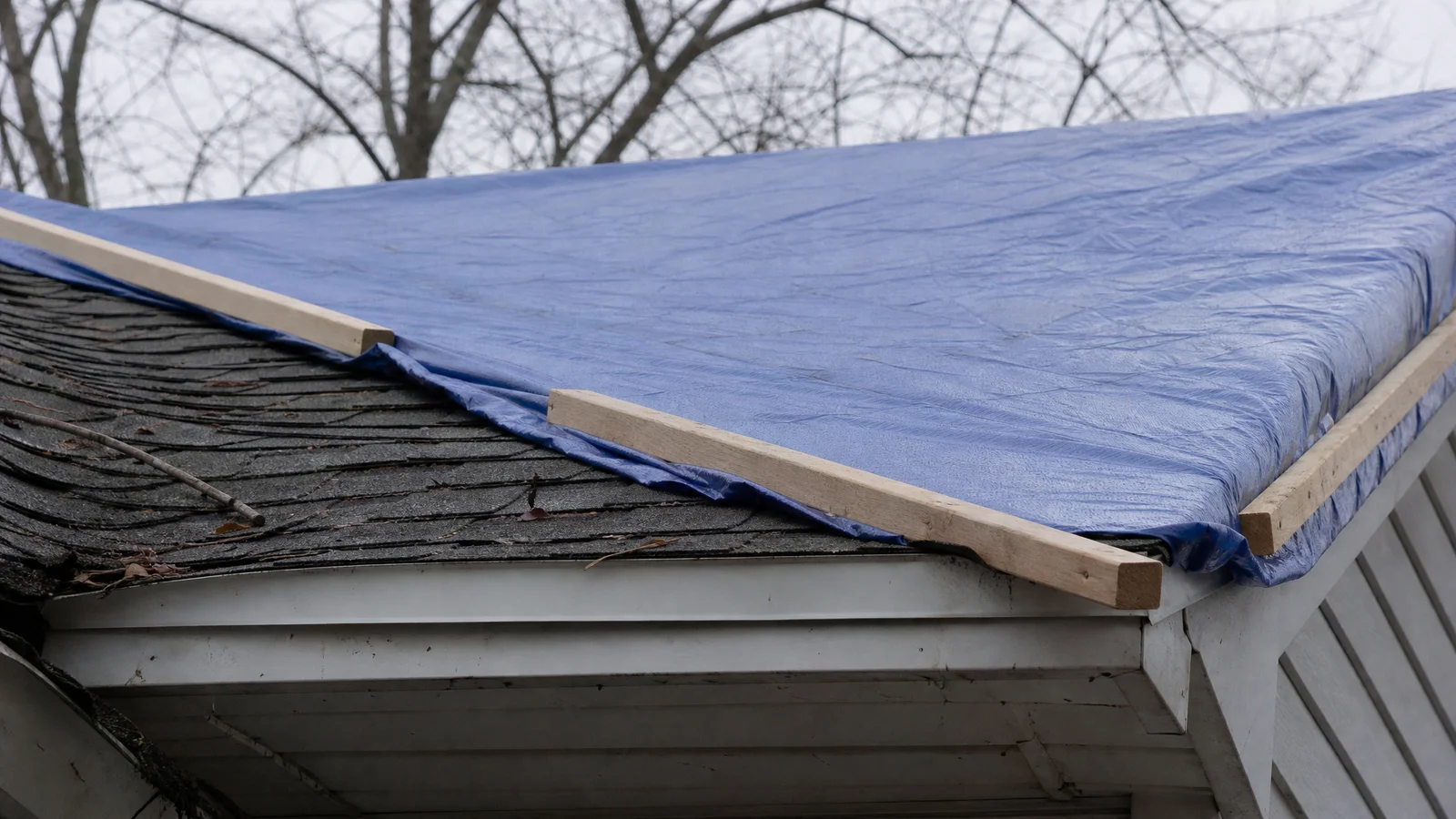
The decision to tarp a roof or skip straight to permanent repair is not always obvious. Some situations demand immediate temporary cover to prevent thousands in secondary damage. Others are better served by a same-day patch that solves the problem permanently.
West Hartford Roofing responds to emergency calls across Hartford County year-round. This guide lays out the clear decision framework we use internally so you can make the right call for your situation.
The Tarp-or-Repair Decision Framework
Every emergency call starts with a simple question: can we permanently fix this before water gets inside? If the answer is no, tarping becomes the immediate priority. If a lasting repair is achievable within hours, that is almost always the smarter path.
Three factors drive the decision:
- Active water intrusion - Water moving through your ceiling or pooling in the attic means the clock is already running on secondary damage. Tarp first, plan repairs second.
- Weather forecast - Missing shingles with clear skies for a week present a different urgency than the same damage with rain arriving tomorrow.
- Repair complexity - A single flashing failure can be permanently fixed in under an hour. Twenty feet of missing ridge cap requires materials ordering, crew scheduling, and weather coordination.
Five Scenarios That Demand Immediate Tarping
Active Interior Water Flow
Water dripping through a ceiling or running down interior walls means the roof barrier has completely failed at that point. Drywall begins deteriorating within hours of sustained moisture contact. This is the highest-priority call we handle.
Large Exposed Deck Sections
Wind can strip entire courses of shingles from older roofs, particularly on the Colonials and Cape Cods common in West Hartford neighborhoods like Elmwood and Bishops Corner. Exposed plywood decking absorbs moisture rapidly and swells, compounding the eventual repair scope.
Tree Strikes
A fallen limb creates structural uncertainty even when no hole is visible from ground level. The underlying decking and rafters may be cracked or displaced. A heavy-duty cover keeps the area dry while the full extent of damage is assessed by a professional.
Back-to-Back Storm Fronts
Connecticut weather patterns frequently deliver storms in clusters. Damage from Tuesday’s wind event becomes catastrophic when Thursday’s rain finds every compromised spot. Tarping bridges the gap between weather events and prevents a manageable repair from becoming a major reconstruction.
Structural Breaches
Sagging decking, broken rafters, or visible holes through to the attic require immediate coverage regardless of the current forecast. Leaving structural openings exposed risks sudden interior flooding from an unexpected shower.
When Tarping Is Not the Right Call
Deploying an emergency cover when a direct repair would solve the problem costs you extra money and adds an unnecessary step. Here are the common situations where skipping the tarp makes sense:
- A single missing shingle tab with dry weather forecast for several days
- A slow drip manageable with a bucket, with no rain expected for 48+ hours
- Minor cosmetic damage without any water penetration
- Localized damage that a crew can permanently repair the same day
| Scenario | Action Required | Average Cost Impact |
|---|---|---|
| Single missing shingle (Dry forecast) | Direct same-day patch | $150 - $300 |
| Large exposed deck (Rain incoming) | Emergency tarp deployment | $400 - $1,000+ |
We always check the forecast before recommending a temporary cover. If the permanent fix is achievable before the next precipitation, we will tell you that directly.
How Professional Tarping Differs from DIY
A hardware store blue tarp held down with cinder blocks will blow off in the first significant wind gust. Professional emergency tarping uses fundamentally different materials and methods.
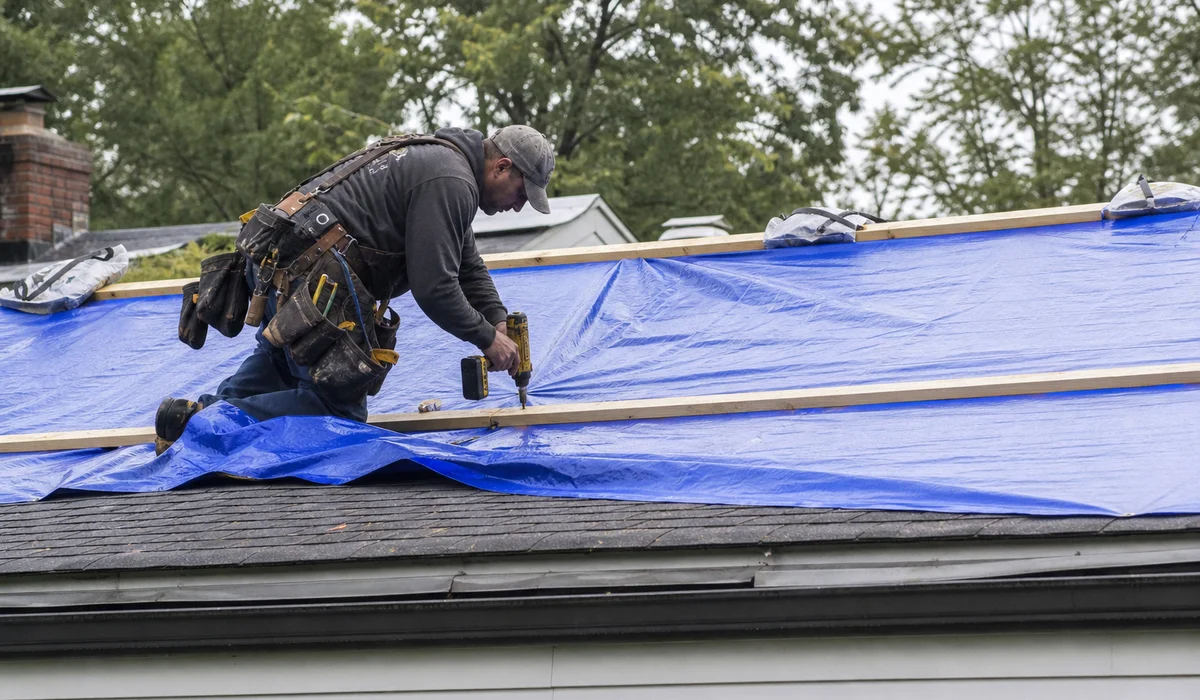
Commercial-grade materials - We use 8 to 12 mil polyethylene sheeting rated for UV resistance and tear strength. These materials survive weeks of sun exposure and wind stress.
Batten fastening - Wooden strips are screwed directly through the material into sound decking around the full perimeter. This eliminates wind uplift, the primary failure mode for improvised covers.
Proper overlap - The top edge extends at least three to four feet up the slope onto undamaged shingles. Water flows over the cover and off the eaves without finding a path underneath. FEMA specifications require this overlap distance for effective temporary roofing.
Interior preparation - Our crew advises moving belongings away from the compromised zone. Even the best temporary cover can admit trace moisture during sustained high winds.
What Tarping Protects Beyond Your Roof
A properly secured cover serves as both a physical barrier and a financial shield. Standard HO-3 insurance policies in Connecticut mandate that homeowners take reasonable steps to prevent further damage after a loss event. Failing to cover a known breach can give an adjuster grounds to deny claims for secondary damage.
Your temporary cover protects:
- Interior drywall, hardwood floors, and furnishings from water saturation
- Attic insulation that permanently loses R-value once wet
- Structural wood framing from moisture-driven rot
- Your insurance claim standing under the mitigation requirement
What Tarping Cannot Fix
A temporary cover buys time. It does not repair structural damage, reverse interior water damage already sustained, or serve as a permanent roofing solution. Professional covers last 30 to 90 days depending on conditions. Within that window, permanent repairs must be scheduled and completed.
West Hartford Response Times
For active leaks in the West Hartford area, we target same-day arrival, typically within 1 to 3 hours during business hours. After-hours calls are prioritized by severity, with active interior water intrusion at the top of the list.
See our emergency roof repair service for details on what a full 24/7 response covers, or review our storm damage roof repair page for the complete recovery process.
For damage happening right now, call our emergency line.
Frequently Asked Questions
How long does a tarp last? ▼
A professionally installed tarp with battens holds reliably for 30 to 90 days depending on UV exposure and weather. That provides enough time for permanent repair scheduling, but it is not a long-term fix.
How fast can you tarp my roof? ▼
Same-day across Hartford County for active leaks. Our emergency response runs 24/7, with typical arrival in 1-4 hours depending on time of day and storm demand.
Does insurance cover emergency tarping? ▼
Yes in most cases. CT homeowner policies require you to mitigate further damage after a covered event, making emergency tarping a reimbursable expense. Keep the invoice and damage photos for your adjuster.
Ready to talk to a roofer?
Read about our storm damage roof repair service or get a free estimate.
Related Guides
What to Do Immediately After Roof Storm Damage
A concrete action plan for the first 72 hours after roof storm damage - safety protocols, interior containment, documentation, emergency repair, and insurance filing with realistic durations.
What to Expect From a Roof Insurance Claim in Connecticut
A realistic look at the CT roof insurance claim process from filing to final payment, including timelines, coverage types, deductibles, and what homeowners should prepare for.
How to Document Roof Storm Damage for a Claim
A concrete step-by-step process for documenting roof storm damage that gets insurance claims approved - photo checklists, dating evidence, receipts, and professional reports.
What to Expect When Working With a Roof Insurance Adjuster
A realistic guide to the adjuster inspection process for CT roof claims, covering contractor coordination, test square methodology, disputed scopes, and supplement filing.