What to Expect When Working With a Roof Insurance Adjuster
A realistic guide to the adjuster inspection process for CT roof claims, covering contractor coordination, test square methodology, disputed scopes, and supplement filing.
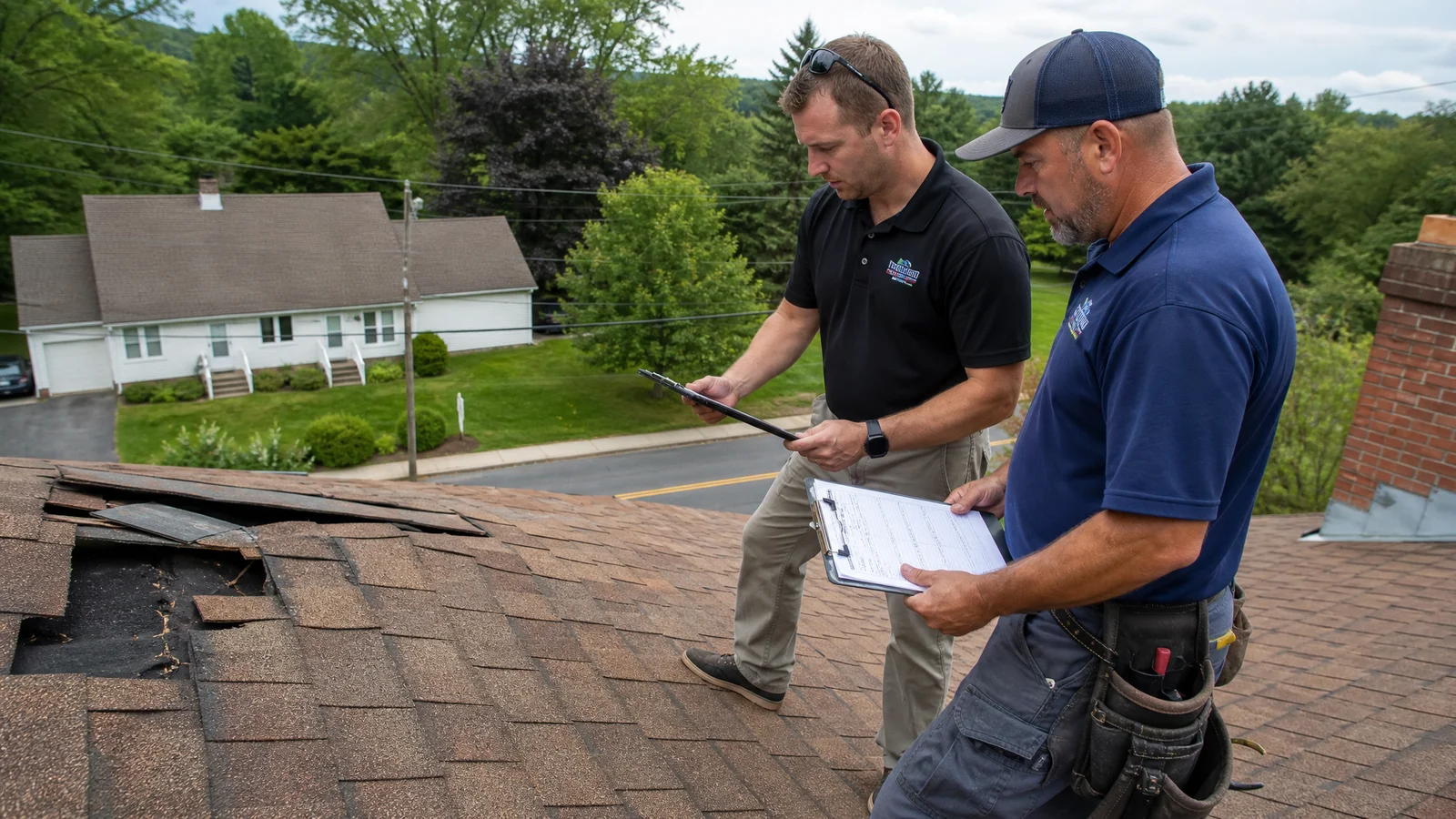
The adjuster inspection is the single most consequential moment in any roof insurance claim. The scope that gets written during that visit determines whether your project is fully funded or stuck in a cycle of appeals and re-inspections. Most West Hartford homeowners go into that meeting without understanding how it works or what they can do to influence the outcome.
This guide covers what actually happens before, during, and after the adjuster visit, along with realistic expectations for each stage of the process.
Understanding the Adjuster’s Role
An adjuster is a licensed professional assigned by your insurance company to inspect the damage, draft a scope of work, and calculate the payout using Xactimate pricing software. Some adjusters are staff employees of the carrier while others are independent contractors, but both follow the same carrier guidelines.
Adjusters are not adversaries, but they operate under real constraints. A 2026 Weiss Ratings analysis found that over 44 percent of home insurance claims filed with major carriers were closed without any payment. That statistic underscores why preparation matters so much. Most adjusters are professional and want to close claims fairly, but they see hundreds of roofs per season and often move quickly. Missed damage is common when no contractor is present to point things out.
Preparing for the Inspection Visit
Preparation starts one to two days before the adjuster arrives. Gather all emergency repair receipts, print your contractor’s inspection report, and confirm that your roofer will be physically present on-site. Having a qualified contractor on the roof changes the entire dynamic of the conversation.
Key preparation steps include:
- Organize documentation in one folder: Photos from the day of the storm, the contractor’s written inspection report, and receipts for any emergency tarping or temporary repairs. The average residential roof replacement in 2026 runs around $17,631 according to Verisk data. A project of that size deserves thorough documentation.
- Review your policy basics: Know your deductible amount and whether you carry ACV or RCV coverage before the meeting. Average roof claim deductibles in 2026 range from $1,500 to $3,000.
- Confirm contractor attendance: Call your roofer the day before to lock down their arrival time. They need to be set up before the adjuster begins.
How the On-Roof Inspection Works
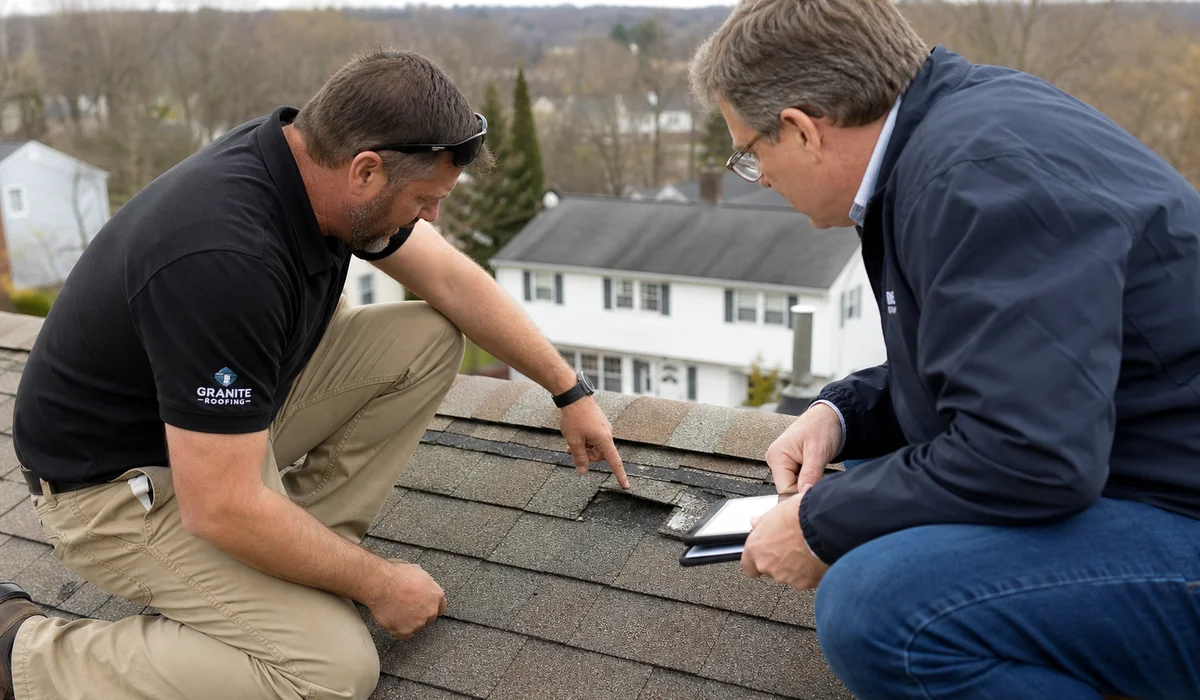
During the adjuster roof inspection, your contractor and the adjuster walk every slope of the roof together. The roofer identifies and marks damage points while the adjuster measures, photographs, and records findings.
Wind and hail damage is often highly uneven across a single roof. One slope may show heavy impact while the opposite side appears untouched. If the adjuster leans toward writing the scope as a localized repair, the contractor uses on-site evidence to make the case for broader replacement when the damage warrants it.
The Test Square Method
Adjusters use an industry-standard sampling technique called a test square. They mark a 10-foot by 10-foot area on each roof slope and count the functional hail hits within that area. Generally, 7 to 10 confirmed impacts within the square justifies replacement of that slope.
West Hartford Roofing marks every hit with specialized chalk before the adjuster sets up their ladder. This prevents sampling bias where the adjuster might inadvertently choose a clean section for their test area. Homeowners should stay on the ground and let the professionals handle the roof work.
Documentation Package for the Meeting
Arriving with comprehensive documentation removes subjectivity from the adjuster’s assessment. Here is what should be ready:
- Aerial measurement data: EagleView or Hover 3D roof reports eliminate measurement disputes. These import directly into Xactimate via ESX file format.
- Photo documentation: Every image captured during emergency response and the contractor’s inspection.
- Written inspection report: Damage counts per slope, core measurements, and specific observations.
- CT building code references: Current Connecticut code requires an ice and water shield extending at least 24 inches past the interior wall line.
- Manufacturer specifications: Installation guides from GAF or Owens Corning that establish compliance requirements.
Resolving Disputed Scopes
When the adjuster’s scope does not match the actual damage, there are formal paths to correction. Most adjusters will approve changes when the engineering and code requirements are clearly demonstrated.
Your options for resolving a disputed insurance adjuster roof claim include:
- File a supplement: A formal request for additional funds backed by updated photos, measurements, code references, and manufacturer specifications.
- Request a re-inspection: The carrier can send a different adjuster or a regional supervisor if the initial assessment significantly underscopes the damage.
- Invoke the appraisal clause: Standard homeowner policies include this provision for major scope disagreements. Each side hires an independent appraiser, and those two select a neutral umpire whose decision is binding.
- File a Department of Insurance complaint: The CT Insurance Department accepts formal complaints for truly deadlocked claims. This step is rarely needed but always available.
The Most Frequently Disputed Items
Certain line items come up in scope disputes more than any others. Understanding these in advance helps you anticipate where friction may occur.
- Repair vs. replacement threshold: Replacement of a slope is generally justified when damage affects more than 25 percent of that section. Full roof replacement typically requires around 50 percent total damage or significant code compliance gaps.
- Shingle matching: When damaged shingles are discontinued or have faded significantly, replacing adjacent sections may be required to maintain a consistent appearance.
- Code upgrades: Connecticut requires a 1:150 attic ventilation ratio and specific drip edge installations that many older West Hartford roofs lack. These are mandatory additions during a replacement.
- Interior water damage: Rot or drywall damage caused by water intrusion is often invisible during an exterior-only adjuster inspection.
Ethical Standards We Follow
We will never inflate a scope beyond what the physical damage actually justifies. Every line item must be defensible with photos, measurements, and code references. Fabricated or exaggerated claims waste everyone’s time and can permanently damage the homeowner’s standing with their carrier.
All work follows proper municipal permitting channels, and every claim we support is grounded in documented structural damage rather than normal aging or cosmetic wear.
Staying Informed Throughout the Process
Before the inspection, you receive a full briefing on what to expect. During the visit, you are welcome to walk the property with the adjuster and contractor. After the meeting, you get a complete recap of what was agreed upon and what remains open. During any supplement filing, you review every financial request before it goes to the carrier.
For the full Connecticut claims process overview, see our guide on how roof insurance claims work in Connecticut. If you have active storm damage, call for emergency response so the inspection starts while evidence is fresh.
Frequently Asked Questions
Should my roofer meet the adjuster? ▼
Absolutely. Having a qualified contractor on the roof during the adjuster's inspection is the single most effective way to ensure every point of damage gets documented and included in the scope.
What if the adjuster misses damage? ▼
Your contractor files a supplement with updated photos, measurements, and code references. Supplements are a routine part of the claims process and typically get approved when the documentation is solid.
Can I hire a public adjuster? ▼
You can. Public adjusters work for you rather than the insurer and charge a percentage of the settlement. For most CT claims, a knowledgeable contractor paired with the carrier's adjuster handles it well. Public adjusters add the most value on large, heavily disputed claims.
Ready to talk to a roofer?
Read about our storm damage roof repair service or get a free estimate.
Related Guides
What to Do Immediately After Roof Storm Damage
A concrete action plan for the first 72 hours after roof storm damage - safety protocols, interior containment, documentation, emergency repair, and insurance filing with realistic durations.
What to Expect From a Roof Insurance Claim in Connecticut
A realistic look at the CT roof insurance claim process from filing to final payment, including timelines, coverage types, deductibles, and what homeowners should prepare for.
How to Document Roof Storm Damage for a Claim
A concrete step-by-step process for documenting roof storm damage that gets insurance claims approved - photo checklists, dating evidence, receipts, and professional reports.
Emergency Roof Tarping: When It's Needed
Know when emergency roof tarping is the right call and when a direct repair makes more sense. Decision framework for West Hartford and Hartford County homeowners.