Last updated:
Diagnosing Skylight Problems Before Spending on Repairs
About half of the “leaking skylight” calls we receive in Hartford County turn out to be condensation, not actual water intrusion. That distinction matters because the fix for condensation is completely different from the fix for a genuine roof leak, and confusing the two wastes hundreds of dollars on unnecessary work.
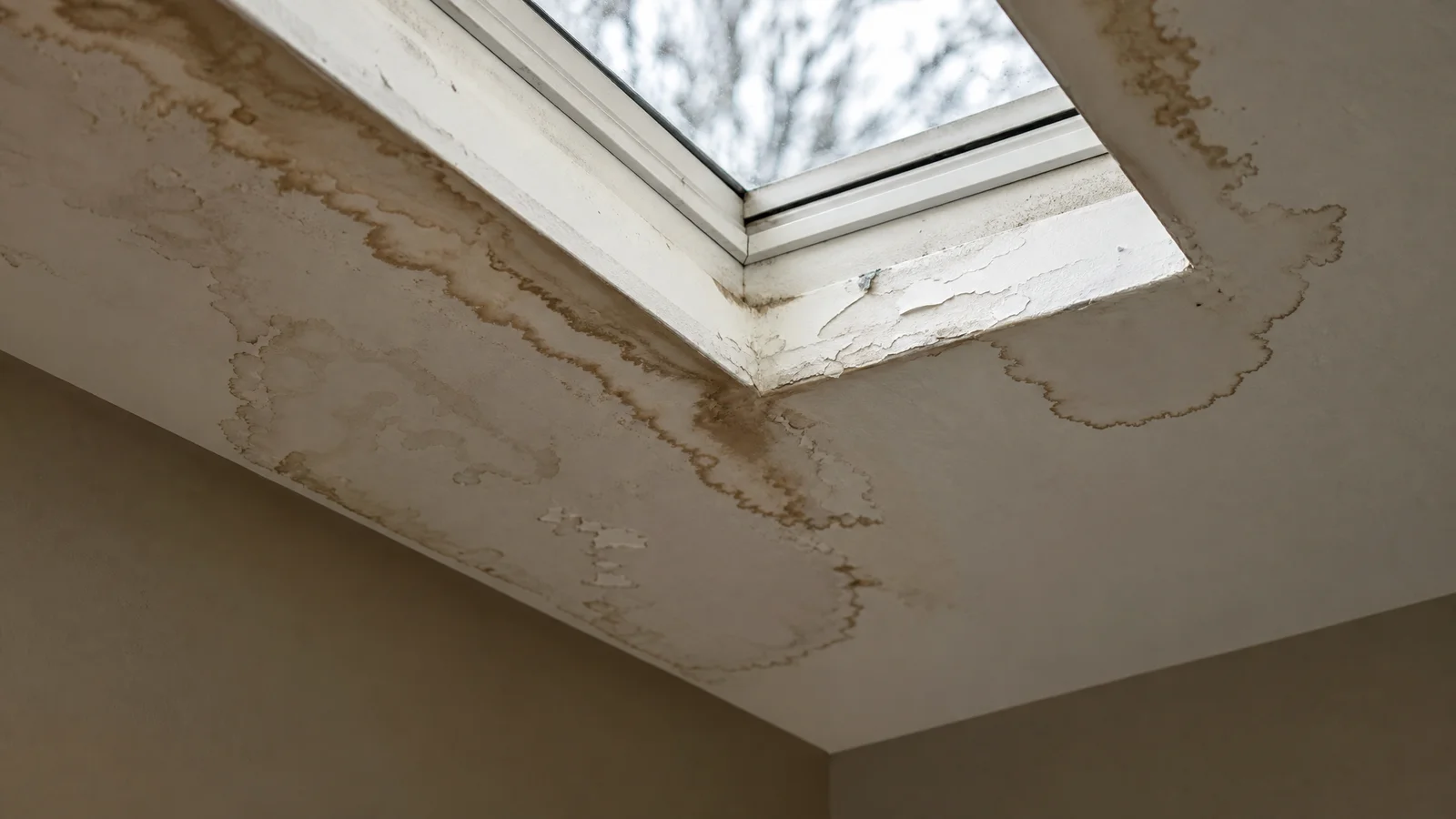
True moisture intrusion leaves brown or yellow stains on the drywall surrounding the skylight frame, and the staining worsens during or immediately after rainfall. Condensation, by contrast, appears as uniform moisture on the glass surface during cold New England mornings when indoor humidity rises.
“Many homeowners are surprised to learn that condensation looks exactly like a roof leak until you test the indoor humidity levels.”
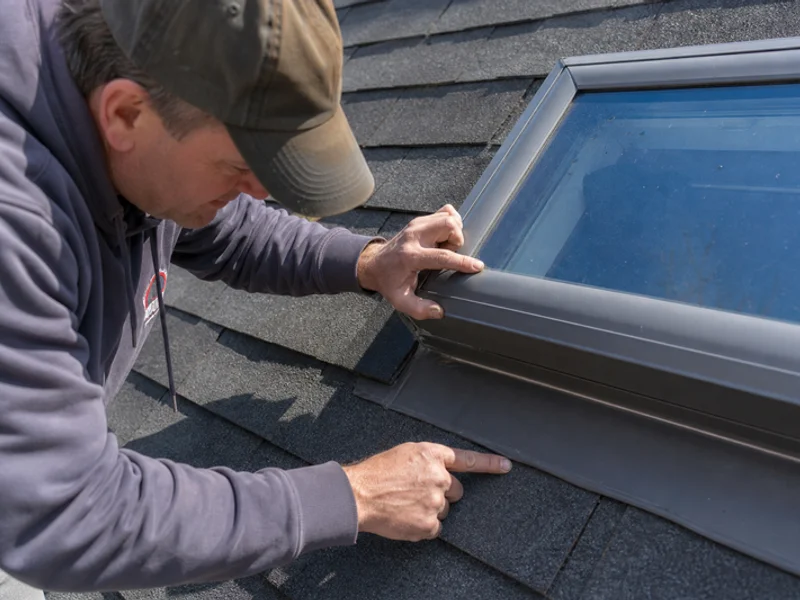
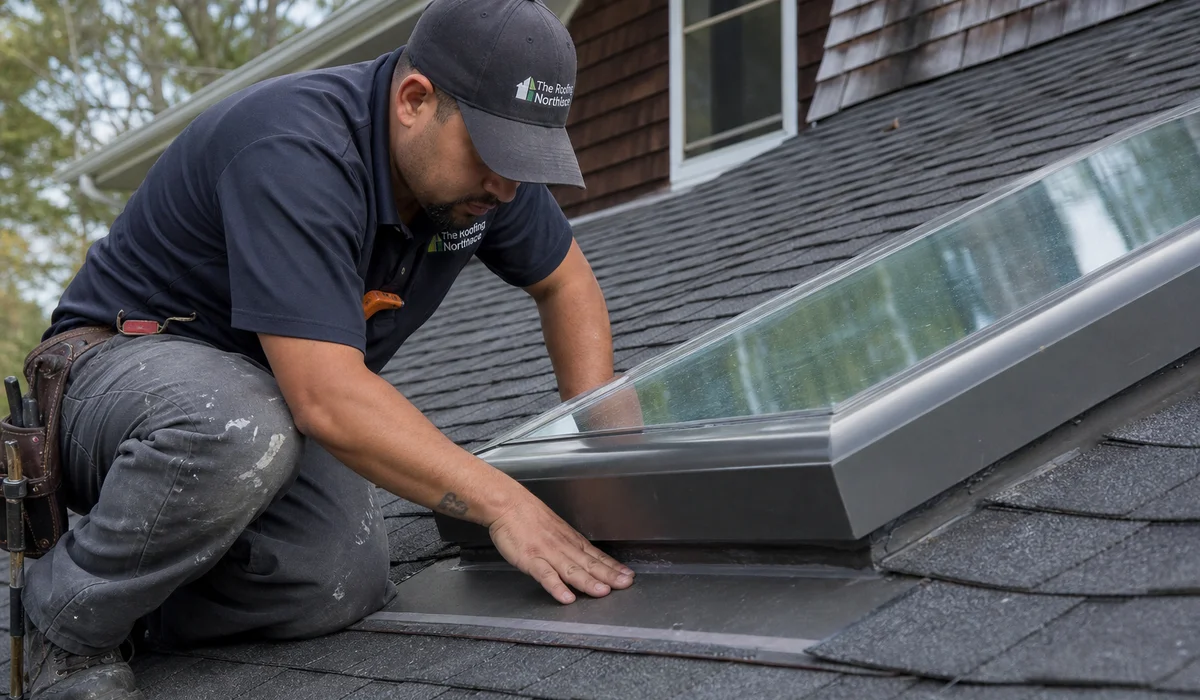
West Hartford Roofing runs a complete diagnostic check before suggesting any repair. We measure indoor humidity, inspect the skylight from both interior and roof side, and trace any water path through the attic sheathing. Water can travel up to six feet along the roof deck before dripping through the ceiling, so the entry point is rarely directly above the visible stain.
This methodical approach saves homeowners from buying a $1,500 replacement they do not need. If keeping your indoor humidity below 50 percent solves the problem, we tell you so.
Five Failure Points We Check on Every Skylight
New England weather pushes building materials to their absolute limits. Major manufacturers like VELUX report that properly installed deck-mount models can last 30 years, but specific components within the system fail much sooner. Here are the five main culprits we find during inspections across West Hartford.
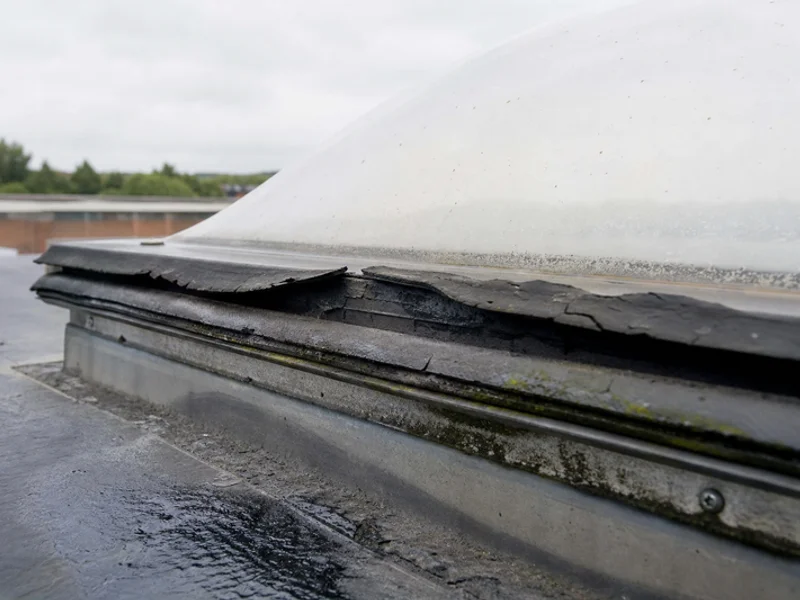
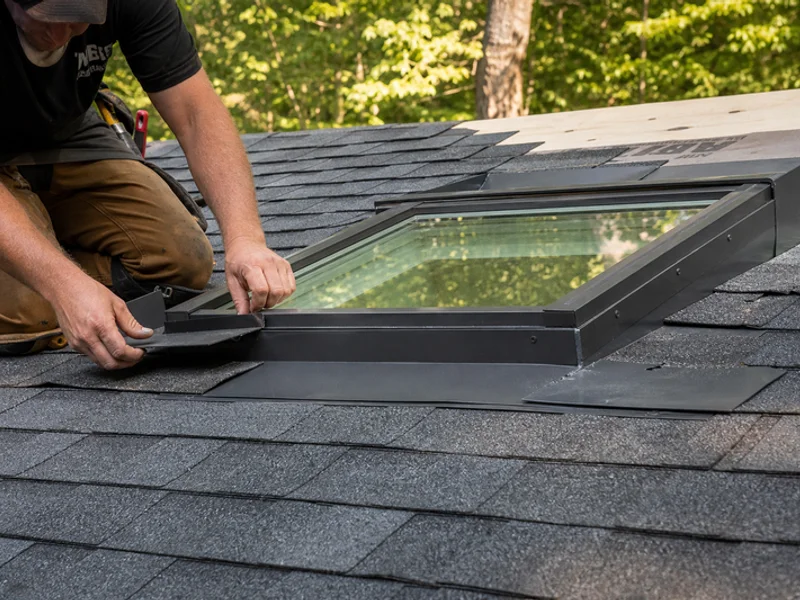
- Perimeter flashing: The head flashing above the unit is the most common failure point, especially after years of ice and snow loading.
- Gasket degradation: The internal rubber weather seal around the sash breaks down from constant UV exposure and thermal cycling.
- Glass-to-frame seal: Extreme temperature swings in Connecticut can cause separation between the glass panel and the frame over time.
- Exposed fastener heads: Improperly sealed fasteners in the flashing kit create direct moisture paths into the attic cavity.
- Shingle interface: Ice dams during Connecticut winters push standing water backward under the shingles where they meet the skylight flashing steps.
How Failure Type Determines Your Next Step
Understanding the source of moisture helps you plan the right repair. Some failures are simple reseals, while others require roof-side work or full unit replacement.
| Leak Source Type | Typical Lifespan | Primary Cause of Failure | Repair Complexity |
|---|---|---|---|
| Metal Flashing | 15 to 20 years | Rust, missing step flashing, or ice dams | High (requires roof work) |
| Rubber Gaskets | 10 to 15 years | Constant UV exposure and thermal shock | Medium |
| Glass Seals | 20+ years | Factory defect or extreme hail damage | High (needs replacement) |
Repair vs. Replacement for West Hartford Skylights
Homeowners always want to know if a reseal is sufficient or if the entire unit needs to come out. The answer depends almost entirely on the age of the skylight and which components have failed.
- Under 10 years old: A specific flashing failure or gasket issue is worth repairing. The unit itself has plenty of life remaining.
- 10 to 15 years: A flashing kit swap can often extend the skylight’s service life by another decade if the glass seal and frame are sound.
- Beyond 20 years: Once the gasket has disintegrated and the frame shows visible daylight, exterior sealants will not hold. Full replacement is the permanent solution.
A basic resealing service typically costs between $225 and $800 in 2026. A full professional replacement ranges from $1,200 to $3,000 depending on size, slope, and access. We present both options with clear pricing so you can make the decision that fits your budget.
Modern Skylights and Energy Savings
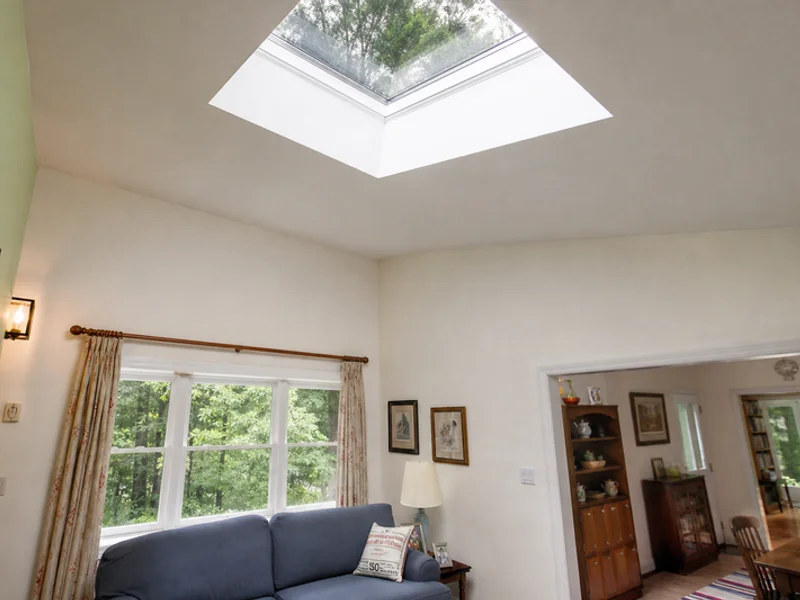
If you do choose replacement, modern units with soft-coat Low-E argon gas glass offer significant energy improvements over older models. These upgrades reduce winter heat loss and cut down on the drafts that make rooms below skylights uncomfortable during January. The energy savings compound over years, partially offsetting the upfront replacement cost.
Ice Dams and Skylights in Connecticut
Skylights installed on lower roof sections or near valleys are especially vulnerable to ice dam damage during Connecticut winters. When backed-up meltwater reaches the skylight perimeter, it can bypass even properly installed flashing and enter the home through the frame or gasket. If you have experienced repeated skylight leaks that only occur during freezing weather, the root cause is often an ice dam forming just above the unit.
In these cases, adding ice-and-water shield around the skylight perimeter during the next repair or reroof provides a secondary barrier that stops backed-up water from reaching the interior. We evaluate ice dam risk as part of every skylight diagnostic and recommend the appropriate prevention measures based on your roof’s specific geometry.
Whether you need a quick reseal or a complete skylight replacement, West Hartford Roofing handles both. We work with Velux, Fakro, and Wasco flashing kits and match brand-specific gasket specifications. Call (203) 824-0275 to schedule a diagnostic inspection and stop that drip for good.