Ceiling Water Stains: Warning Signs Every Homeowner Should Recognize
Brown spots on your ceiling are more than cosmetic problems. Learn what different stain patterns reveal about roof leaks and when to take immediate action.
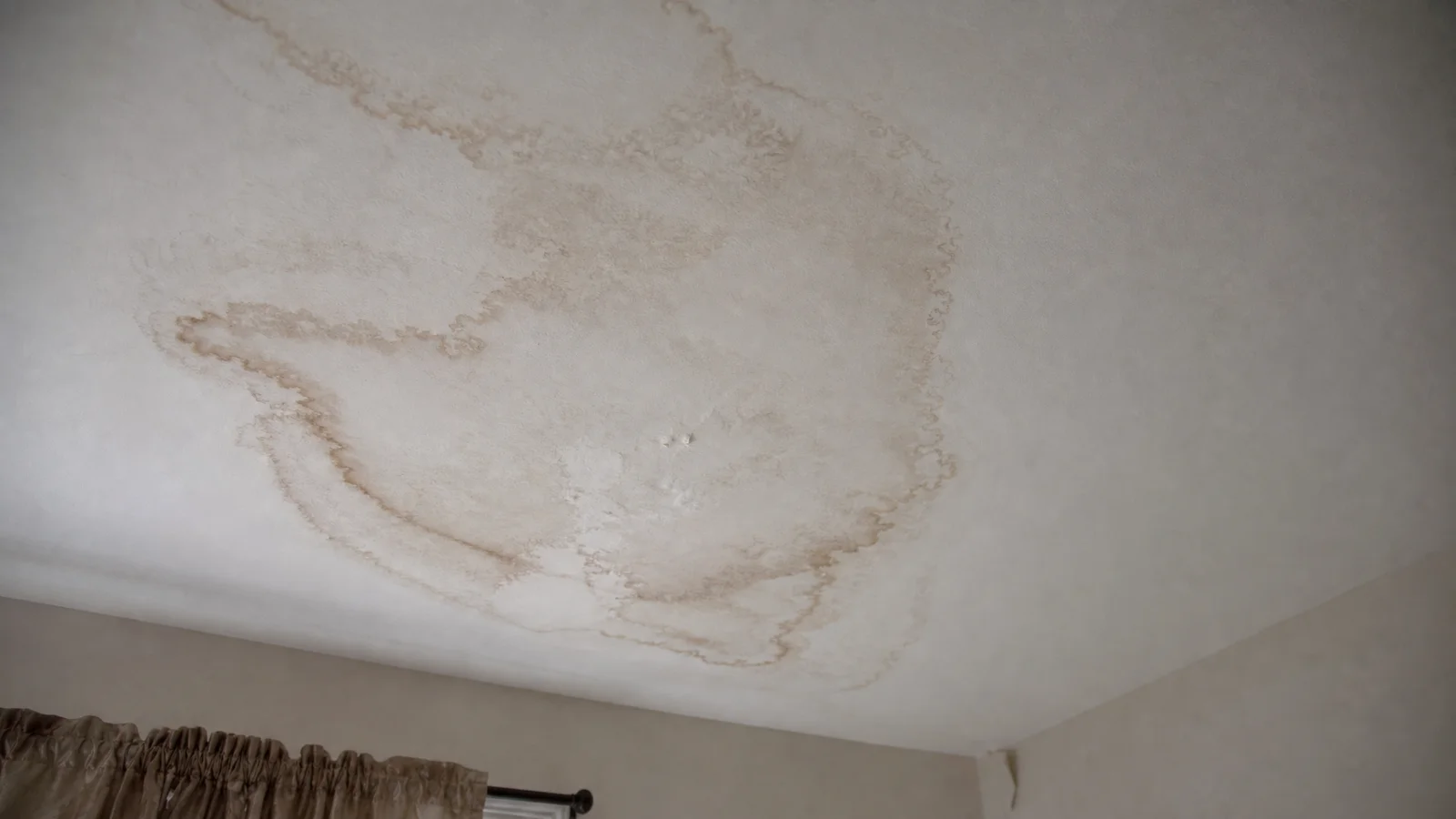
That brown discoloration spreading across your ceiling drywall is not just a cosmetic blemish. It is a message from your roof or plumbing system, and reading it correctly can save thousands of dollars in structural repairs. We encounter ceiling water stains roof leak situations regularly across West Hartford homes, especially during spring snowmelt and heavy summer storms.
Understanding what that stain is telling you starts with identifying the source.
Distinguishing Roof Leaks from Plumbing Failures
The fastest way to narrow down the source is to watch the weather. A roof-related leak worsens during rain or after snow melts off your roof deck. A plumbing leak drips steadily regardless of conditions outside. The EPA estimates that roughly 10 percent of American homes have hidden plumbing leaks, but those behave very differently than weather-driven moisture intrusion.
Signs pointing to a roof problem:
- The stain sits on a top-floor ceiling directly below attic space
- Discoloration appears or grows after storms or freeze-thaw cycles
- Ring-shaped marks with darker edges suggest repeated wet-dry cycles
- A musty odor lingers in the attic above the stain
- Damp patches appear on a nearby exterior wall
Signs pointing to plumbing:
- The stain is directly below a bathroom, kitchen, or laundry area
- Spreading continues at a constant rate unrelated to weather
- The stain appeared suddenly without any recent storm
- An unpleasant sewage-like odor accompanies the discoloration
If plumbing is the culprit, call a licensed plumber. If the evidence points to the roof, the sections below will help you understand the urgency.
Reading Stain Patterns Like a Diagnostic Map
A brown ceiling stain roof indicator reveals the behavior of moisture behind your drywall. The shape, color, and size each carry specific meaning.
Small, round, single spot - This typically means a single drip point that has been active for a short period. One nail penetration or a cracked pipe boot can produce this pattern.
Long streak running from a ceiling-wall joint - Water is traveling along a rafter or the top plate of an interior wall before dropping onto the drywall. The actual roof entry point is up-slope from where you see the stain.
Ring with a darker outer edge and dry center - This is the hallmark of a recurring leak. Each rain event pushes dissolved tannins and minerals outward, leaving a visible tide line at the boundary.
Sagging or bulging drywall - Significant water has pooled above the surface. You should carefully puncture the lowest point with a screwdriver (bucket underneath) to release the weight and prevent a ceiling collapse.
Widespread staining spanning most of a ceiling - This suggests a major failure, often from deteriorated chimney flashing, a large ice dam, or a severely compromised roof penetration.
Color matters too. Rust-colored rings often mean water is pulling iron oxide from roofing nails or metal straps. A pale yellow ring usually indicates a slower drip dissolving tannins from wood framing above.
Why the Stain Location Misleads You
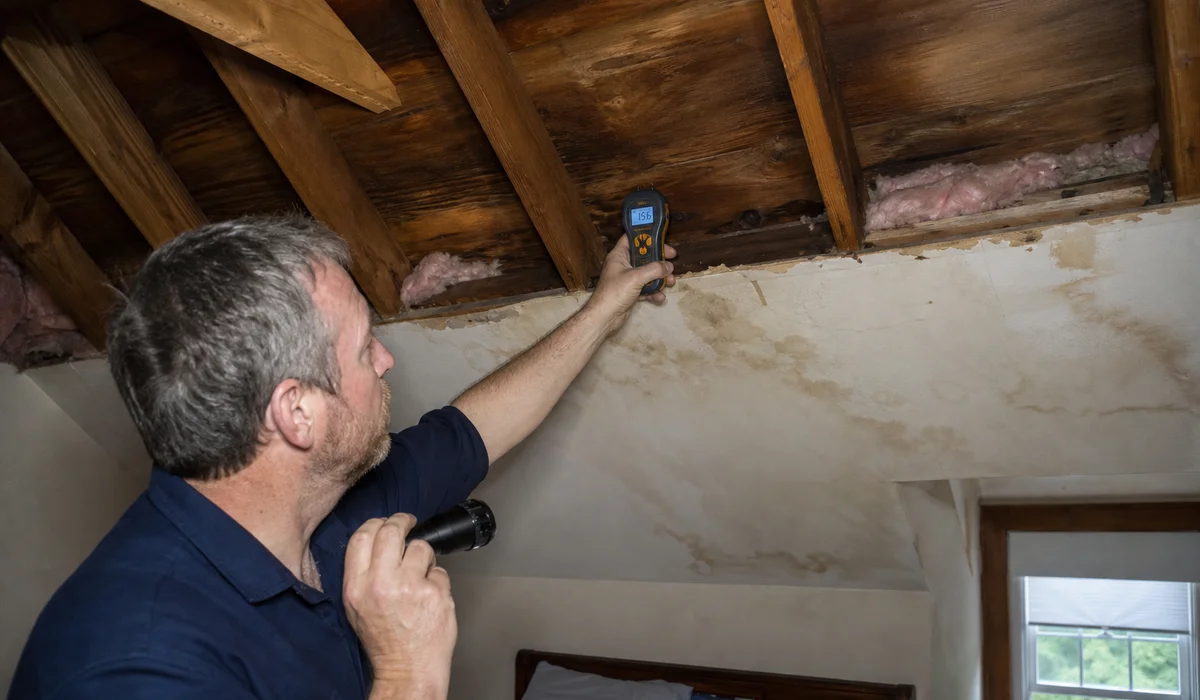
Water rarely drops straight through your roof assembly. It enters through a breach in the shingles or flashing, then tracks laterally along the roof deck and rafters before finally soaking through the drywall below. The stain you see is the exit point, not the entry. The actual breach may sit several feet away, often near a chimney, skylight, vent pipe, or valley.
Professional leak detection uses thermal imaging cameras and pinless moisture meters to trace the moisture path back to its origin rather than guessing. This approach prevents unnecessary tear-offs and gets to the real problem the first time.
The Mold Timeline and Why Speed Matters
The Centers for Disease Control and Prevention warns that mold can begin growing on damp organic materials within 24 to 48 hours. Once it takes hold, a straightforward drying job escalates into a hazardous remediation project. Here is how the timeline typically unfolds in West Hartford’s humid climate:
| Timeframe | Status and Required Action |
|---|---|
| Days 1 to 3 | Materials are wet but no mold colonies have formed. Immediate water extraction and drying are critical. |
| Days 3 to 7 | Mold spores begin colonizing damp wood and drywall. Professional intervention is typically needed at this stage. |
| Days 7 to 14 | Visible mold growth appears on surfaces. Full remediation is now required. |
| Beyond 2 weeks | Established colonies have penetrated framing and insulation. Heavy remediation with containment protocols is necessary. |
Once mold is involved, costs compound fast. You are paying for the roof repair itself, professional mold remediation (often $2,000 or more), and complete drywall replacement.
Immediate Steps to Protect Your Home
FEMA advises that thorough drying is the single most important step for preventing secondary damage after water intrusion. Take these actions as soon as you discover a ceiling stain that is still wet or growing.
1. Contain the water. Place buckets under active drips. If drywall is sagging, puncture it carefully to prevent a full collapse.
2. Document everything. Photograph all visible damage from multiple angles before moving furniture or beginning cleanup. Your insurance adjuster will need this.
3. Inspect the attic. Look for wet insulation, damp rafters, or any visible water source above the stain location.
4. Schedule professional leak detection. A temporary patch only buys time. West Hartford Roofing traces leaks to their actual source using thermal imaging and moisture mapping.
5. Dry the affected area thoroughly. Run high-capacity fans or a dehumidifier once the active leak has been stopped.
6. Replace damaged drywall last. Wait until everything is completely dry before any cosmetic repairs or repainting.
If you encounter visible mold during your inspection, wear an N-95 respirator and avoid disturbing the growth until a professional can assess the situation.
When Stains Signal a Bigger Problem
Multiple ceiling water stains roof leak patterns across several rooms, especially on a roof that is 20 or more years old, point to systemic failure rather than an isolated breach. Repeated repair calls just chase symptoms without addressing the underlying deterioration. A standard asphalt shingle replacement for an average Connecticut home runs between $9,500 and $15,000 based on 2026 industry data. See our repair vs replacement guide for an honest cost breakdown.
For active stains and leaks, explore our leak repair service or call now.
Frequently Asked Questions
Does a ceiling stain always indicate a roof leak? ▼
Not always. Plumbing leaks are the other common cause. If the stain sits below a bathroom or kitchen, plumbing is likely. If it's below the attic or an upper-floor ceiling, the roof is the primary suspect.
How quickly should I respond to a ceiling water stain? ▼
Within a few days at most. The CDC notes mold can begin colonizing damp surfaces in 24 to 48 hours, and decking rot can set in within a single season of unchecked moisture.
Is it safe to just paint over a water stain? ▼
Only after the underlying leak has been fully repaired. Painting over an active leak masks the problem temporarily while moisture continues damaging the structure behind the drywall.
Ready to talk to a roofer?
Read about our roof leak detection & repair service or get a free estimate.
Related Guides
Why Is My Roof Leaking? The Most Common Causes in Connecticut
Most roof leaks trace to six specific failure points. Learn the warning signs for each, how urgent they are, and what repairs typically cost.
How Professionals Trace Roof Leaks Using Thermal Imaging and Moisture Meters
Follow the step-by-step process roofers use to pinpoint leak sources with thermal cameras, moisture meters, and controlled water testing.
Missing or Damaged Shingles: Real Scenarios and What They Mean for Your Roof
Shingles blown off by wind, cracked by hail, or curling from age each tell a different story. Learn what specific damage patterns mean and how to respond.
Roof Leak Repair vs. Replacement: A Side-by-Side Decision Guide
Compare repair and replacement across roof age, decking condition, leak scope, and long-term cost to decide which option fits your situation.