Roof Leak Repair vs. Replacement: A Side-by-Side Decision Guide
Compare repair and replacement across roof age, decking condition, leak scope, and long-term cost to decide which option fits your situation.
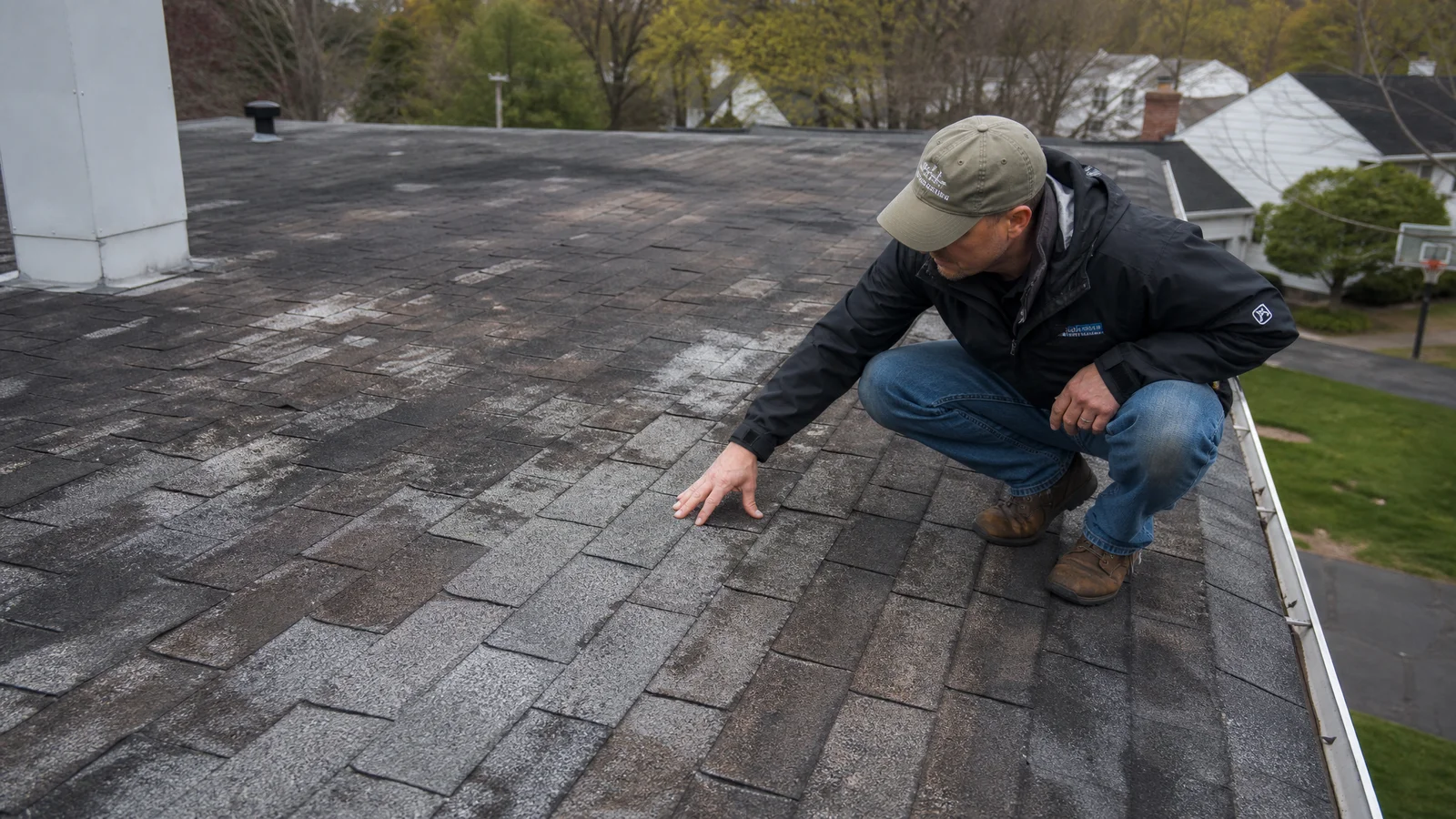
A water stain on the ceiling does not automatically mean you need a new roof. But it does not always mean a quick patch will solve the problem either. The honest answer depends on a handful of measurable factors that separate an isolated failure from a system reaching the end of its life.
This guide compares repair and replacement across every criterion that matters so you can make a confident decision.
Side-by-Side Criteria Table
Before diving into the details, here is a direct comparison of the key factors that determine whether repair or replacement is the right path.
| Criterion | Repair | Replacement |
|---|---|---|
| Roof age | Under 15 years | Over 20 years (15-20 is a gray zone) |
| Leak scope | Single source (one flashing, boot, or shingle) | Multiple leaks in different roof sections |
| Decking condition | Dry and structurally sound | Soft, wet, or rotted in multiple areas |
| Shingle field | Normal wear, good granule retention | Widespread curling, granule loss, missing tabs |
| Repair history | No leak calls in the past 3 years | Repeat leaks despite previous repairs |
| Typical cost (2026) | $450 to $1,500 | $11,500 to $16,500 (architectural shingles) |
| Timeline | Same-day to next-day | 1 to 3 days for most residential roofs |
When Repair Is the Clear Winner
A localized failure on an otherwise healthy roof points directly to repair. Water entry often stems from a single failed component rather than widespread material breakdown. The most common culprit is a cracked neoprene pipe boot flashing. Sun exposure degrades these rubber seals years before the surrounding shingles begin to show wear.
Conditions that favor repair:
- The leak traces to one location (one flashing, one boot, one shingle section)
- The roof is under 15 years old
- Decking beneath the failure is dry and solid
- No prior leak calls in recent years
- The rest of the shingle field shows normal, age-appropriate wear
Replacing a cracked pipe boot or a piece of step flashing is a fast, targeted fix. See our leak repair service for details on what a typical repair covers.
When Replacement Becomes the Better Investment
Chasing multiple water entry points across a deteriorating roof quickly costs more than installing a new system. Once the core materials have reached the end of their design life, every patch buys less time than the last one.
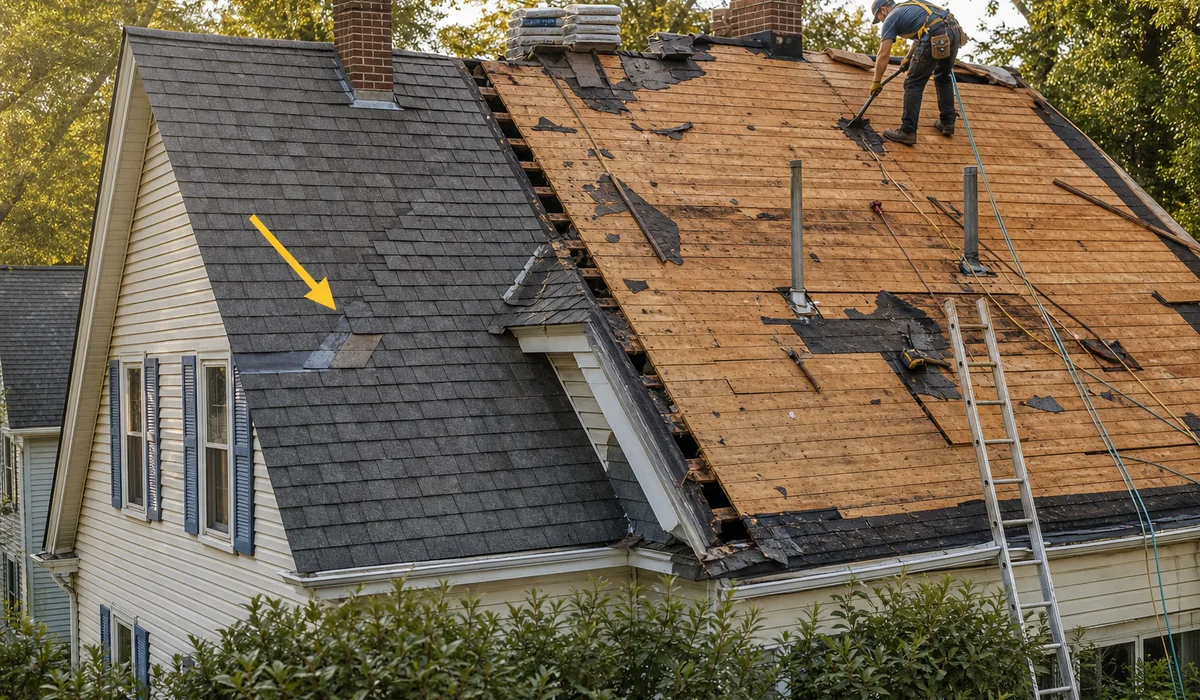
Warning signs that point toward replacement:
- Multiple leaks appearing in different parts of the roof
- The roof is past 20 years old
- Decking feels soft or spongy in more than one area
- Leaks recur even after previous professional repairs
- Widespread granule loss exposing the fiberglass mat
- Insurance carriers pushing back on continued repair claims
Spending $1,500 every few months on temporary fixes makes little financial sense when it compounds toward the cost of a new roof anyway.
The Three Deciding Factors
Almost every repair-vs-replacement decision comes down to three measurable variables.
Leak localization. One source usually means a patch. Six different leak points across different roof sections indicate a system at the end of its useful life. West Hartford Roofing traces every water path backward to determine whether the issue stems from a single failed flashing or from widespread material breakdown.
Decking condition. Dry sheathing under the leak keeps you on the repair path. Soft, rotted, or waterlogged plywood or OSB puts you firmly in replacement territory. Rotten decking cannot be patched from above, and replacing multiple sheets requires removing large sections of shingles.
Roof age. Under 15 years old, you need a compelling reason not to repair. Past 20 years, you need a compelling reason not to replace. Roofs in the 15-to-20-year window depend on the first two factors to break the tie.
The 30 Percent Threshold
When repair costs exceed 30 percent of a full replacement price on a roof over 15 years old, the math favors replacement. This benchmark protects your budget from the diminishing returns of repeated patching.
Consider this real-world example for a 17-year-old roof in West Hartford:
| Option | Immediate Cost | Estimated Future Repairs | Total 5-Year Spend |
|---|---|---|---|
| Repair now, replace later | $4,500 (32% of new roof) | $2,000 to $3,000 | $20,500+ (includes eventual replacement) |
| Replace now | $14,000 | $0 | $14,000 |
The replacement saves $6,500 over five years and delivers 25 years of warranty-backed protection. A $14,000 replacement spread across a 25-year lifespan works out to $560 per year, far less than annual emergency patches.
When Repair Still Wins on an Older Roof
Certain life situations make a targeted patch the smartest tactical move even when the numbers lean toward replacement.
- Selling within 12 months. The 2025 Zonda Cost vs. Value Report shows a new asphalt roof recoups 59 to 68 percent at resale. A repair-and-disclose approach sometimes keeps more cash in your pocket during the transaction.
- Cash flow constraints. A quality repair buys time if replacement is not in the budget this year.
- Insurance timing. A strategic patch can position a property for a fuller, legitimate claim if storm damage is involved.
- Single-point failure. One failed chimney flashing on an otherwise solid 22-year-old roof can be fixed without replacing the entire system.
Buying time is a valid strategy when you go into it with open eyes and a plan for the eventual replacement.
Getting Both Numbers
West Hartford Roofing quotes both the specific leak repair and a full roof replacement for every leak call on a roof older than 15 years. You see both sets of numbers side by side with a long-term cost breakdown so the decision is based on data, not pressure.
Get leak detection to find the actual source first, then request a free assessment for both repair and replacement estimates.
Frequently Asked Questions
When does a leak justify a full replacement? ▼
When leaks appear in multiple areas, the decking is soft or rotted, the roof is near end of life, or cumulative repair costs approach 30 percent of a replacement price on a roof over 15 years old.
Is repairing a leak on an old roof worth it? ▼
It can be a smart stopgap for specific reasons like sale timing, cash flow constraints, or insurance scheduling. But repeated leaks on an aging roof almost always favor replacement over time.
What three factors determine the decision? ▼
How localized the leak source is, the condition of the decking underneath, and the roof's current age relative to its expected lifespan.
Ready to talk to a roofer?
Read about our roof leak detection & repair service or get a free estimate.
Related Guides
Ceiling Water Stains: Warning Signs Every Homeowner Should Recognize
Brown spots on your ceiling are more than cosmetic problems. Learn what different stain patterns reveal about roof leaks and when to take immediate action.
Why Is My Roof Leaking? The Most Common Causes in Connecticut
Most roof leaks trace to six specific failure points. Learn the warning signs for each, how urgent they are, and what repairs typically cost.
How Professionals Trace Roof Leaks Using Thermal Imaging and Moisture Meters
Follow the step-by-step process roofers use to pinpoint leak sources with thermal cameras, moisture meters, and controlled water testing.
Missing or Damaged Shingles: Real Scenarios and What They Mean for Your Roof
Shingles blown off by wind, cracked by hail, or curling from age each tell a different story. Learn what specific damage patterns mean and how to respond.