Why Is My Roof Leaking? The Most Common Causes in Connecticut
Most roof leaks trace to six specific failure points. Learn the warning signs for each, how urgent they are, and what repairs typically cost.
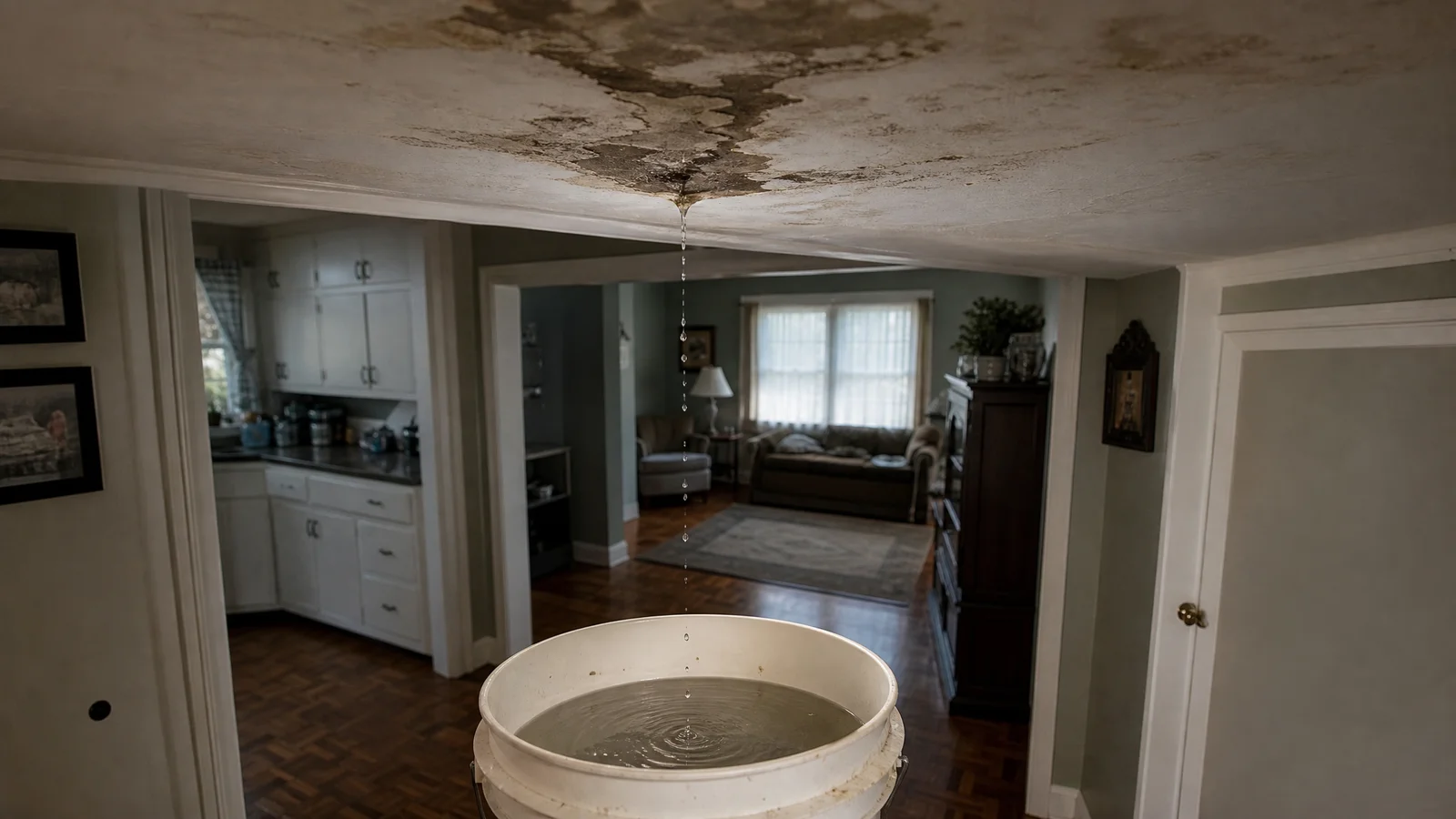
The dark stain spreading across your ceiling is almost never directly below the actual breach in your roof. Water enters at a penetration or transition point, travels along rafters and decking, and drops onto your drywall somewhere else entirely. National data for 2026 shows that 93 percent of residential roof leaks originate at penetrations or transitions rather than the open shingle field.
That statistic changes how you should approach diagnosing why is my roof leaking. Checking the flat shingle areas is far less productive than examining every joint, seal, and flashing detail on your roof surface.
Here are the six most common roof leak causes, ranked by how frequently we encounter them, along with the warning signs that signal urgency for each.
Flashing Failures: The Leading Cause
Flashing is the thin metal barrier that seals every joint between the roof surface and anything protruding through it, including chimneys, dormers, sidewalls, and additions. When the metal corrodes or the sealant dries out, water finds those joints quickly.
On the older Colonials and Tudors throughout West Hartford, original galvanized steel flashing corrodes over decades of New England freeze-thaw cycles. The roofing cement used to seal these joints cracks and separates after years of UV exposure. Based on 2026 industry data, replacing compromised chimney or wall flashing runs $400 to $1,000 depending on roof pitch and accessibility.
Warning signs demanding attention:
- Water stains on ceilings near a chimney or exterior wall intersection
- Damp attic sheathing near any roof penetration
- Visible rust streaks running down from flashing edges
- Cracked or separated sealant at flashing joints
Temporary caulk over damaged flashing only hides the problem. A proper flashing repair requires stripping down to the decking and installing new metal with correct step and counter-flashing techniques.
Cracked Pipe Boots: The Quiet Failure
The rubber gaskets around plumbing vent pipes crack from UV exposure at the 10 to 15 year mark. Once the neoprene splits, it creates a direct channel for water to reach the deck. Standard plastic boots can fail in as few as 5 to 7 years in exposed locations.
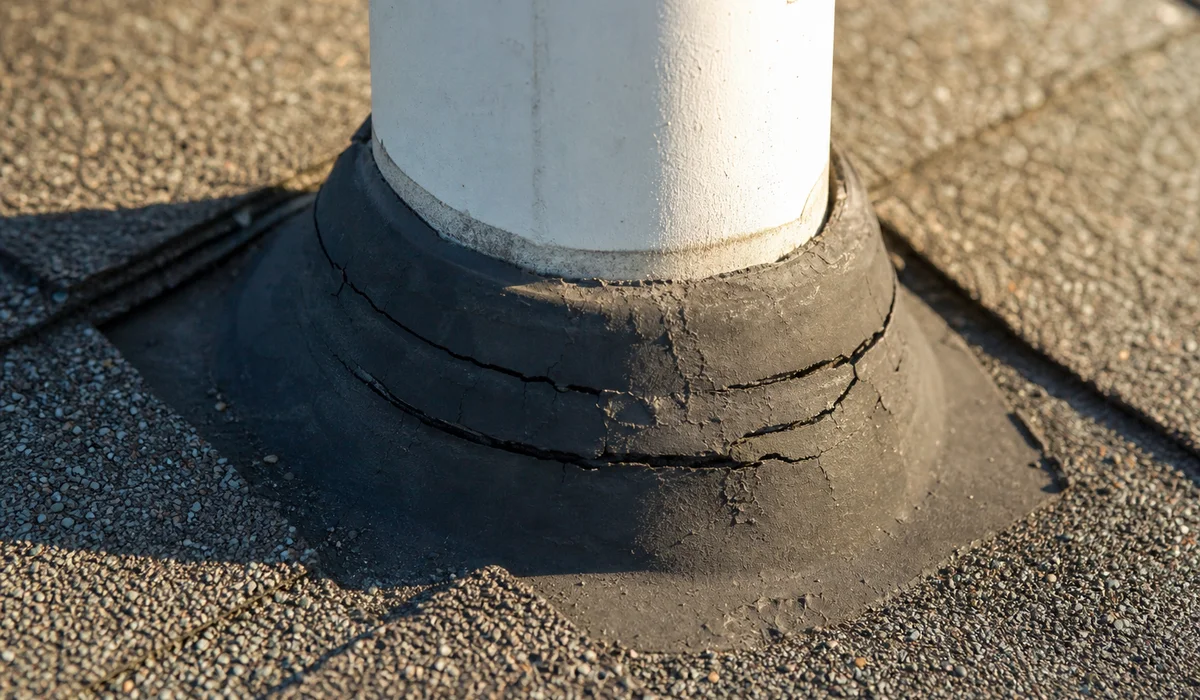
Warning signs demanding attention:
- A water stain directly below a plumbing vent, often in the bathroom above a garage
- Visible cracks or splitting in the rubber collar from ground level
- Exposed or rusted nails around the boot base
Replacing a pipe boot is typically a same-visit repair running $150 to $450 in 2026. Lead boots or lifetime silicone options resist UV degradation far longer than standard rubber.
Missing or Damaged Shingles: Storm and Age Damage
Wind lifts shingle tabs until the thermal adhesive strip breaks. Hail impacts crack the surface. Age curls the edges. Each creates a path for water. Standard three-tab shingles rated at 60 mph fail significantly faster than architectural varieties like GAF Timberline HDZ, which are rated at 130 mph.
| Shingle Type | Wind Rating | Typical Application |
|---|---|---|
| Standard Three-Tab | 60 mph | Budget repairs and older installations |
| Architectural (GAF Timberline HDZ) | 130 mph | High-wind regions and new installations |
Warning signs demanding attention:
- Bare patches visible from the ground or with binoculars
- Shingle tabs or granule debris in gutters after storms
- Curled or lifted edges across a roof section
Replacing individual shingles works when the surrounding field is otherwise sound. Scattered loss across the entire surface suggests system-wide sealant failure.
Ice Dams and Clogged Valleys: Winter Threats
Ice dams form along roof eaves when attic heat melts snow on the upper slopes and the meltwater refreezes at the colder edges. The resulting ice ridge forces water backward under shingles. In West Hartford, where annual snowfall averages 38 to 52 inches, this is a seasonal concern on homes with insufficient attic insulation or ventilation.
Clogged valleys present a similar problem year-round. Leaves and debris block drainage, forcing water sideways under the shingle overlap during heavy rain. Upgrading to R49 attic insulation and establishing continuous soffit-to-ridge airflow eliminates the majority of ice dam formations.
Warning signs demanding attention:
- Leaks appearing along eaves during winter or early spring
- Icicles forming at the roof edge while snow remains on upper slopes
- Water dripping at valley intersections during heavy rain
Proper ventilation and ice dam repair addresses the root cause rather than treating symptoms each winter.
Skylight Seal Failures
Failed gaskets or flashing gaps around skylights allow moisture to seep inside the building envelope. Plastic skylight domes typically last 10 to 15 years before UV degradation causes cracking. Glass models can last 20 to 30 years, particularly those with modern Low-E coatings. The most common reason for premature failure is improper flashing installation rather than a defective unit.
Warning signs demanding attention:
- Stains forming directly around the skylight frame
- Condensation patterns that worsen in humid weather
- Visible cracks or cloudiness on the dome surface
Early detection prevents small fractures from expanding under temperature stress. Proper skylight leak repair involves resealing or replacing the unit depending on its condition and age.
Nail Pops and Minor Penetrations
Daily temperature swings cause wood decking to expand and contract, gradually pushing roofing nails upward until they break through the shingle surface. Ridge cap fasteners and roof-to-wall junctions on additions account for additional small failures.
Warning signs demanding attention:
- Small, isolated drips that appear inconsistently
- Raised bumps visible in the shingle surface from ground level
Simply hammering a popped nail back into place is ineffective because the hole in the OSB decking is already oversized. West Hartford Roofing removes damaged fasteners and installs ring-shank nails or roofing screws for superior grip against future thermal movement.
Why the Stain Is Not Where the Leak Is
Water follows the path of least resistance through your roof assembly. Moisture travels along the deck, rafters, and framing until it finds a low point to exit. A bedroom ceiling stain might trace back to a pipe boot 15 feet away. Learn more about how leaks are traced using thermal imaging and moisture meters.
Take Action Before the Next Storm
If you have an active drip or a growing stain, these steps protect your home while you arrange professional help:
- Place a bucket under the drip and move furniture clear of the area
- Photograph the stain and note its exact location
- Check the attic safely for visible moisture above the stain
- Schedule professional leak detection and repair promptly
- Do not wait for the stain to dry between rain events
A small leak today becomes structural damage next month. Get a free estimate to trace the source and stop it at the actual failure point.
Frequently Asked Questions
Where do roof leaks start most often? ▼
At penetrations and transition points, not the open shingle field. Flashing around chimneys, pipe boots, skylights, and valleys account for the vast majority of residential leaks.
Can a single missing shingle cause a leak? ▼
Yes, especially if it sits over a seam, valley, or penetration where water concentrates. Even in the open field, one missing tab can leak during the next heavy rain.
How quickly should I address a small roof leak? ▼
Within weeks, not months. Water that finds a path in will widen that entry point with every storm. Repair costs climb steadily with delay.
Ready to talk to a roofer?
Read about our roof leak detection & repair service or get a free estimate.
Related Guides
Ceiling Water Stains: Warning Signs Every Homeowner Should Recognize
Brown spots on your ceiling are more than cosmetic problems. Learn what different stain patterns reveal about roof leaks and when to take immediate action.
How Professionals Trace Roof Leaks Using Thermal Imaging and Moisture Meters
Follow the step-by-step process roofers use to pinpoint leak sources with thermal cameras, moisture meters, and controlled water testing.
Missing or Damaged Shingles: Real Scenarios and What They Mean for Your Roof
Shingles blown off by wind, cracked by hail, or curling from age each tell a different story. Learn what specific damage patterns mean and how to respond.
Roof Leak Repair vs. Replacement: A Side-by-Side Decision Guide
Compare repair and replacement across roof age, decking condition, leak scope, and long-term cost to decide which option fits your situation.