Missing or Damaged Shingles: Real Scenarios and What They Mean for Your Roof
Shingles blown off by wind, cracked by hail, or curling from age each tell a different story. Learn what specific damage patterns mean and how to respond.
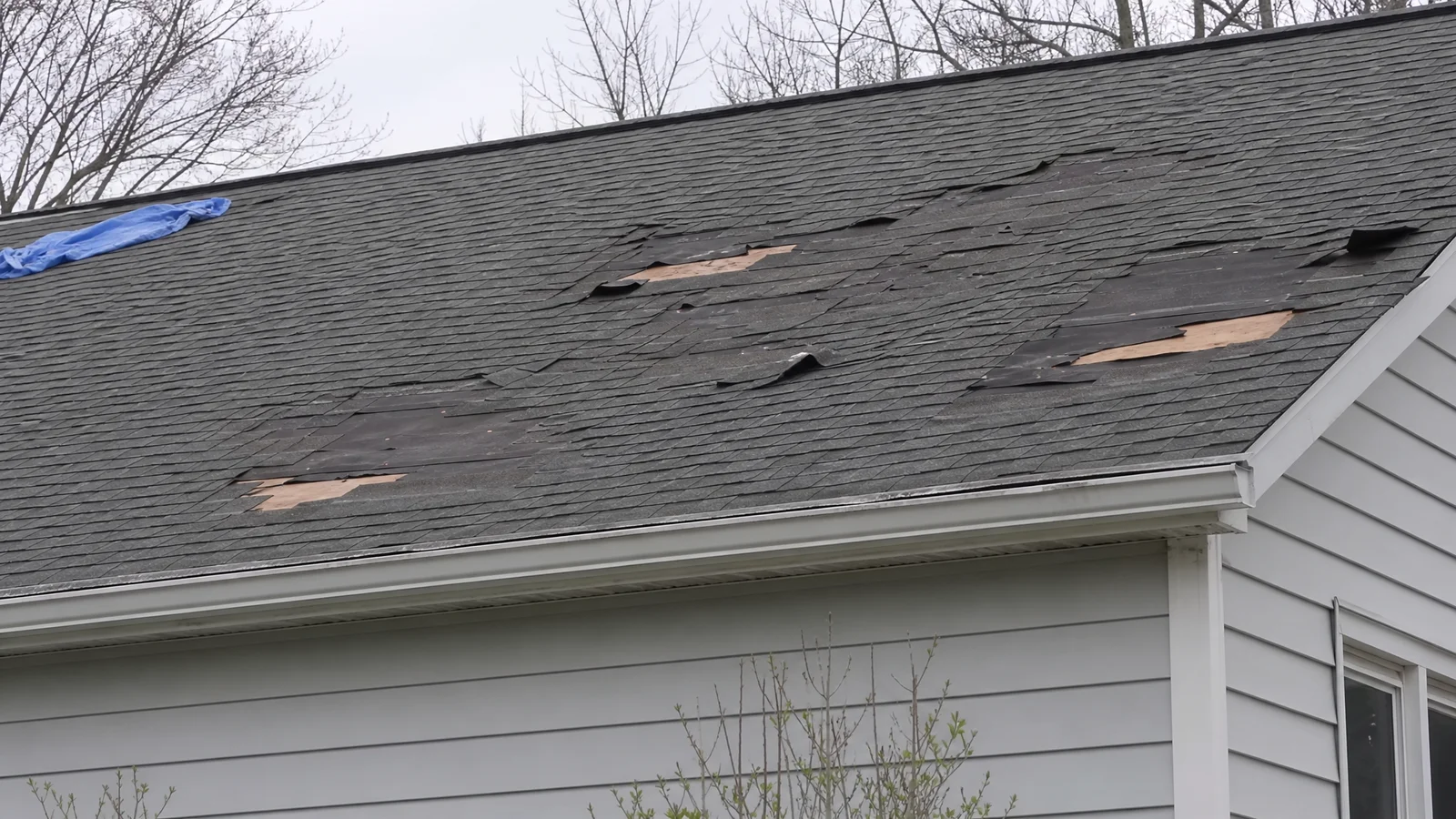
Every missing or damaged shingle tells a story about what happened to your roof. The cause, location, and extent of the damage determine whether you need a quick patch or a serious conversation about replacement. A missing shingles roof problem is never just cosmetic. It is an open pathway for water to reach your decking, framing, and living space.
Here are the real-world scenarios we encounter most often and what each one means for your home.
Scenario 1: Shingles Blown Off After a Summer Storm
This is the most common call we receive between June and September. A strong thunderstorm with straight-line winds rolls through West Hartford, and the next morning a homeowner spots bare patches on their roof or finds shingle tabs scattered in the yard.
Wind catches shingle edges and lifts tabs until the adhesive sealant strip breaks free. According to 2026 industry data, this can happen with gusts as low as 45 to 50 miles per hour. On homes in neighborhoods like Elmwood and Bishops Corner, where mature trees create wind-tunnel effects between houses, damage often concentrates on the windward slope.
What it means: If the roof is under 15 years old and the damage is limited to one section, this is typically a straightforward repair costing $150 to $400 for a few tabs. The underlayment is still protecting the deck in the short term, but you have days, not months, to act.
Scenario 2: Cracked or Bruised Shingles After Hail
Connecticut gets hail events several times per year. The damage is not always obvious from the ground. Hail strikes leave circular dents, cracked surfaces, or displaced granules that expose the asphalt mat beneath. Verisk reports that non-catastrophic wind and hail losses now account for roughly 25 percent of all residential claim value nationally.
What it means: Hail damage is cumulative. A single stone may crack one shingle, but a widespread hail event can compromise dozens across the entire roof surface. This scenario often qualifies as an insurance claim, and documentation within days of the storm strengthens your case significantly.
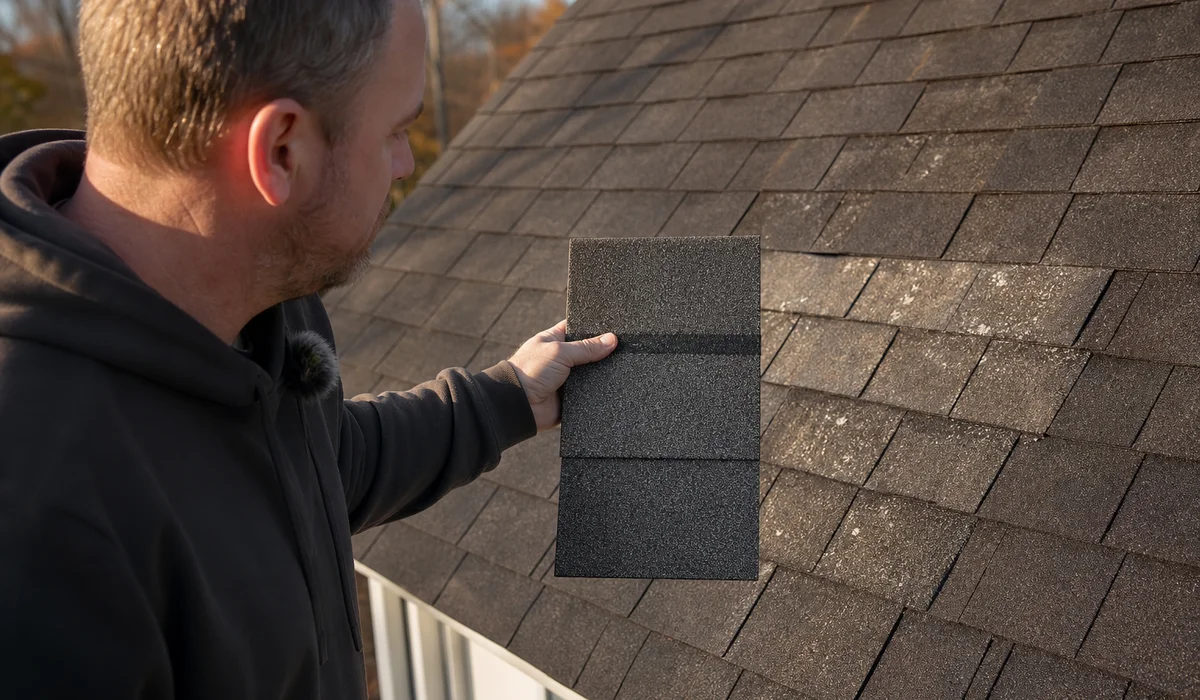
Scenario 3: Tabs Lifting and Curling from Age
On older Colonials and Cape Cods throughout West Hartford, we regularly see shingles that have lost their sealant strip adhesion entirely. The tabs curl upward at the edges, and moderate winds peel them off one by one over successive storms.
What it means: This is not localized damage. It signals system-wide sealant failure, which means the entire roof has reached the end of its functional life. Patching individual spots only buys a few months before the next section lifts. On roofs past 20 years, this scenario almost always leads to a replacement conversation.
Scenario 4: Ice Dam Damage in Late Winter
Ice dams form along roof eaves when heat escaping through the attic melts snow on the upper slopes. The meltwater refreezes at the colder eaves, building up a ridge of ice that forces water back under the shingles. This process cracks shingle tabs from below and can shove them completely out of position.
What it means: Ice dam damage indicates both a roofing issue and a ventilation or insulation problem in the attic. Repairing the shingles alone without addressing the root cause guarantees the same damage will return next winter.
Scenario 5: Poor Installation Revealed Over Time
Insufficient nails, wrong nail placement, missing starter courses, or tabs installed too close to the edge are installation defects that show up gradually. We see these most often on roofs installed during housing booms when crews were rushed.
What it means: If shingles are sliding or separating in a pattern that does not match wind or weather damage, the installation itself may be the problem. This scenario typically requires a more extensive repair or full re-roofing if the defects are widespread.
How Exposed Underlayment Degrades
Once a shingle is gone, the underlayment is your last line of defense. Standard felt paper degrades from UV exposure within 30 to 90 days. Synthetic underlayment lasts longer, up to about 180 days, but neither is designed as a permanent waterproofing layer.
- Day 0: Underlayment is exposed but still shedding water
- Days 1 to 7: UV degradation begins on traditional felt
- Days 7 to 30: Ceiling leaks appear in wet weather
- Beyond 30 days: Underlayment can fail entirely, and the roof deck starts absorbing water
A fast repair is cheap. A delayed repair with structural water damage averages $3,000 to $6,000 based on 2026 pricing.
Matching Replacement Shingles
Shingle matching depends on what is currently on your roof.
- Same manufacturer, same color, still in production: Close match is achievable. Minor fading differences from weathering are visible up close but read fine from the street. Most CT residential roofs from the last 20 years use one of a few common lines like GAF Timberline HDZ or Owens Corning TruDefinition Duration.
- Discontinued color or old product line: An exact match is typically not possible. West Hartford Roofing can source the closest available shade or discuss whether replacing a full slope provides a cleaner result.
Repair Versus Replacement Thresholds
Repair makes sense when:
- Damage is isolated to one section with a clear cause
- The roof is under 15 years old with good granule coverage
- Fewer than 10 shingles are affected
- A close shingle match is available
Replacement makes sense when:
- Multiple areas across the roof show damage
- Sealant strips have failed system-wide
- The roof is past 20 years with visible wear
- Many building codes require full replacement if more than 25 percent of a roof section is compromised within 12 months
Insurance and Storm Damage Claims
If a shingle blew off roof sections during a documented storm event, the damage is often covered under CT homeowner’s insurance. Age-related loss is generally excluded. Many carriers in 2026 use percentage-based wind and hail deductibles rather than flat fees.
Coverage note: A two percent deductible on a $300,000 home means $6,000 out of pocket before insurance coverage begins.
For a fast repair or full diagnosis, see our leak detection and repair service or call now.
Frequently Asked Questions
Can replacement shingles match my existing roof? ▼
In most cases, yes. We source from the same manufacturer and color line. Slight fading differences from age are visible up close but blend well from ground level. If the shingle is discontinued, we discuss the closest alternative or whether replacing a full slope makes more sense.
Is a single missing shingle an emergency? ▼
Address it within days. Exposed underlayment degrades quickly from UV and moisture, and the next storm will exploit that opening. A fast repair typically costs $150 to $400.
How many missing shingles mean I need a full replacement? ▼
The number matters less than the cause. A handful blown off in one storm is a repair. Random missing tabs scattered across the entire roof from age-related sealant failure points to replacement.
Ready to talk to a roofer?
Read about our roof leak detection & repair service or get a free estimate.
Related Guides
Ceiling Water Stains: Warning Signs Every Homeowner Should Recognize
Brown spots on your ceiling are more than cosmetic problems. Learn what different stain patterns reveal about roof leaks and when to take immediate action.
Why Is My Roof Leaking? The Most Common Causes in Connecticut
Most roof leaks trace to six specific failure points. Learn the warning signs for each, how urgent they are, and what repairs typically cost.
How Professionals Trace Roof Leaks Using Thermal Imaging and Moisture Meters
Follow the step-by-step process roofers use to pinpoint leak sources with thermal cameras, moisture meters, and controlled water testing.
Roof Leak Repair vs. Replacement: A Side-by-Side Decision Guide
Compare repair and replacement across roof age, decking condition, leak scope, and long-term cost to decide which option fits your situation.